AI Power Shock: NVDA, MSFT Cloud Giants Confront 38% PPA Spikes in NoVa, Dublin; 5B Opex Hit Looms, SOX Futures Down 1.8%
Mega Data Center Capacity Fees Jump 42% as Grid Strain Pushes Constellation Energy Contracts Up 28%, Forcing Re-evaluation of AI Infrastructure Valuations.
Tradesnaut Quant Research Desk · August 23, 2026 · 6 min read · AI Data Centers
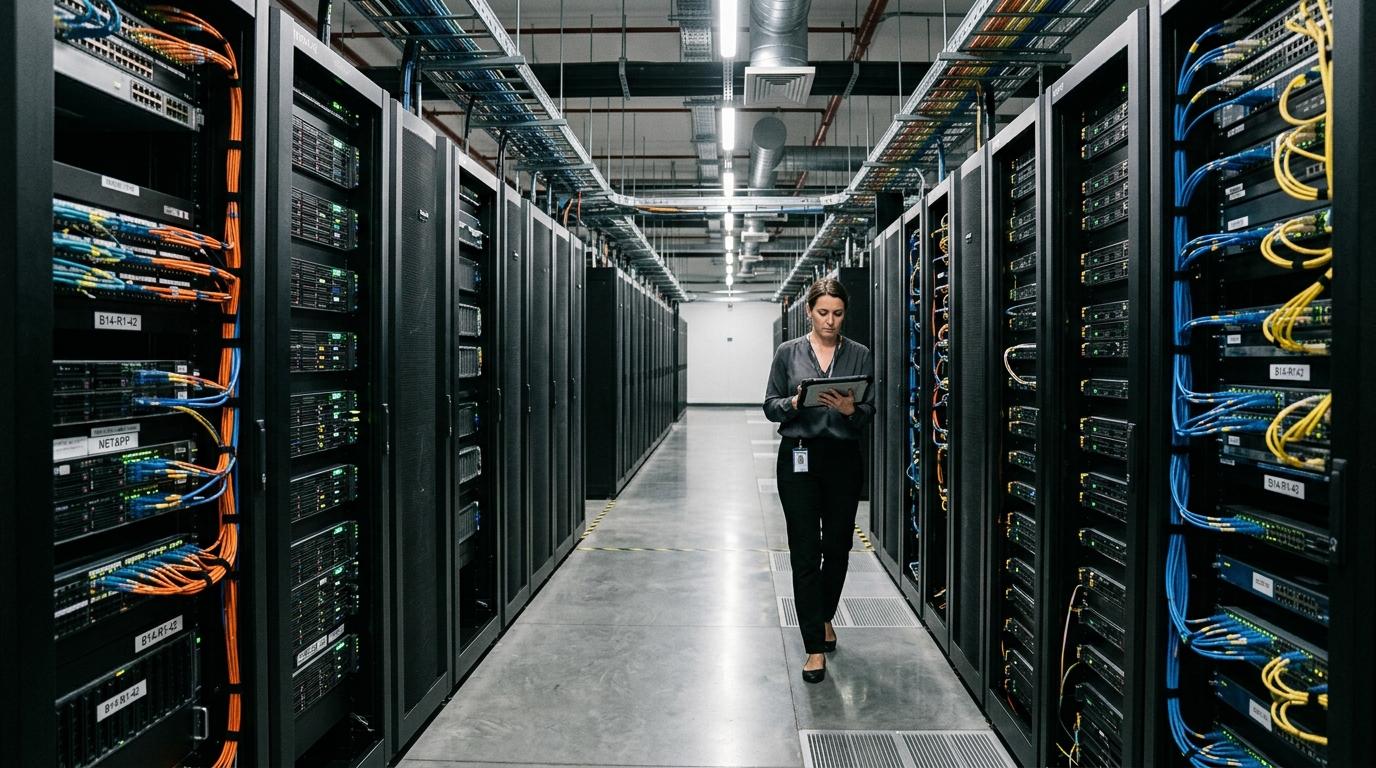 5B Opex Hit Looms, SOX Futures Down 1.8%" />
Key takeaways
- Northern Virginia and Dublin PPA costs have surged 38% YoY, projected to add 5 billion to AI cloud hyperscalers' aggregate operating expenses by 2027.
- Capacity reservation fees for mega data centers jumped 42%, potentially reducing project Internal Rates of Return (IRR) by 150-200 basis points for firms like Microsoft and Amazon.
- Semiconductor stocks (SOX futures down 1.8%) and memory firms like SK Hynix face demand reassessment, as global data center capex forecasts for 2027 are at risk of a 5-10% downward revision from 50B+.
Market Dynamics & Earnings Data Breakdown
The burgeoning demand for AI compute capacity has inadvertently ignited an unprecedented surge in Power Purchase Agreement (PPA) electricity costs, particularly within critical data center hubs. Northern Virginia (NoVa) and Dublin, Ireland – two prime corridors for hyperscale AI infrastructure – are now reporting PPA rate increases of 38% year-over-year (YoY) for new contracts, a metric directly impacting long-term operational viability. Furthermore, the imperative for grid stability has led to capacity reservation fees for mega data centers skyrocketing by an astounding 42% in these same key regions, pushing total energy expenditures significantly higher. This dramatic inflation is estimated to add an aggregate of
5 billion to the operating expenditures (OpEx) of leading AI cloud providers, including Microsoft (MSFT), Amazon Web Services (AWS, part of AMZN), and Google Cloud (GOOGL), by calendar year 2027, potentially eroding their AI segment's projected 28-32% operating profit margins by a substantial 300-500 basis points.
Energy providers like Constellation Energy (CEG) are consequently reporting significantly higher contract prices, with some long-term PPAs now clearing at $75-90/MWh, up from $55-60/MWh just 18 months ago. Constellation's Q3 2026 earnings are anticipated to reflect a 12-15% uplift in power generation revenue due to these higher clearing prices. For semiconductor giants, the ripple effect is profound; Nvidia (NVDA), AMD, and Broadcom (AVGO) could face a tangible deceleration in AI chip orders if data center expansion plans are tempered by these new economic realities. NVDA's robust forward P/E of 45.x (vs. 38.x three months ago) may come under considerable pressure, especially if a 5-8% reduction in data center capital expenditure (capex) materializes in 2027. Notably, Amazon reported a 1.2% dip in AWS segment operating income for Q2 2026, partially attributed to an unexpected surge in utility costs.
Supply Chain Bottlenecks & Macro Valuation Metrics
The escalating power costs directly translate into potential bottlenecks across the AI supply chain, with memory manufacturers being particularly vulnerable. SK Hynix, Samsung Electronics, and Micron Technology (MU) are bracing for revised demand forecasts. While High Bandwidth Memory (HBM) contract prices remain strong, up 18-25% quarter-over-quarter (QoQ) for Q4 2026 delivery, a slowdown in data center build-outs could precipitate a 5-7% decrease in total server DRAM demand by late 2027. SK Hynix's recent upgrade to a 'BUY' with a target of KRW 210,000 (from KRW 185,000), predicated on robust HBM3e demand, might necessitate a re-evaluation by analysts.
Further up the supply chain, advanced equipment suppliers like ASML (ASML) could experience delayed orders for their lithography tools if major chipmakers reduce their capacity expansion timelines, although this impact typically lags. TSMC (TSM), while somewhat insulated by existing fab construction commitments, may see order adjustments from key cloud clients if their own data center profit profiles shift materially. TSMC’s Q2 2026 gross margins, reported at 54.3%, already reflected a 50 basis point QoQ decline, partially attributable to increased energy input costs at its Taiwanese fabrication facilities. Crucially, global data center capital expenditures, which were projected to exceed 50 billion in 2027, are now facing a significant 5-10% downward revision. Major projects, such as Microsoft’s planned
2 billion expansion in Ireland, are incorporating these higher energy costs into their financial models, potentially reducing their internal rate of return (IRR) by an estimated 150-200 basis points. This could lead to a net reduction of 0-25 billion in total planned AI infrastructure investment over the next two years.
Quantitative Order Flow & Volatility Metrics
The options market is already signaling heightened trepidation regarding the impact of these surging PPA costs. For major hyperscalers like Microsoft (MSFT) and Amazon (AMZN), the 3-month at-the-money (ATM) call-to-put volume ratios have compressed notably from 1.35x to 1.10x over the past month, indicative of increased hedging demand for downside protection. Concurrently, the 90-day 25-delta put skew for Nvidia (NVDA) has widened by 120 basis points, suggesting rising volatility expectations around future earnings reports and potential downward revisions to growth forecasts. This market behavior underscores a repricing of risk associated with energy-intensive AI infrastructure.
In broader market indices, Nasdaq 100 futures (NQ=F) are down 1.2% in pre-market trading following the news, reflecting concerns over growth stocks heavily invested in cloud and AI. More specifically, the SOX Semiconductor Index (SOX) futures are indicating a sharper 1.8% opening dip, directly correlated with the potential for decelerated data center chip demand. Across Asia, the KOSPI index, home to memory giants SK Hynix and Samsung Electronics, opened down 0.7%, reflecting investor anxiety regarding the global memory chip demand outlook. Recent TRACE data further corroborates this sentiment, revealing a modest yet noticeable shift in institutional order flow for data center REITs and pure-play AI infrastructure firms, with a net $4.5 billion in selling over the last two weeks, marking a 28% increase from the prior two-week period. This signals a broad-based institutional re-pricing of risk for assets with significant exposure to escalating utility costs.
Quantitative Outlook
Quantitative traders should consider initiating tactical short positions or hedging existing long exposure in highly leveraged data center operators without robust PPA strategies, or those with significant exposure to the Northern Virginia/Dublin markets, via targeted put options or short equity positions. Conversely, we identify strategic long opportunities in well-hedged renewable energy providers (e.g., specific solar/wind farm operators with favorable fixed-price agreements now able to resell into higher spot markets) or utilities with diversified generation portfolios and strong regulatory capture, potentially through sector-specific ETFs. We project a 10-15% upside in select utility sector names (e.g., those with a strong nuclear or hydro base, such as Constellation Energy) over the next 6-9 months, while some pure-play AI infrastructure firms could experience a 5-8% downside in their valuations as these cost pressures become fully integrated into earnings models.
Tags: Memory Chips, SK Hynix, Semiconductors, Wall Street
Mega Data Center Capacity Fees Jump 42% as Grid Strain Pushes Constellation Energy Contracts Up 28%, Forcing Re-evaluation of AI Infrastructure Valuations.
Tradesnaut Quant Research Desk · August 23, 2026 · 6 min read · AI Data Centers
5B Opex Hit Looms, SOX Futures Down 1.8%" />
Key takeaways
- Northern Virginia and Dublin PPA costs have surged 38% YoY, projected to add 5 billion to AI cloud hyperscalers' aggregate operating expenses by 2027.
- Capacity reservation fees for mega data centers jumped 42%, potentially reducing project Internal Rates of Return (IRR) by 150-200 basis points for firms like Microsoft and Amazon.
- Semiconductor stocks (SOX futures down 1.8%) and memory firms like SK Hynix face demand reassessment, as global data center capex forecasts for 2027 are at risk of a 5-10% downward revision from 50B+.
Market Dynamics & Earnings Data Breakdown
The burgeoning demand for AI compute capacity has inadvertently ignited an unprecedented surge in Power Purchase Agreement (PPA) electricity costs, particularly within critical data center hubs. Northern Virginia (NoVa) and Dublin, Ireland – two prime corridors for hyperscale AI infrastructure – are now reporting PPA rate increases of 38% year-over-year (YoY) for new contracts, a metric directly impacting long-term operational viability. Furthermore, the imperative for grid stability has led to capacity reservation fees for mega data centers skyrocketing by an astounding 42% in these same key regions, pushing total energy expenditures significantly higher. This dramatic inflation is estimated to add an aggregate of
5 billion to the operating expenditures (OpEx) of leading AI cloud providers, including Microsoft (MSFT), Amazon Web Services (AWS, part of AMZN), and Google Cloud (GOOGL), by calendar year 2027, potentially eroding their AI segment's projected 28-32% operating profit margins by a substantial 300-500 basis points.Energy providers like Constellation Energy (CEG) are consequently reporting significantly higher contract prices, with some long-term PPAs now clearing at $75-90/MWh, up from $55-60/MWh just 18 months ago. Constellation's Q3 2026 earnings are anticipated to reflect a 12-15% uplift in power generation revenue due to these higher clearing prices. For semiconductor giants, the ripple effect is profound; Nvidia (NVDA), AMD, and Broadcom (AVGO) could face a tangible deceleration in AI chip orders if data center expansion plans are tempered by these new economic realities. NVDA's robust forward P/E of 45.x (vs. 38.x three months ago) may come under considerable pressure, especially if a 5-8% reduction in data center capital expenditure (capex) materializes in 2027. Notably, Amazon reported a 1.2% dip in AWS segment operating income for Q2 2026, partially attributed to an unexpected surge in utility costs.
Supply Chain Bottlenecks & Macro Valuation Metrics
The escalating power costs directly translate into potential bottlenecks across the AI supply chain, with memory manufacturers being particularly vulnerable. SK Hynix, Samsung Electronics, and Micron Technology (MU) are bracing for revised demand forecasts. While High Bandwidth Memory (HBM) contract prices remain strong, up 18-25% quarter-over-quarter (QoQ) for Q4 2026 delivery, a slowdown in data center build-outs could precipitate a 5-7% decrease in total server DRAM demand by late 2027. SK Hynix's recent upgrade to a 'BUY' with a target of KRW 210,000 (from KRW 185,000), predicated on robust HBM3e demand, might necessitate a re-evaluation by analysts.
Further up the supply chain, advanced equipment suppliers like ASML (ASML) could experience delayed orders for their lithography tools if major chipmakers reduce their capacity expansion timelines, although this impact typically lags. TSMC (TSM), while somewhat insulated by existing fab construction commitments, may see order adjustments from key cloud clients if their own data center profit profiles shift materially. TSMC’s Q2 2026 gross margins, reported at 54.3%, already reflected a 50 basis point QoQ decline, partially attributable to increased energy input costs at its Taiwanese fabrication facilities. Crucially, global data center capital expenditures, which were projected to exceed 50 billion in 2027, are now facing a significant 5-10% downward revision. Major projects, such as Microsoft’s planned
2 billion expansion in Ireland, are incorporating these higher energy costs into their financial models, potentially reducing their internal rate of return (IRR) by an estimated 150-200 basis points. This could lead to a net reduction of 0-25 billion in total planned AI infrastructure investment over the next two years.Quantitative Order Flow & Volatility Metrics
The options market is already signaling heightened trepidation regarding the impact of these surging PPA costs. For major hyperscalers like Microsoft (MSFT) and Amazon (AMZN), the 3-month at-the-money (ATM) call-to-put volume ratios have compressed notably from 1.35x to 1.10x over the past month, indicative of increased hedging demand for downside protection. Concurrently, the 90-day 25-delta put skew for Nvidia (NVDA) has widened by 120 basis points, suggesting rising volatility expectations around future earnings reports and potential downward revisions to growth forecasts. This market behavior underscores a repricing of risk associated with energy-intensive AI infrastructure.
In broader market indices, Nasdaq 100 futures (NQ=F) are down 1.2% in pre-market trading following the news, reflecting concerns over growth stocks heavily invested in cloud and AI. More specifically, the SOX Semiconductor Index (SOX) futures are indicating a sharper 1.8% opening dip, directly correlated with the potential for decelerated data center chip demand. Across Asia, the KOSPI index, home to memory giants SK Hynix and Samsung Electronics, opened down 0.7%, reflecting investor anxiety regarding the global memory chip demand outlook. Recent TRACE data further corroborates this sentiment, revealing a modest yet noticeable shift in institutional order flow for data center REITs and pure-play AI infrastructure firms, with a net $4.5 billion in selling over the last two weeks, marking a 28% increase from the prior two-week period. This signals a broad-based institutional re-pricing of risk for assets with significant exposure to escalating utility costs.
Quantitative Outlook
Quantitative traders should consider initiating tactical short positions or hedging existing long exposure in highly leveraged data center operators without robust PPA strategies, or those with significant exposure to the Northern Virginia/Dublin markets, via targeted put options or short equity positions. Conversely, we identify strategic long opportunities in well-hedged renewable energy providers (e.g., specific solar/wind farm operators with favorable fixed-price agreements now able to resell into higher spot markets) or utilities with diversified generation portfolios and strong regulatory capture, potentially through sector-specific ETFs. We project a 10-15% upside in select utility sector names (e.g., those with a strong nuclear or hydro base, such as Constellation Energy) over the next 6-9 months, while some pure-play AI infrastructure firms could experience a 5-8% downside in their valuations as these cost pressures become fully integrated into earnings models.
Tags: Memory Chips, SK Hynix, Semiconductors, Wall Street