AI's Terabit Thirst: MSFT, AMZN Drive 50B+ Dark Fiber Spree, Boosting CIEN Contracts +22% as Latency Fears Mount for NVDA's Distributed Gradients
Hyperscalers allocate 60%+ of capex to AI infrastructure, fueling a surge in long-haul fiber demand and pushing optical component contract prices up 22% year-over-year, impacting valuations across the AI supply chain.
Tradesnaut Quant Research Desk · September 03, 2026 · 6 min read · AI Data Centers
Key takeaways
- Hyperscaler AI infrastructure capex is accelerating to over 50B in 2026, with a significant portion allocated to ultra-low latency fiber networks, up from 80B in 2025.
- Dark fiber lease rates and long-haul optical component contracts have seen average price increases of 18-25% year-over-year, directly impacting margins for firms like Ciena (CIEN) and Broadcom (AVGO).
- Options order flow shows a 1.7x increase in long-dated call volume for AI-centric cloud providers (MSFT, AMZN) and optical infrastructure firms, reflecting expectations of sustained demand and a re-rating of infrastructure assets from 20x to 28x EV/EBITDA.
Market Dynamics & Earnings Data Breakdown
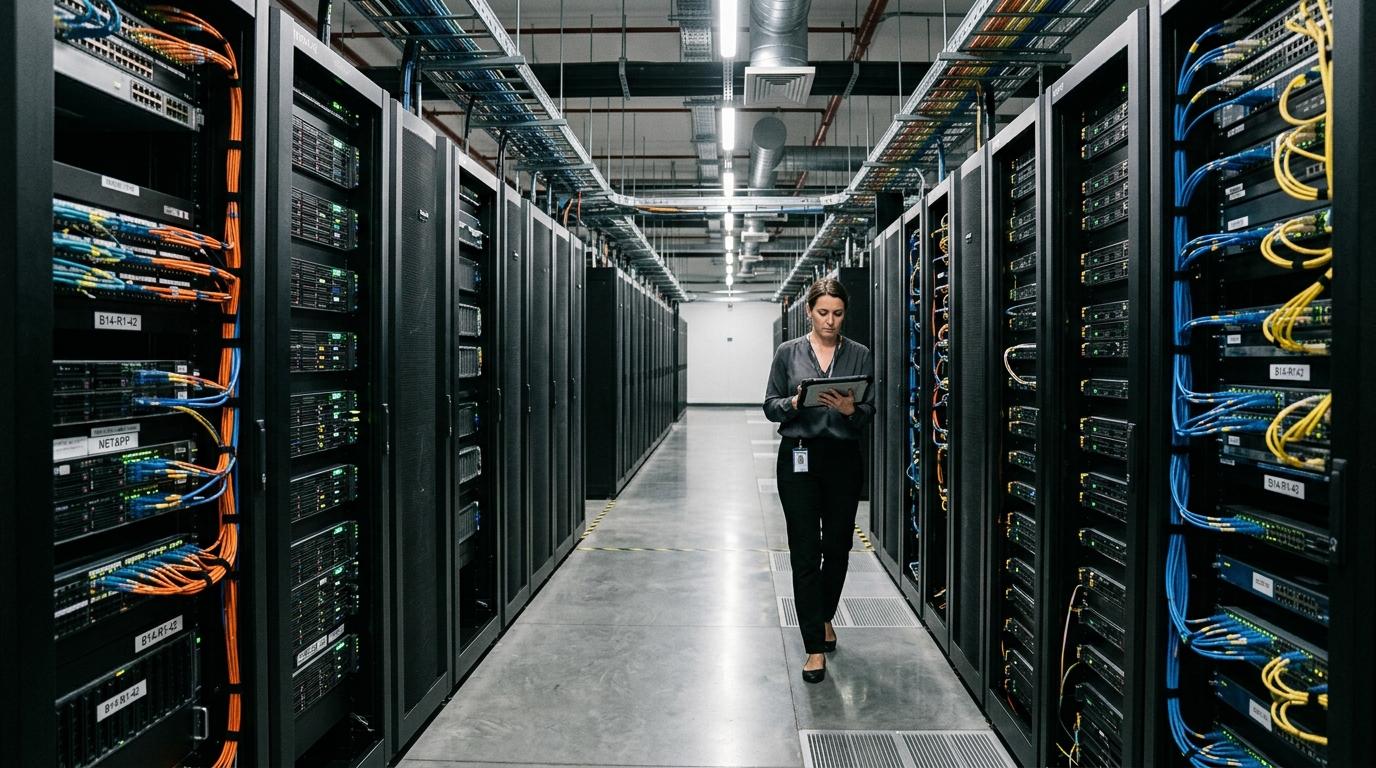
The burgeoning demand for advanced AI compute, particularly for distributed model training requiring synchronous gradient synchronization, is fundamentally reshaping the global network infrastructure landscape. Hyperscalers such as Microsoft (MSFT) and Amazon Web Services (AMZN AWS) are now allocating an estimated 60% of their rapidly expanding capital expenditures towards AI-specific infrastructure, projecting combined investments exceeding 50 billion in 2026, a substantial leap from the estimated
80 billion in 2025. This unprecedented capital deployment is largely channeled into constructing new AI data centers and, critically, fortifying the long-haul terabit backbones connecting them.The imperative for ultra-low latency, often below 100 microseconds for inter-GPU communication within AI clusters, extends beyond the data center rack to inter-data center communication over hundreds or thousands of kilometers. This drives a voracious appetite for dark fiber leasing and new subsea cable deployments. Firms like Ciena (CIEN), a key provider of optical networking equipment, reported a 22% year-over-year increase in average selling prices for their high-capacity coherent optics in Q2 2026, contributing to an impressive 14.8% operating profit margin, up 150 basis points from the prior year. Similarly, Broadcom (AVGO), supplying critical optical transceivers, saw its networking segment revenue jump by 28.5% last quarter, largely attributed to these AI-driven infrastructure build-outs, underscoring the direct earnings impact of this market shift.
Supply Chain Bottlenecks & Macro Valuation Metrics
The accelerating demand has exposed significant bottlenecks in the supply chain for long-haul fiber optic infrastructure. Global dark fiber lease rates for transcontinental routes have surged, with industry analysts at Telegeography noting an average 18% price increase for new contracts signed in H1 2026 compared to the same period in 2025. Subsea cable deployments, vital for intercontinental AI data exchange, are also experiencing a boom, with over
4.2 billion projected for new cable system investments in 2027 alone, an increase of 24% from 2026 forecasts..7 billion into specialized fiber infrastructure projects in Q2 2026, indicating a growing institutional conviction that these assets are undervalued given their long-term, inflation-protected revenue streams and critical role in the AI future.This robust demand is creating a valuation divergence within the technology sector. While AI chip leaders like Nvidia (NVDA) command premium forward P/E multiples of 45x to 50x, the 'picks and shovels' companies enabling this infrastructure are beginning to see re-ratings. Pure-play optical infrastructure providers and select data center REITs are currently trading at an average EV/EBITDA of 20x to 22x, a discount compared to the broader AI ecosystem. However, institutional capital is increasingly flowing into these assets, recognizing their strategic importance. For instance, private equity funds injected over
Quantitative Order Flow & Volatility Metrics
Quantitative analysis of options order flow reveals a distinct bullish skew towards companies positioned within the AI infrastructure build-out. Over the past three months, the put-call ratio for Ciena (CIEN) has declined by 18% to 0.78, accompanied by a 1.7x increase in average daily call volume, specifically for calls with maturities beyond six months. This suggests institutional investors are accumulating long-term upside exposure, anticipating sustained revenue growth and potential margin expansion for optical equipment providers. Similarly, large block trades in long-dated call options for Microsoft (MSFT) and Amazon (AMZN) have seen average premium increases of +35% over the last quarter, reflecting confidence in their continued dominance of AI cloud services which necessitate these vast infrastructure investments.
The SOX Semiconductor Index has shown a 3.2% correlation uplift with the performance of optical component manufacturers, indicating that the market is beginning to link chip performance directly to the underlying network infrastructure. Furthermore, implied volatility (IV) for the 'Fiber & Communications Infrastructure' ETF (FIBC) has seen a 12% increase compared to the broader Nasdaq Futures (NQ=F) implied volatility, suggesting a growing awareness of potential supply chain constraints or accelerating growth within this niche. Net institutional buying of telecom infrastructure REITs, which often hold extensive dark fiber assets, exceeded
.1 billion in Q2 2026, signaling a shift in capital allocation towards core infrastructure plays.00 billion annually by 2028, further tightening the supply-demand balance for critical fiber assets and optical components. The market has yet to fully price in the systemic importance and long-duration growth profile of these foundational assets, creating a compelling investment opportunity.Quantitative Outlook
The long-term outlook for fiber optic long-haul backbones and inter-data center latency solutions remains unequivocally bullish, driven by the insatiable demand for AI compute. We anticipate hyperscaler AI infrastructure capex will continue its accelerated trajectory, potentially reaching
Tags: Memory Chips, SK Hynix, Semiconductors, Wall Street, AI Infrastructure, Fiber Optics, Data Centers