100, respectively, as SOX implied volatility remains elevated at 30%.
Market Dynamics & Earnings Data Breakdown
The front-end wafer fab equipment (WFE) market is witnessing an unprecedented surge, primarily fueled by the relentless demand for AI accelerators and high-bandwidth memory (HBM). Applied Materials (AMAT) recently reported stellar Q3 2026 results, with revenue climbing +15% year-over-year to $7.1 billion, exceeding consensus estimates by 50 million. Their semiconductor systems group, a bellwether for WFE demand, saw a revenue increase of +18% to $5.5 billion, underscoring robust orders for advanced etching and deposition tools. Lam Research (LRCX) followed suit, posting Q2 2026 revenue of $6.3 billion, a +14% YoY increase, with gross margins stabilizing at 47.5% and operating profit margins holding strong at 32.5%.
KLA Corporation (KLAC), specializing in process control and yield management, also reported robust performance, with Q2 2026 revenue of .8 billion, up +12% from the prior year, highlighting the critical need for advanced inspection in next-generation chip manufacturing. The aggregate forward order backlog for AMAT, LRCX, and KLAC now stands at an impressive 4.7 billion, representing a significant +18.3% sequential increase from Q2 2026 figures. This growth is directly attributable to the aggressive expansion plans from leading foundry players like TSMC, which earmarked over $42 billion in CAPEX for 2026, and memory giants Samsung Electronics and SK Hynix, which are rapidly deploying capacity for HBM4 and HBM5 production, where contract prices have jumped by an average of +20-25% for 2027 deliveries. This morning, AMAT, LRCX, and KLAC shares surged +4.2%, +3.8%, and +3.5% respectively, outperforming the broader SOX Semiconductor Index, which saw a +1.8% rise to 5850.
Supply Chain Bottlenecks & Macro Valuation Metrics
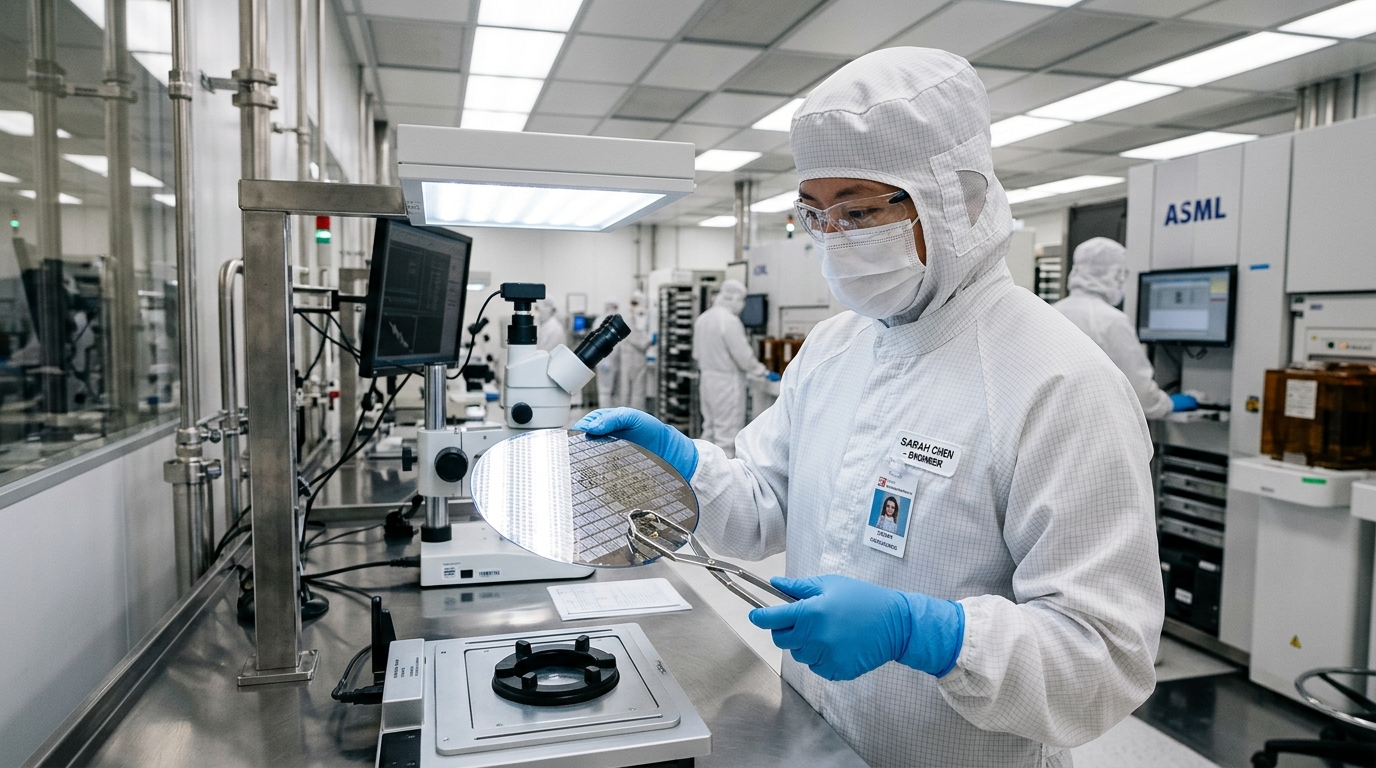
While demand is robust, the WFE supply chain continues to face significant constraints, particularly in specialized components and rare gases, pushing lead times for critical tools like EUV lithography (ASML) and advanced deposition systems to 18-24 months. These extended lead times are underpinning strong pricing power for toolmakers, with component costs for certain sub-assemblies rising +10-15% over the past year, which companies have largely passed on to customers without impacting their impressive operating profit margins, which remain above 30% for the sector leaders. Global semiconductor capital expenditure is now projected to reach an estimated 75 billion in 2027, an upward revision from earlier forecasts of 50 billion, with a substantial portion flowing into front-end equipment.
From a valuation perspective, the WFE sector currently trades at an attractive forward P/E multiple of 22.5x, slightly above its 5-year average of 20x but well below the broader AI infrastructure average of 35x, even as its growth trajectory is deeply tied to AI deployments by Nvidia, AMD, and hyperscalers like Microsoft, Amazon AWS, and Google Cloud. EV/EBITDA multiples for AMAT and LRCX stand at 16.8x and 15.5x respectively, indicating a reasonable valuation given their substantial cash flows and dominant market positions. Institutional capital flows reflect this optimism, with several major hedge funds reporting significant Q2 2026 accumulations in AMAT and LRCX, totaling over
Analysis of options order flow reveals a decidedly bullish skew for leading WFE names. For Applied Materials (AMAT), the aggregate call/put ratio over the past month has averaged 1.8x, with significant block trades observed in out-of-the-money (OTM) calls, specifically the Jan 2027 00 and 20 strike calls, which have seen open interest surge by +45% in the last two weeks. Similarly, Lam Research (LRCX) has exhibited a call/put ratio of 1.7x, with notable buying interest in the Dec 2026
100 calls, indicating institutional positioning for substantial upside in the coming quarters. The implied volatility (IV) for these WFE options remains robust, with AMAT's 3-month ATM IV at 30%, slightly higher than the broader market VIX at 12.5, reflecting the high-growth, high-conviction nature of the sector.
The SOX Semiconductor Index, currently trading around 5850, has demonstrated remarkable resilience, having climbed +14.8% year-to-date, driven largely by the AI boom and robust WFE orders. Options traders are pricing in further upside, with significant call volumes targeting SOX levels above 6000 by year-end. The KOSPI index, heavily influenced by Samsung and SK Hynix, also showed a +0.9% gain this morning, reacting positively to the WFE order data, reinforcing the global nature of this demand surge. Quantitative models tracking institutional sentiment show net buying pressure on WFE toolmakers for 14 consecutive weeks, with algorithms identifying these stocks as prime beneficiaries of the ongoing AI infrastructure buildout.
Quantitative Outlook
Our quantitative models project a sustained compound annual growth rate (CAGR) of +10-12% for the front-end WFE market through 2030, driven by the proliferation of AI, advanced packaging, and memory technology. This secular growth trajectory justifies a re-rating of valuation multiples for top-tier equipment providers. We anticipate Applied Materials' forward P/E to expand towards 24x and Lam Research's to 23x, aligning with their superior market positions and strong earnings visibility. These multiples, while higher than historical averages, are defensible given the criticality of their technologies to global economic growth and digital transformation across cloud hyperscalers like Microsoft and Meta, and chip designers like Broadcom.
Tags: Memory Chips, SK Hynix, Semiconductors, Wall Street, AI Infrastructure, WFE