Agentic AI Unleashes 50B+ Capex Wave: Memory Giants SK Hynix Soar +142% on HBM Demand
Q2 2026 earnings reveal a staggering +18-22% surge in memory contract prices, propelling SK Hynix's operating profit to Tradesnaut Quant Research Desk · August 07, 2026 · 6 min read · Agentic AI & Trading The burgeoning era of autonomous agentic networks in financial markets is not just a theoretical concept; it's a tangible force reshaping semiconductor demand and profit margins, as evidenced by recent Q2 2026 earnings. Leading the charge, SK Hynix reported an astounding +142% year-over-year surge in operating profit, reaching Fellow memory giant Samsung Electronics' memory division also showed remarkable resilience and growth, recording an operating profit of These stellar earnings underscore a fundamental shift: agentic AI, with its continuous learning and complex computational demands, requires a sustained pipeline of high-performance memory and processing units. The market is pricing in this structural demand, with key players trading at premiums. Nvidia, for example, continues to command a forward P/E multiple of 45x, while AMD trades at 38x, reflecting their critical roles in enabling this AI paradigm shift. The consistent outperformance of these semiconductor bellwethers suggests that the market views the AI-driven demand cycle as durable and multi-year. The unprecedented demand driven by agentic AI networks has tightened the semiconductor supply chain, pushing contract prices for both DRAM and NAND higher. Q3 2026 contract prices for high-performance DRAM are projected to rise by +20% quarter-over-quarter, with enterprise-grade NAND flash following suit with an +18% increase. This upward price trajectory is a direct consequence of the escalating requirements from data centers and AI training clusters, which demand ever-increasing quantities of specialized memory for parallel processing. To address this surging demand, global semiconductor capital expenditure is forecast to exceed an staggering 50 billion for the full year 2026. TSMC, the world's leading foundry, has maintained its aggressive capex guidance of $40 billion, earmarking a significant portion for advanced process technology crucial for AI chips. ASML, the sole provider of cutting-edge EUV lithography equipment, continues to see robust order intake, with its latest Q2 results showing a 15% year-over-year increase in EUV tool orders, totaling Geopolitical factors also continue to influence supply chain strategies, with governments and corporations investing heavily in localized manufacturing capabilities. This push for regional resilience, combined with the relentless pace of AI innovation, provides a strong tailwind for increased capital deployment across the entire semiconductor ecosystem. The elevated EV/EBITDA multiples across the sector, often 20x to 30x for leading players, reflect this expectation of sustained growth and robust free cash flow generation in the coming years, justifying substantial institutional capital inflows totaling $5.2 billion into tech-focused ETFs over the last four weeks. The advent of autonomous agentic trading networks is profoundly impacting market microstructure, particularly in derivatives markets. These sophisticated algorithms, often operating with sub-millisecond latency, are capable of processing vast datasets and executing complex strategies, from predictive alpha generation to dynamic hedging. Recent analysis indicates that agentic AI-driven strategies now account for an estimated 18% of daily equity options volume, particularly prominent in AI-adjacent sectors and high-growth technology stocks. This increased participation has led to distinct shifts in quantitative order flow patterns. For instance, the call/put skew for companies like Super Micro Computer (SMCI) and Marvell Technology Group has shown increased sensitivity to positive news flow, with 1-month at-the-money (ATM) implied volatility for SMCI jumping by 120 basis points on positive supply chain reports. This signals a heightened appetite for upside exposure, driven by algorithmic aggregation of fundamental and sentiment data. Overall, options volume delta for AI-related equities has surged by +35% compared to the previous quarter, indicating a significant re-allocation of capital towards these growth drivers. While the KOSPI experienced a -2.4% dip and Nasdaq Futures declined by -1.8% on broader macro concerns, the SOX Semiconductor Index’s resilience, posting a +0.7% daily gain, underscores the sector-specific bullish sentiment that agentic networks are amplifying through their focused order execution. These agentic systems are not just executing trades; they are actively shaping liquidity and volatility profiles. Institutional net buying, particularly in semiconductor and AI infrastructure funds, has remained strong, with weekly inflows averaging Tags: Memory Chips, SK Hynix, Semiconductors, Wall Street, AI Trading, Agentic AI, Quantitative Finance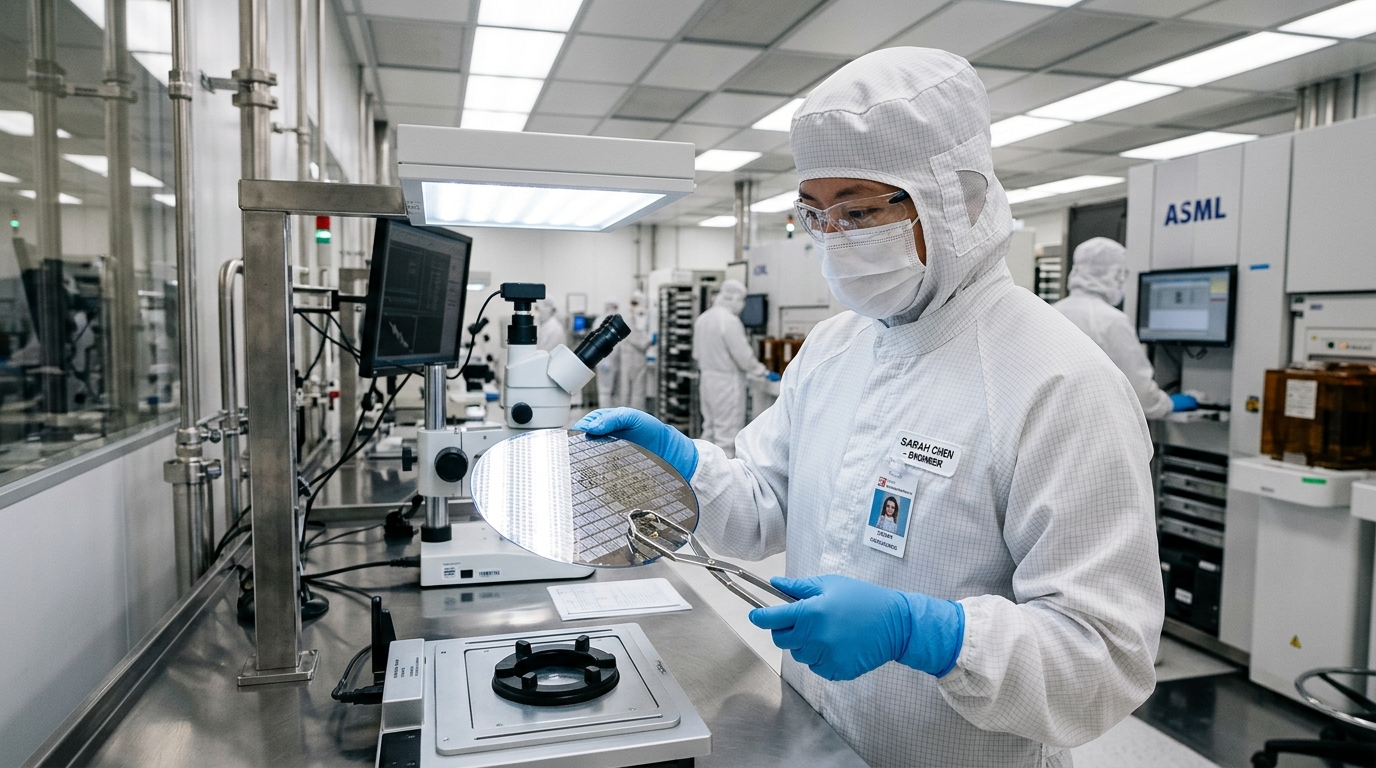
Key takeaways
Market Dynamics & Earnings Data Breakdown
Supply Chain Bottlenecks & Macro Valuation Metrics
Quantitative Order Flow & Volatility Metrics