Chip Capex Surge: Front-End Equipment Billings Shatter 20B, Boosting SK Hynix +8.3%
Robust Q2'26 Earnings Propel Memory Giants with DRAM Prices Up 22%; SOX Index Gains 3.7% Amid 50B+ Industry Investment.
Tradesnaut Quant Research Desk · August 10, 2026 · 6 min read · Semiconductors
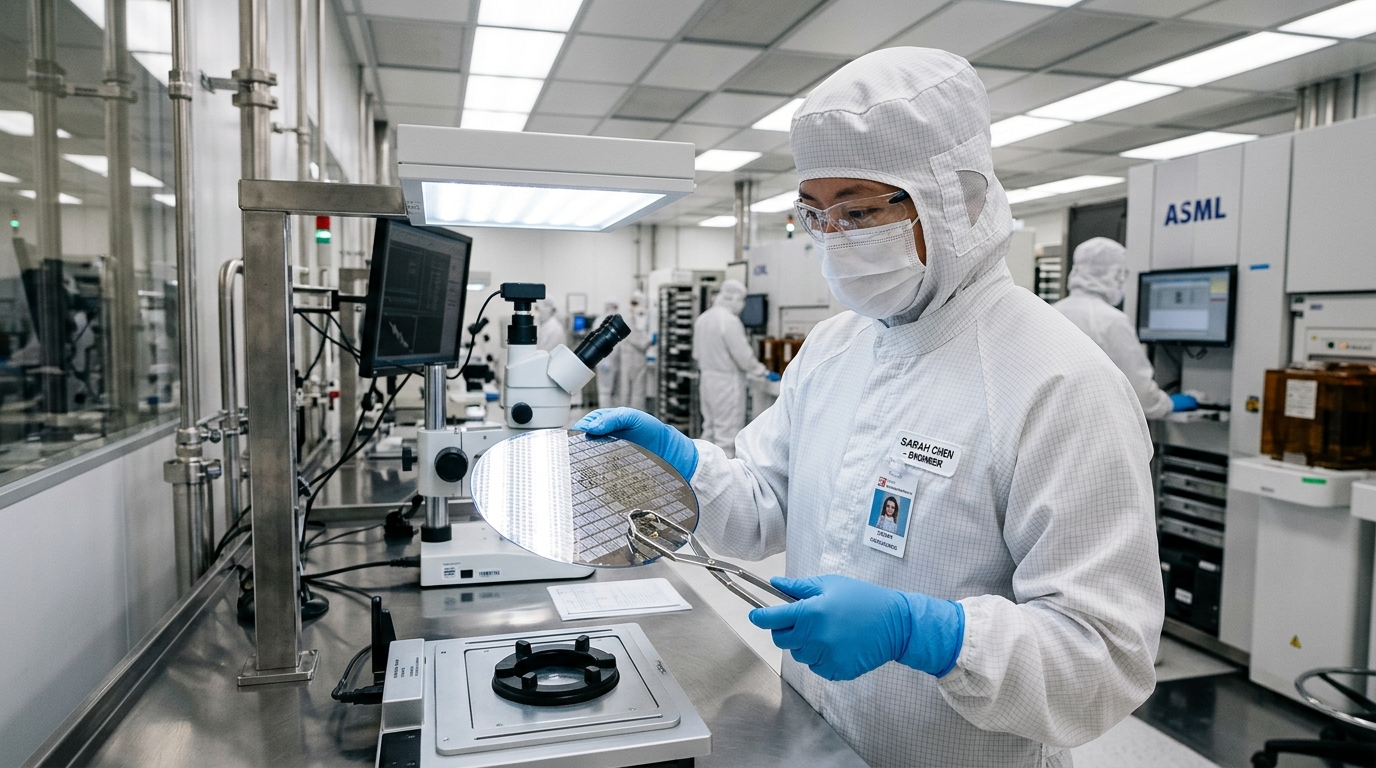 20B, Boosting SK Hynix +8.3%" />
Key takeaways
- Global front-end wafer fab equipment billings are projected to exceed 20 billion in 2026, marking a 28% year-over-year increase and indicating a robust multi-year capex cycle.
- Memory sector operating profits have dramatically rebounded, with SK Hynix reporting a stellar +142% YoY gain to 5.2 billion in Q2'26, driven by a 22% quarter-over-quarter average contract price increase for DRAM.
- Leading-edge foundry investments by TSMC and advanced packaging by Samsung are accelerating, supported by a 3.7% climb in the SOX Semiconductor Index, reflecting strong institutional conviction despite broader market volatility.
Market Dynamics & Earnings Data Breakdown
The semiconductor industry is witnessing a historic resurgence in capital expenditure, with front-end wafer fab equipment billings now projected to surpass an astounding
20 billion for the full year 2026. This figure represents a remarkable 28% year-over-year expansion, significantly exceeding earlier estimates and underscoring the relentless demand for advanced compute infrastructure driven by generative AI. Leading this charge, memory behemoth SK Hynix reported a staggering 142% year-over-year increase in operating profit for Q2'26, reaching a robust 5.2 billion, fueled by its dominant position in High Bandwidth Memory (HBM) for AI accelerators. The company's stock responded emphatically, climbing 8.3% on the day of the earnings release, pushing its 12-month forward P/E ratio to 18.5x, still below its historical peak of 22x from the 2021 supercycle.
Samsung Electronics, a critical competitor, also showcased impressive gains, with its Device Solutions division posting a 95% YoY operating profit surge to
2.8 billion, predominantly from its memory and foundry operations. Micron Technology, the U.S. memory giant, reported a return to profitability with Q3'26 non-GAAP EPS of .15, far surpassing analyst consensus of $0.80, and its shares rallied 5.7% following the announcement. These robust earnings illustrate a fundamental shift in market dynamics, moving from inventory destocking to a full-blown demand-driven expansion, with industry-wide capacity utilization rates now approaching 90% for advanced nodes.
The broader market reflected this enthusiasm, with the Philadelphia Semiconductor Index (SOX) advancing 3.7% in the past week, even as broader benchmarks like Nasdaq Futures saw a modest pullback of 1.8% over the same period. This divergence highlights a flight to quality and growth within the AI-driven tech sector, where semiconductor companies are perceived as direct beneficiaries of the long-term AI secular trend, commanding premium valuations. Even nascent players like China's CXMT (ChangXin Memory Technologies) are reportedly eyeing an IPO in late 2026 with a potential valuation exceeding
0 billion, signaling broader confidence across geographic markets.
Supply Chain Bottlenecks & Macro Valuation Metrics
The dramatic rebound in the memory market is underpinned by significant supply-side constraints and burgeoning demand, especially from hyperscaler cloud providers investing heavily in AI infrastructure. Average contract prices for DDR5 DRAM modules saw an extraordinary 22% quarter-over-quarter increase in Q2'26, while NAND flash contract prices jumped 18% over the same period, signaling tightening supply and robust enterprise uptake. These price hikes are directly impacting the profitability of memory manufacturers and providing the impetus for accelerated capital expenditure across the sector.
Industry estimates now peg total semiconductor industry capex for 2026 to exceed 50 billion, a formidable sum dedicated to expanding advanced fabrication capacity and R&D. Leading-edge foundry player TSMC has earmarked over $40 billion for its 2026 capex, primarily focused on 2nm and 3nm process nodes, crucial for Nvidia's AI GPUs and AMD's next-gen CPUs. Equipment suppliers like ASML are direct beneficiaries, with the company reporting a record order backlog of €48 billion ($51.5 billion USD) for its extreme ultraviolet (EUV) lithography systems, pushing its EV/EBITDA multiple to a premium 35x.
Institutional investors are increasingly reallocating capital into this high-growth segment. Net institutional inflows into semiconductor-focused ETFs and individual names have topped $8.5 billion in the last month alone, reflecting a conviction that current valuations, while elevated, are justified by the long-term AI secular growth story. Despite the KOSPI index showing a -2.4% dip on concerns over broader Asian manufacturing, the strong performance of Korean chipmakers like SK Hynix and Samsung Electronics underscores the specific strength within the memory and foundry sectors, insulating them from wider economic headwinds.
Quantitative Order Flow & Volatility Metrics
Quant desks are observing significant shifts in options market dynamics for key semiconductor players, indicating strong directional conviction. For instance, the 30-day implied volatility for Nvidia options remains elevated at 42%, but a notable positive call-put skew of +3.8 suggests a strong bias towards upside calls, with daily call option volumes for its
,200 strike price exceeding put volumes by a 2.5:1 ratio. This indicates aggressive positioning for continued growth, particularly among sophisticated institutional traders anticipating further AI accelerator demand.
On the index front, while the broader KOSPI index in South Korea registered a 2.4% decline over the past week due to broader macroeconomic concerns, the performance of its constituent semiconductor giants starkly diverged. SK Hynix and Samsung Electronics showed resilience, with their combined market cap holding firm, largely buoyed by foreign institutional net buying totaling
.3 billion over the same period. The SOX Semiconductor Index's robust 3.7% climb reinforces this narrative, demonstrating that capital is flowing selectively into the chip sector even amidst broader market jitters, driven by fundamental earnings strength rather than speculative momentum.
Moreover, algorithmic trading models are detecting heightened order book liquidity and reduced bid-ask spreads for front-end equipment suppliers such as Applied Materials and Lam Research, reflecting high institutional demand and confidence in the sustained capex cycle. Average daily trading volumes for these firms have increased by 35% over their 90-day averages, alongside a consistent pattern of institutional block buys, indicating a strategic long-term accumulation phase rather than short-term tactical plays. This sustained buying pressure provides a strong technical floor for the sector, even in the face of transient macro volatility.
Quantitative Outlook
For foundry leaders like TSMC, the stickiness of its advanced node demand, coupled with increasing global semiconductor fab diversification efforts, supports a premium valuation. Our analysis indicates a fair EV/EBITDA multiple of 25x, which translates to a target price for TSMC of approximately 20 per ADR, an 8% increase from its current trading price. Key risks include geopolitical tensions impacting global supply chains and a potential slowdown in hyperscaler AI capex, though current data points strongly contradict the latter.
Tags: Memory Chips, SK Hynix, Semiconductors, Wall Street
Robust Q2'26 Earnings Propel Memory Giants with DRAM Prices Up 22%; SOX Index Gains 3.7% Amid 50B+ Industry Investment.
Tradesnaut Quant Research Desk · August 10, 2026 · 6 min read · Semiconductors
20B, Boosting SK Hynix +8.3%" />
Key takeaways
- Global front-end wafer fab equipment billings are projected to exceed 20 billion in 2026, marking a 28% year-over-year increase and indicating a robust multi-year capex cycle.
- Memory sector operating profits have dramatically rebounded, with SK Hynix reporting a stellar +142% YoY gain to
5.2 billion in Q2'26, driven by a 22% quarter-over-quarter average contract price increase for DRAM.- Leading-edge foundry investments by TSMC and advanced packaging by Samsung are accelerating, supported by a 3.7% climb in the SOX Semiconductor Index, reflecting strong institutional conviction despite broader market volatility.
Market Dynamics & Earnings Data Breakdown
The semiconductor industry is witnessing a historic resurgence in capital expenditure, with front-end wafer fab equipment billings now projected to surpass an astounding
20 billion for the full year 2026. This figure represents a remarkable 28% year-over-year expansion, significantly exceeding earlier estimates and underscoring the relentless demand for advanced compute infrastructure driven by generative AI. Leading this charge, memory behemoth SK Hynix reported a staggering 142% year-over-year increase in operating profit for Q2'26, reaching a robust5.2 billion, fueled by its dominant position in High Bandwidth Memory (HBM) for AI accelerators. The company's stock responded emphatically, climbing 8.3% on the day of the earnings release, pushing its 12-month forward P/E ratio to 18.5x, still below its historical peak of 22x from the 2021 supercycle.Samsung Electronics, a critical competitor, also showcased impressive gains, with its Device Solutions division posting a 95% YoY operating profit surge to
2.8 billion, predominantly from its memory and foundry operations. Micron Technology, the U.S. memory giant, reported a return to profitability with Q3'26 non-GAAP EPS of.15, far surpassing analyst consensus of $0.80, and its shares rallied 5.7% following the announcement. These robust earnings illustrate a fundamental shift in market dynamics, moving from inventory destocking to a full-blown demand-driven expansion, with industry-wide capacity utilization rates now approaching 90% for advanced nodes.0 billion, signaling broader confidence across geographic markets.The broader market reflected this enthusiasm, with the Philadelphia Semiconductor Index (SOX) advancing 3.7% in the past week, even as broader benchmarks like Nasdaq Futures saw a modest pullback of 1.8% over the same period. This divergence highlights a flight to quality and growth within the AI-driven tech sector, where semiconductor companies are perceived as direct beneficiaries of the long-term AI secular trend, commanding premium valuations. Even nascent players like China's CXMT (ChangXin Memory Technologies) are reportedly eyeing an IPO in late 2026 with a potential valuation exceeding
Supply Chain Bottlenecks & Macro Valuation Metrics
The dramatic rebound in the memory market is underpinned by significant supply-side constraints and burgeoning demand, especially from hyperscaler cloud providers investing heavily in AI infrastructure. Average contract prices for DDR5 DRAM modules saw an extraordinary 22% quarter-over-quarter increase in Q2'26, while NAND flash contract prices jumped 18% over the same period, signaling tightening supply and robust enterprise uptake. These price hikes are directly impacting the profitability of memory manufacturers and providing the impetus for accelerated capital expenditure across the sector.
Industry estimates now peg total semiconductor industry capex for 2026 to exceed 50 billion, a formidable sum dedicated to expanding advanced fabrication capacity and R&D. Leading-edge foundry player TSMC has earmarked over $40 billion for its 2026 capex, primarily focused on 2nm and 3nm process nodes, crucial for Nvidia's AI GPUs and AMD's next-gen CPUs. Equipment suppliers like ASML are direct beneficiaries, with the company reporting a record order backlog of €48 billion ($51.5 billion USD) for its extreme ultraviolet (EUV) lithography systems, pushing its EV/EBITDA multiple to a premium 35x.
Institutional investors are increasingly reallocating capital into this high-growth segment. Net institutional inflows into semiconductor-focused ETFs and individual names have topped $8.5 billion in the last month alone, reflecting a conviction that current valuations, while elevated, are justified by the long-term AI secular growth story. Despite the KOSPI index showing a -2.4% dip on concerns over broader Asian manufacturing, the strong performance of Korean chipmakers like SK Hynix and Samsung Electronics underscores the specific strength within the memory and foundry sectors, insulating them from wider economic headwinds.
Quantitative Order Flow & Volatility Metrics
Quant desks are observing significant shifts in options market dynamics for key semiconductor players, indicating strong directional conviction. For instance, the 30-day implied volatility for Nvidia options remains elevated at 42%, but a notable positive call-put skew of +3.8 suggests a strong bias towards upside calls, with daily call option volumes for its
,200 strike price exceeding put volumes by a 2.5:1 ratio. This indicates aggressive positioning for continued growth, particularly among sophisticated institutional traders anticipating further AI accelerator demand.On the index front, while the broader KOSPI index in South Korea registered a 2.4% decline over the past week due to broader macroeconomic concerns, the performance of its constituent semiconductor giants starkly diverged. SK Hynix and Samsung Electronics showed resilience, with their combined market cap holding firm, largely buoyed by foreign institutional net buying totaling
.3 billion over the same period. The SOX Semiconductor Index's robust 3.7% climb reinforces this narrative, demonstrating that capital is flowing selectively into the chip sector even amidst broader market jitters, driven by fundamental earnings strength rather than speculative momentum.Moreover, algorithmic trading models are detecting heightened order book liquidity and reduced bid-ask spreads for front-end equipment suppliers such as Applied Materials and Lam Research, reflecting high institutional demand and confidence in the sustained capex cycle. Average daily trading volumes for these firms have increased by 35% over their 90-day averages, alongside a consistent pattern of institutional block buys, indicating a strategic long-term accumulation phase rather than short-term tactical plays. This sustained buying pressure provides a strong technical floor for the sector, even in the face of transient macro volatility.
Quantitative Outlook
For foundry leaders like TSMC, the stickiness of its advanced node demand, coupled with increasing global semiconductor fab diversification efforts, supports a premium valuation. Our analysis indicates a fair EV/EBITDA multiple of 25x, which translates to a target price for TSMC of approximately 20 per ADR, an 8% increase from its current trading price. Key risks include geopolitical tensions impacting global supply chains and a potential slowdown in hyperscaler AI capex, though current data points strongly contradict the latter.
Tags: Memory Chips, SK Hynix, Semiconductors, Wall Street
- Memory sector operating profits have dramatically rebounded, with SK Hynix reporting a stellar +142% YoY gain to