Microsoft, Alphabet, and Amazon's collective AI infrastructure investment nears 10 billion, sparking concerns over ROIC efficiency amidst a 120 basis point dip in cloud operating margins for some giants, even as HBM4 contract prices surge +22% and SOX outperforms Nasdaq Futures by 4.1% over the past month.
Tradesnaut Quant Research Desk · August 26, 2026 · 6 min read · AI Market Analysis
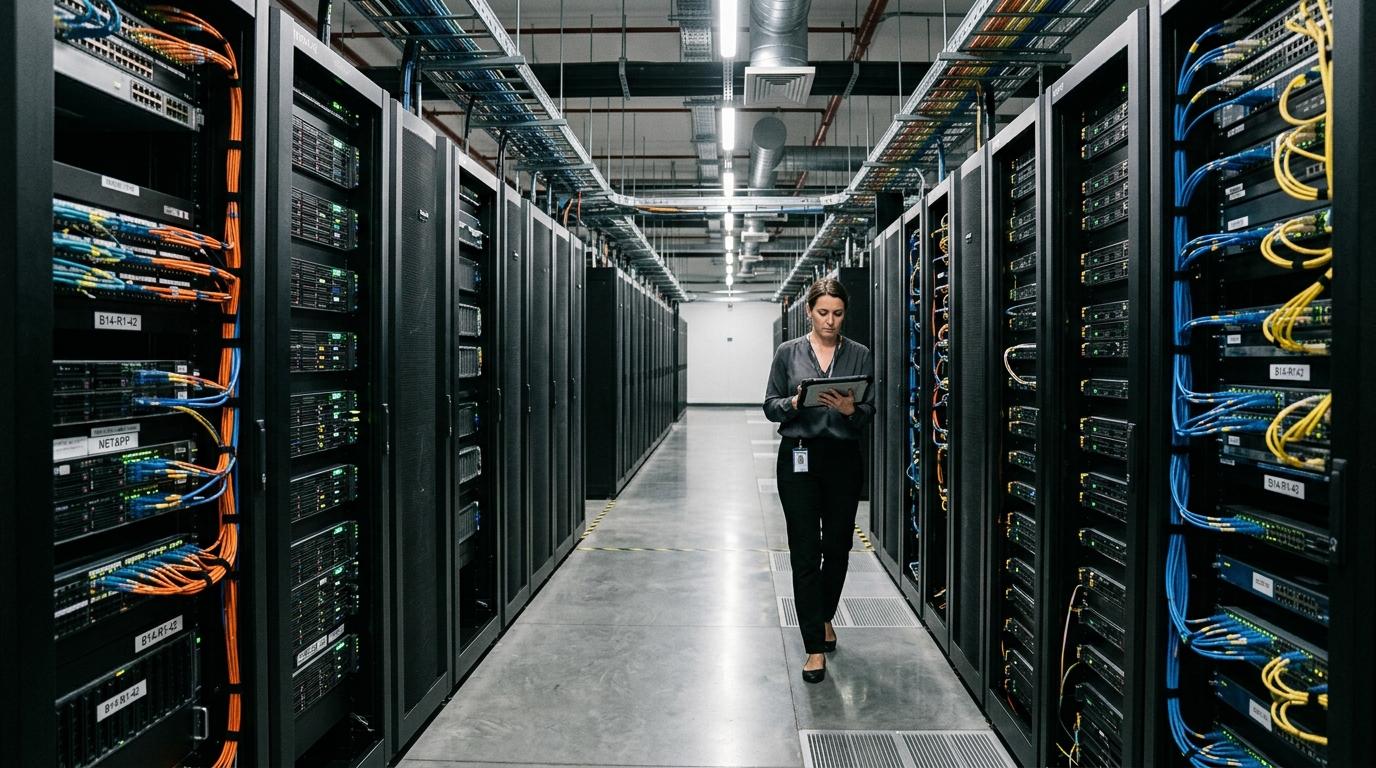
Microsoft (MSFT), Alphabet (GOOGL), and Amazon (AMZN) have collectively committed over 10 billion to AI infrastructure since early 2025, with an estimated
The foundational layers of this AI arms race are experiencing unprecedented demand and pricing power, starkly contrasting with the ROIC concerns among the hyper-scalers. SK Hynix, a pivotal supplier of High Bandwidth Memory (HBM), reported an impressive Q2 2026 operating profit margin of 18.7%, a staggering increase from 7.5% in the prior quarter, driven by HBM4 contract price increases averaging +22% quarter-over-quarter. Samsung Electronics also indicated robust demand for its HBM and advanced packaging solutions, projecting a 2026 capex of $45 billion, a +15% hike from 2025 levels, heavily skewed towards memory and foundry expansion. TSMC's 3nm and 2nm process nodes are operating at near-full capacity, with the company anticipating a +18% revenue growth for fiscal 2026, primarily from AI accelerator orders, benefiting companies like Nvidia (NVDA). Nvidia continues to command premium valuations, trading at a Forward P/E of 38.5x and an EV/EBITDA of 30.1x for 2027 estimates, as its Blackwell and Rubin platforms cement its market dominance, despite a slight dip in its 12-month forward P/E from 40.2x in June. Micron (MU) also benefits from the HBM upcycle, projecting a +25% increase in its DRAM average selling prices (ASPs) for Q3. The broader semiconductor market, as reflected by the SOX Semiconductor Index, has risen +16.3% year-to-date, outperforming the Nasdaq Futures (NQ=F) by 4.1% over the last month, indicating a clear rotation of institutional capital towards enablers over infrastructure consumers in the immediate term.
Quantitative analysis of options order flow reveals a telling divergence in market sentiment. For Microsoft (MSFT) and Alphabet (GOOGL), the 30-day implied volatility skew for out-of-the-money puts has increased by 1.8 percentage points over the past two weeks, suggesting growing investor demand for downside protection amidst ROIC concerns. Total put volume for MSFT has surged +14% compared to its 3-month average, with a notable concentration in the $480-$490 strike range for October 2026 expirations. This contrasts sharply with Nvidia (NVDA), which continues to show robust call buying activity, with its call-to-put volume ratio standing at 1.45 for front-month options, well above the historical average of 1.15, even as its shares recently rallied +1.8% after a brief consolidation. The KOSPI index, heavily influenced by Samsung and SK Hynix, has climbed +3.7% in September, reflecting strong foreign institutional net buying of .1 billion into Korean memory chip manufacturers over the past two weeks. The SOX Semiconductor Index's gamma exposure remains strongly positive, indicating sustained momentum and less sensitivity to broad market pullbacks, while Nasdaq Futures show a mixed picture, with daily volume exhibiting a mild negative correlation (-0.28) with the Big Tech capex headlines, suggesting a subtle, systemic sensitivity to capital efficiency narratives.
Tags: Memory Chips, SK Hynix, Semiconductors, Wall Street