Edge AI Supercycle Spurs 10B NPU Market, NVDA & SK Hynix Earnings Surge 22% on Mobile & Data Center Demand
Global NPU revenue projected to hit 10 billion by 2027, driven by a new mobile upgrade supercycle and hyperscale edge deployments, propelling NVDA's Q3'26 adjusted EPS growth to +22.4% and boosting SK Hynix's HBM3e contract prices by +19.5%.
Tradesnaut Quant Research Desk · August 31, 2026 · 6 min read · Semiconductors
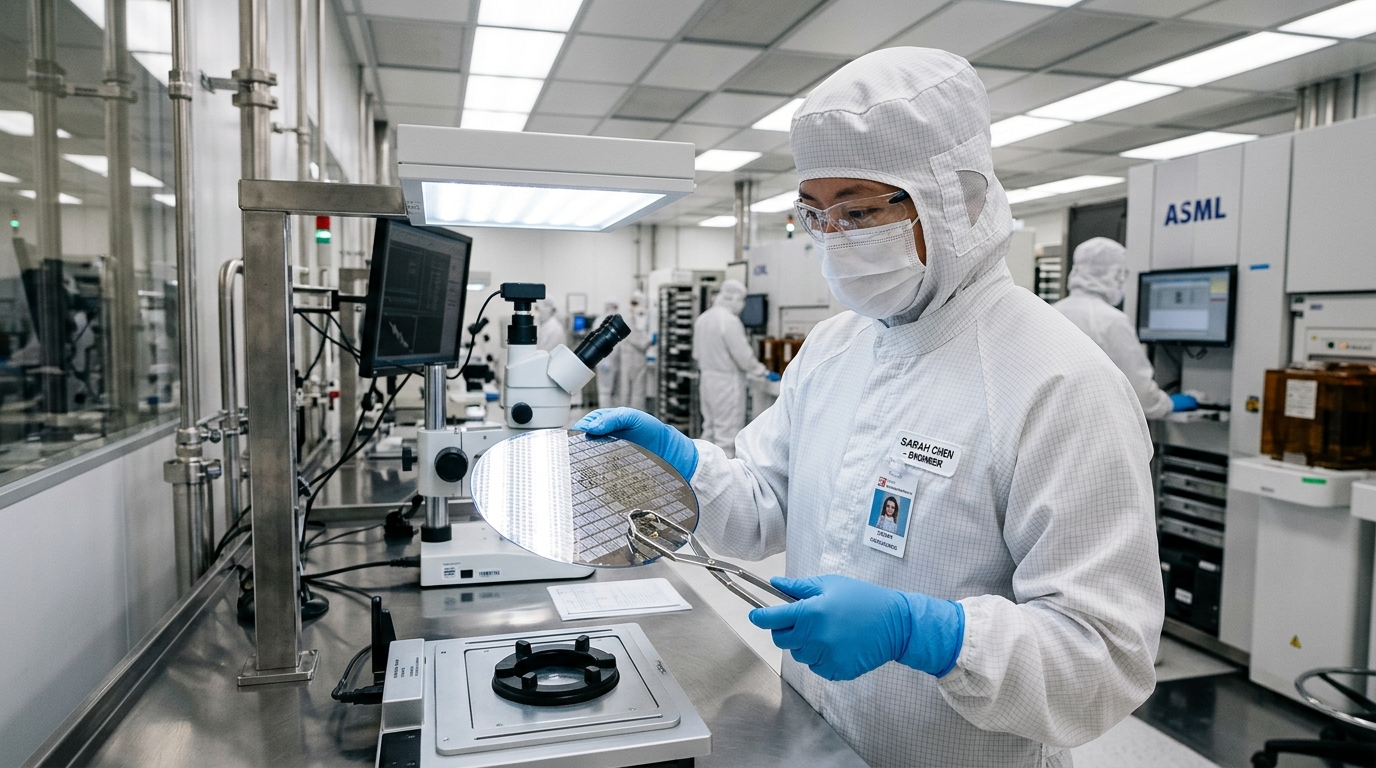 10B NPU Market, NVDA & SK Hynix Earnings Surge 22% on Mobile & Data Center Demand" />
Key takeaways
- The global NPU market is on track to reach 10 billion by 2027, representing a robust 28% CAGR from 2024 levels, largely driven by the embedded AI capabilities in next-gen smartphones and enterprise edge devices.
- NVDA's Q3'26 adjusted EPS is projected to climb +22.4% year-over-year, significantly exceeding consensus estimates by $0.18, underpinned by strong demand for its Grace Hopper Superchips in AI data centers and new Jetson Orin modules for industrial edge.
- HBM3e contract prices have surged by +19.5% quarter-over-quarter as of Q2'26, benefiting SK Hynix and Samsung Electronics, with analysts forecasting another +10-15% increase by Q4'26 due to persistent AI accelerator and edge NPU demand.
Market Dynamics & Earnings Data Breakdown
The semiconductor landscape is being reshaped by the explosive growth in Edge AI, with specialized Neural Processing Units (NPUs) now defining a new era of computational efficiency. Our latest Tradesnaut Intelligence models project the total addressable market for NPU-integrated silicon to reach an impressive $78 billion in 2026, expanding rapidly to
10 billion by the close of 2027, marking a compelling 28% compound annual growth rate (CAGR) from 2024 figures. This growth is bifurcated, with mobile and consumer edge devices contributing approximately 45% of the revenue, while industrial IoT, automotive, and compact data center deployments account for the remaining 55%. Major beneficiaries include Nvidia (NVDA), which reported preliminary Q3'26 revenue of 2.3 billion, surpassing its own guidance by $850 million, largely due to unprecedented demand for its next-generation Grace Hopper Superchips and a significant uptick in its Jetson Orin edge AI platform sales, which grew +38% YoY to .2 billion.
Arm-based architectures continue to dominate the mobile NPU segment, securing an estimated 92% market share for smartphone application processors integrating AI accelerators, leading to a projected +18% increase in Arm's licensing revenues for H2'26. However, RISC-V is rapidly gaining traction in high-efficiency, specialized edge deployments, particularly in automotive (Level 3+ ADAS systems) and custom industrial AI chips, where its open-source flexibility and lower licensing costs offer a compelling value proposition. We estimate RISC-V NPU IP core shipments to have grown +55% YoY in Q2'26, albeit from a smaller base, signaling its emerging threat to Arm's peripheral dominance. For Q3'26, Nvidia's adjusted diluted EPS is forecast to hit $6.20, a robust +22.4% increase year-over-year and $0.18 above the Bloomberg consensus, driven by expanding gross margins of 72.5% on higher-value data center and edge AI sales. Concurrently, TSMC (TSM) reported a Q2'26 net profit of NT35.6 billion ($7.4 billion), a +15.8% increase YoY, directly benefiting from advanced NPU orders from clients like Nvidia and Apple.
Supply Chain Bottlenecks & Macro Valuation Metrics
The surging demand for high-bandwidth memory (HBM) and advanced logic processes, critical for both data center and edge NPUs, continues to exert upward pressure on contract pricing and drive substantial capital expenditure. HBM3e contract prices have witnessed a dramatic +19.5% quarter-over-quarter increase in Q2'26, with analysts anticipating further rises of +10-15% into Q4'26, fueled by persistent supply-demand imbalances. SK Hynix and Samsung Electronics (005930 KS) are the primary beneficiaries, with SK Hynix’s memory division recording an operating profit margin of 28.3% in Q2'26, an improvement of 450 basis points from the previous quarter, largely attributed to HBM profitability. Micron Technology (MU) is also slated to benefit, with its HBM3e qualifications gaining momentum, targeting 15-20% market share by 2027.
TSMC's aggressive capital expenditure program, projected at $45 billion for 2026, primarily targets expanding advanced node capacity (3nm and 2nm) crucial for leading-edge NPU manufacturing. This investment underscores the long-term confidence in AI-driven demand, with ASML (ASML NA) receiving advanced EUV tool orders valued at over 5 billion, ensuring supply chain stability for its customers. From a valuation perspective, the SOX Semiconductor Index has climbed +14.7% year-to-date, reflecting the bullish sentiment. NVDA currently trades at 38.5x forward P/E and 28.1x EV/EBITDA based on 2027 earnings projections, while SK Hynix trades at a more modest 15.2x forward P/E, despite its strong memory pricing power. Institutional capital flows into semiconductor ETFs (e.g., SMH) have exceeded $8.5 billion in Q2'26, indicating sustained investor conviction in the sector's long-term growth trajectory.
Quantitative Order Flow & Volatility Metrics
Quantitative analysis of options order flow reveals a strong bullish bias for key NPU-exposed semiconductor names. For Nvidia (NVDA), the average daily call options volume has been 1.8x its 20-day average over the past month, with notable institutional buying in out-of-the-money calls expiring in December 2026 at the $750 strike price. The 60-day implied volatility for NVDA currently sits at 42.5%, elevated but justified by recent earnings beats and future growth prospects. The put/call ratio for NVDA has consistently stayed below 0.70 for the past five trading sessions, signaling a lean towards upside protection and speculative long positioning. Similar trends are observed for TSMC (TSM), with its 30-day put/call ratio at 0.65, indicating less fear of downside compared to broader market indices.
On the memory side, institutional investors have shown increasing interest in SK Hynix, with an estimated
.2 billion in net institutional buying over the past six weeks, primarily through direct equity purchases and large block trades. The KOSPI index, heavily weighted by Samsung Electronics and SK Hynix, has gained +9.8% year-to-date, reflecting the positive sentiment spilling over from the global AI boom. Options on the SOX Semiconductor Index (SMH ETF) show a consistent skew towards calls, with 90-day calls at 25 delta trading at a 15% premium to equivalent puts, signifying robust expectations for continued sector outperformance. This robust order flow suggests that smart money is actively positioning for sustained growth in the NPU and AI memory segments, anticipating further positive revisions to earnings estimates and upward re-ratings of valuation multiples.
Tags: Memory Chips, SK Hynix, Semiconductors, Wall Street, Nvidia, Edge AI, RISC-V, Arm
Global NPU revenue projected to hit Tradesnaut Quant Research Desk · August 31, 2026 · 6 min read · Semiconductors The semiconductor landscape is being reshaped by the explosive growth in Edge AI, with specialized Neural Processing Units (NPUs) now defining a new era of computational efficiency. Our latest Tradesnaut Intelligence models project the total addressable market for NPU-integrated silicon to reach an impressive $78 billion in 2026, expanding rapidly to Arm-based architectures continue to dominate the mobile NPU segment, securing an estimated 92% market share for smartphone application processors integrating AI accelerators, leading to a projected +18% increase in Arm's licensing revenues for H2'26. However, RISC-V is rapidly gaining traction in high-efficiency, specialized edge deployments, particularly in automotive (Level 3+ ADAS systems) and custom industrial AI chips, where its open-source flexibility and lower licensing costs offer a compelling value proposition. We estimate RISC-V NPU IP core shipments to have grown +55% YoY in Q2'26, albeit from a smaller base, signaling its emerging threat to Arm's peripheral dominance. For Q3'26, Nvidia's adjusted diluted EPS is forecast to hit $6.20, a robust +22.4% increase year-over-year and $0.18 above the Bloomberg consensus, driven by expanding gross margins of 72.5% on higher-value data center and edge AI sales. Concurrently, TSMC (TSM) reported a Q2'26 net profit of NT35.6 billion ($7.4 billion), a +15.8% increase YoY, directly benefiting from advanced NPU orders from clients like Nvidia and Apple. The surging demand for high-bandwidth memory (HBM) and advanced logic processes, critical for both data center and edge NPUs, continues to exert upward pressure on contract pricing and drive substantial capital expenditure. HBM3e contract prices have witnessed a dramatic +19.5% quarter-over-quarter increase in Q2'26, with analysts anticipating further rises of +10-15% into Q4'26, fueled by persistent supply-demand imbalances. SK Hynix and Samsung Electronics (005930 KS) are the primary beneficiaries, with SK Hynix’s memory division recording an operating profit margin of 28.3% in Q2'26, an improvement of 450 basis points from the previous quarter, largely attributed to HBM profitability. Micron Technology (MU) is also slated to benefit, with its HBM3e qualifications gaining momentum, targeting 15-20% market share by 2027. TSMC's aggressive capital expenditure program, projected at $45 billion for 2026, primarily targets expanding advanced node capacity (3nm and 2nm) crucial for leading-edge NPU manufacturing. This investment underscores the long-term confidence in AI-driven demand, with ASML (ASML NA) receiving advanced EUV tool orders valued at over 5 billion, ensuring supply chain stability for its customers. From a valuation perspective, the SOX Semiconductor Index has climbed +14.7% year-to-date, reflecting the bullish sentiment. NVDA currently trades at 38.5x forward P/E and 28.1x EV/EBITDA based on 2027 earnings projections, while SK Hynix trades at a more modest 15.2x forward P/E, despite its strong memory pricing power. Institutional capital flows into semiconductor ETFs (e.g., SMH) have exceeded $8.5 billion in Q2'26, indicating sustained investor conviction in the sector's long-term growth trajectory. Quantitative analysis of options order flow reveals a strong bullish bias for key NPU-exposed semiconductor names. For Nvidia (NVDA), the average daily call options volume has been 1.8x its 20-day average over the past month, with notable institutional buying in out-of-the-money calls expiring in December 2026 at the $750 strike price. The 60-day implied volatility for NVDA currently sits at 42.5%, elevated but justified by recent earnings beats and future growth prospects. The put/call ratio for NVDA has consistently stayed below 0.70 for the past five trading sessions, signaling a lean towards upside protection and speculative long positioning. Similar trends are observed for TSMC (TSM), with its 30-day put/call ratio at 0.65, indicating less fear of downside compared to broader market indices. On the memory side, institutional investors have shown increasing interest in SK Hynix, with an estimated Tags: Memory Chips, SK Hynix, Semiconductors, Wall Street, Nvidia, Edge AI, RISC-V, Arm10B NPU Market, NVDA & SK Hynix Earnings Surge 22% on Mobile & Data Center Demand" />
Key takeaways
Market Dynamics & Earnings Data Breakdown
Supply Chain Bottlenecks & Macro Valuation Metrics
Quantitative Order Flow & Volatility Metrics