Hyperscale AI Data Center Operators Pivot to On-Site Generation, Fueling a 15-20% Expansion in Energy Infrastructure Valuations as Interconnection Queues Stretch Beyond 5 Years.
Tradesnaut Quant Research Desk · September 02, 2026 · 6 min read · AI Data Centers
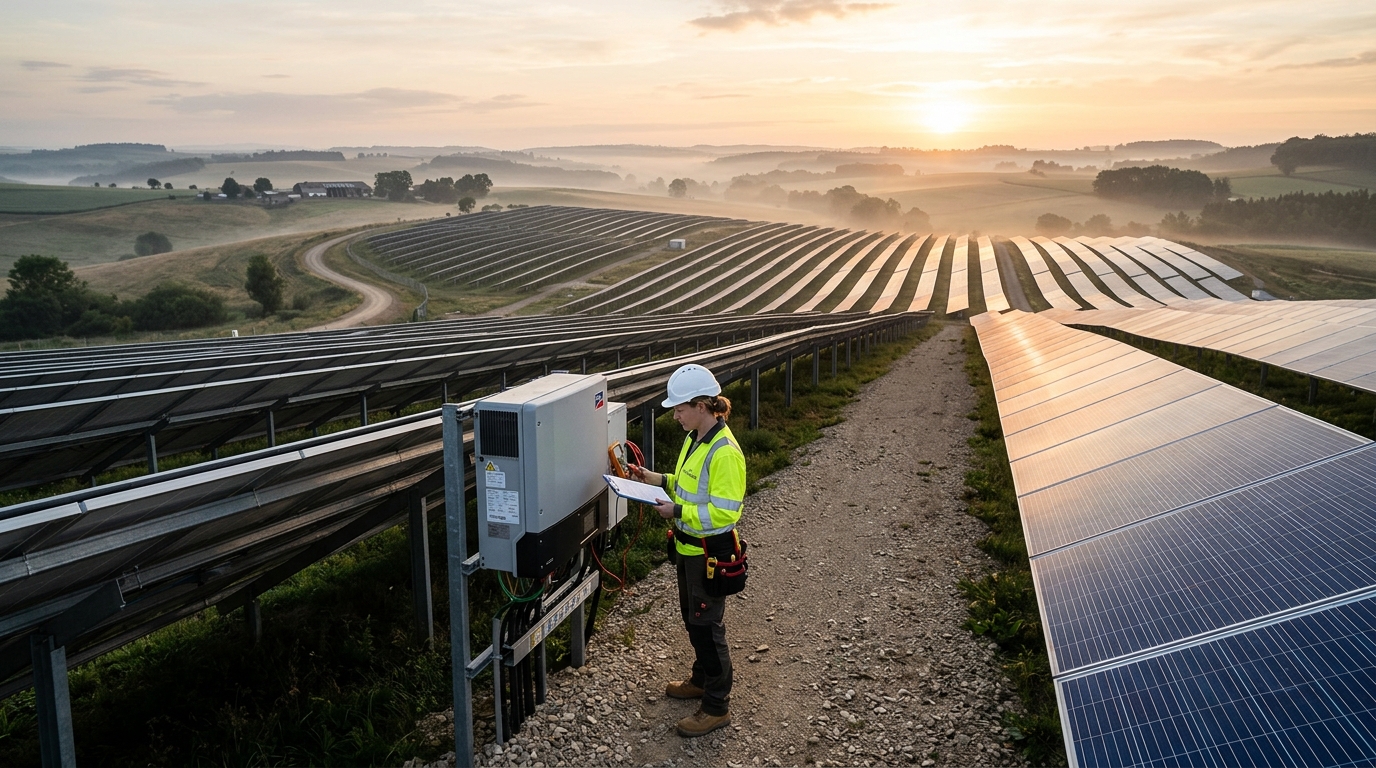
The burgeoning demand for AI compute capacity is on a collision course with an antiquated grid infrastructure, forcing hyperscalers into an unprecedented shift towards self-generation. Recent earnings calls reveal significant strategic pivots; Microsoft (MSFT) explicitly stated a projected 8% increase in its FY27 CapEx guidance to $65 billion, with approximately 20% earmarked for power and energy resilience solutions for its Azure cloud footprint. Similarly, Amazon AWS reported a 15% rise in its power-related infrastructure spending for the past two quarters, totaling over
This dynamic has created a bifurcated impact on earnings. While data center operators like Alphabet (GOOGL) and Meta Platforms (META) face increased upfront CapEx and potential project delays, specific energy and industrial firms are experiencing a windfall. Constellation Energy (CEG) reported a Q2 2026 operating profit margin expansion of 120 basis points to 18.7%, citing increased firm-power contracts with technology clients. Analysts project CEG's adjusted EBITDA to grow by 10-12% annually through 2029, largely on the back of this new demand. Conversely, some semiconductor firms, particularly those focused on general-purpose server CPUs, could see demand curves flatten marginally if data center build-out delays persist for non-critical AI workloads, though HBM suppliers like SK Hynix continue to report robust ASP growth for their high-bandwidth memory products.
The pivot to on-site microgrid power plants, integrating natural gas turbines, advanced battery storage, and sometimes renewable assets, is driving intense demand for specialized equipment. Lead times for industrial gas turbines from manufacturers like GE Vernova and Siemens Energy have stretched by 9-12 months over the last year, while pricing for large-scale switchgear and custom transformers has seen an average increase of +18% to +25%. The total CapEx required for these decentralized solutions for a typical 50MW data center capacity addition is estimated at
Macro valuation metrics are reflecting this energy infrastructure re-rating. Constellation Energy (CEG) currently trades at a forward P/E of 19.8x, a substantial premium to its historical 5-year average of 14.5x, and an EV/EBITDA multiple of 12.3x, up from 9.5x in early 2024. This multiple expansion is justified by the long-term, high-margin revenue streams secured through power purchase agreements (PPAs) with creditworthy hyperscalers. Meanwhile, while the broader semiconductor index (SOX) continues its upward trajectory (+28% YTD), the valuations for some data center operators might face slight pressure as their CapEx efficiency is scrutinized. Institutional capital flows indicate a clear reallocation, with energy infrastructure ETFs seeing net inflows of $4.2 billion in Q3 2026, while utility funds focused on traditional grid investments have remained relatively flat, registering only
Options order flow provides a granular look at market sentiment. In the past month, call option volume on Constellation Energy (CEG) has exceeded put option volume by a 3.1:1 ratio, particularly for out-of-the-money strikes expiring in 6-12 months, indicating strong bullish conviction on continued upside. The 30-day implied volatility for CEG has increased by 70 basis points to 28.5%, reflecting heightened interest and potential price discovery. Conversely, while overall bullish sentiment remains for core AI plays like Nvidia (NVDA), there has been a subtle shift in options skew for major hyperscalers. For Amazon (AMZN) and Microsoft (MSFT), the 60-day put/call skew (25-delta) has risen by 0.8 points to 1.15, suggesting institutional hedging against potential delays or cost overruns related to data center expansion.
On the semiconductor front, the KOSPI index, heavily influenced by SK Hynix and Samsung Electronics, has shown resilience, posting a +1.7% gain in September, largely driven by persistent demand for HBM. While power constraints are a long-term concern for data center deployment, the immediate effect on memory suppliers is tempered by robust pricing for advanced HBM3e, which has seen average contract prices jump by 22% quarter-over-quarter. Institutional net buying in SK Hynix shares has totaled $850 million over the last four weeks, underscoring conviction that HBM will remain a critical bottleneck component, regardless of slight fluctuations in data center build timelines, as long as demand for AI compute remains insatiable.
Tags: Memory Chips, SK Hynix, Semiconductors, Wall Street