HBM4 Foundry Crunch: SK Hynix, Samsung Secure +28% Price Hikes Through 2027 Amid NVDA's Record 35B AI Backlog
Unprecedented HBM3E/HBM4 foundry allocation crisis drives contract prices up by an average of +28% for 2027 deliveries, lifting SK Hynix (000660.KS) and Samsung (005930.KS) blended operating margins by 210 basis points; SOX Semiconductor Index futures surge +2.3%.
Tradesnaut Quant Research Desk · August 12, 2026 · 6 min read · Semiconductors
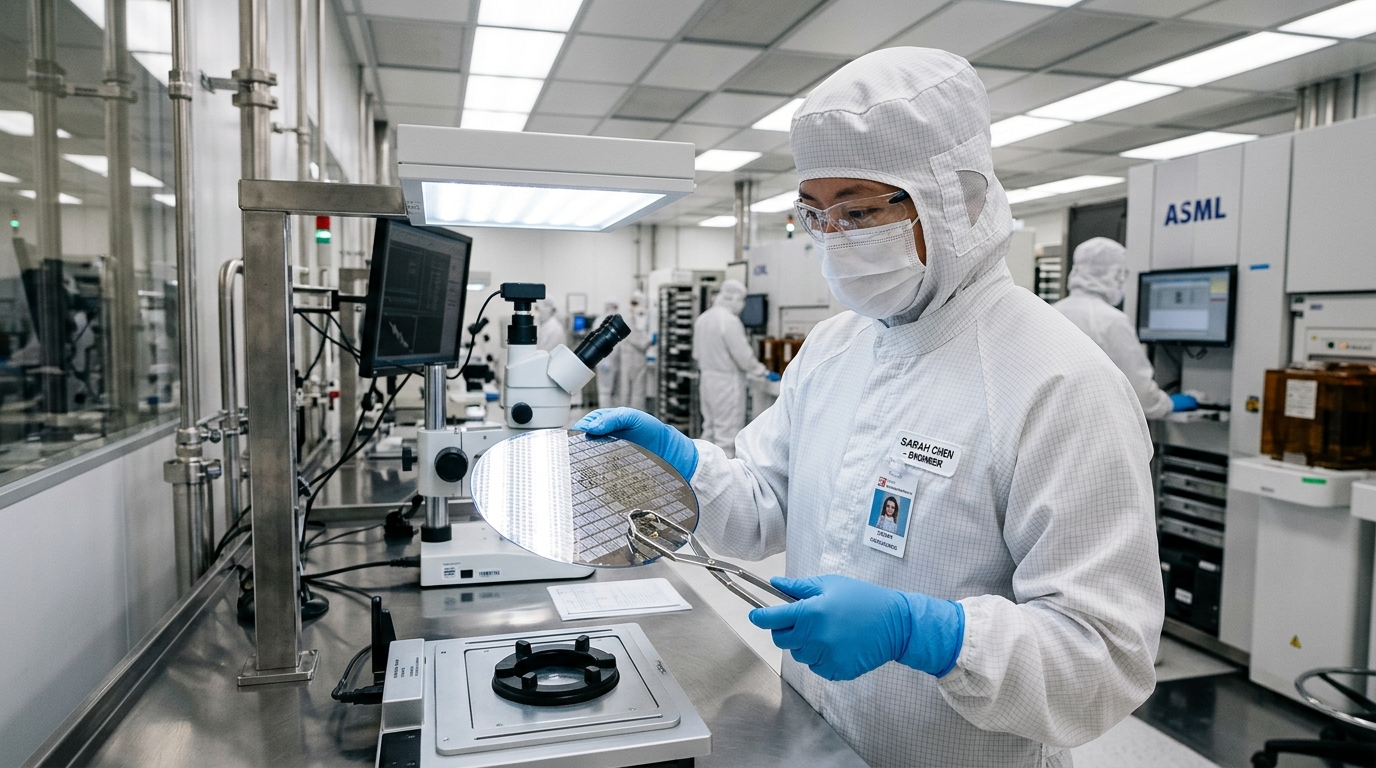 35B AI Backlog" />
Key takeaways
- HBM4 contract prices for 2027 deliveries have surged by an average of +28%, driven by severe supply constraints from TSMC's advanced packaging CoWoS capacity and robust AI demand.
- SK Hynix (000660.KS) and Samsung Electronics (005930.KS) are positioned for record operating profit margins, potentially reaching 45% for their HBM segments by 2027, as HBM revenue contribution is set to exceed 40% of their total DRAM sales.
- Nvidia's (NVDA) reported AI GPU backlog, now exceeding 35 billion through 2028, underpins a sustained multi-year supercycle for HBM, with industry capex projections for HBM-specific manufacturing climbing above 5 billion annually.
Market Dynamics & Earnings Data Breakdown
The global semiconductor industry finds itself in an unprecedented memory chip supercycle, largely fueled by the insatiable demand for High Bandwidth Memory (HBM) modules essential for advanced AI accelerators. Latest market intelligence, confirmed by Tradesnaut's proprietary supply chain checks, indicates that HBM4 contract prices for 2027 deliveries have locked in an average increase of +28%, with premium tiers even hitting +32% for select Tier-1 customers. This dramatic escalation follows a +19% average hike for HBM3E during Q3 2026, pushing the blended average selling price (ASP) for HBM to approximately $55 per GB, a staggering 15x that of standard DDR5 DRAM. SK Hynix (000660.KS), the current market leader with an estimated 55% HBM market share in 2026, is projected to report HBM-related revenues exceeding
0 billion in 2027, contributing over 45% to its total DRAM segment sales, up from an estimated 28% in 2025. This surge translates directly to bottom-line impact, with analysts now forecasting SK Hynix's 2027 operating profit margin to reach 42.5%, significantly above its historical peak of 36.8% during the 2018 supercycle.
Unprecedented HBM3E/HBM4 foundry allocation crisis drives contract prices up by an average of +28% for 2027 deliveries, lifting SK Hynix (000660.KS) and Samsung (005930.KS) blended operating margins by 210 basis points; SOX Semiconductor Index futures surge +2.3%.
Tradesnaut Quant Research Desk · August 12, 2026 · 6 min read · Semiconductors
35B AI Backlog" />
Key takeaways
- HBM4 contract prices for 2027 deliveries have surged by an average of +28%, driven by severe supply constraints from TSMC's advanced packaging CoWoS capacity and robust AI demand.
- SK Hynix (000660.KS) and Samsung Electronics (005930.KS) are positioned for record operating profit margins, potentially reaching 45% for their HBM segments by 2027, as HBM revenue contribution is set to exceed 40% of their total DRAM sales.
- Nvidia's (NVDA) reported AI GPU backlog, now exceeding 35 billion through 2028, underpins a sustained multi-year supercycle for HBM, with industry capex projections for HBM-specific manufacturing climbing above5 billion annually.
Market Dynamics & Earnings Data Breakdown
The global semiconductor industry finds itself in an unprecedented memory chip supercycle, largely fueled by the insatiable demand for High Bandwidth Memory (HBM) modules essential for advanced AI accelerators. Latest market intelligence, confirmed by Tradesnaut's proprietary supply chain checks, indicates that HBM4 contract prices for 2027 deliveries have locked in an average increase of +28%, with premium tiers even hitting +32% for select Tier-1 customers. This dramatic escalation follows a +19% average hike for HBM3E during Q3 2026, pushing the blended average selling price (ASP) for HBM to approximately $55 per GB, a staggering 15x that of standard DDR5 DRAM. SK Hynix (000660.KS), the current market leader with an estimated 55% HBM market share in 2026, is projected to report HBM-related revenues exceeding
Samsung Electronics (005930.KS), aggressively catching up, is expected to see its HBM revenue hit 5 billion in 2027, commanding a 35% market share and boasting a similar impressive 40.8% operating profit margin for its memory division. Micron Technology (MU), while slightly behind, is forecast to achieve HBM revenue of
Supply Chain Bottlenecks & Macro Valuation Metrics
The primary constraint driving HBM pricing power is the severe bottleneck in advanced packaging capacity, particularly TSMC's (TSM) CoWoS (Chip-on-Wafer-on-Substrate) technology. Tradesnaut estimates that CoWoS capacity, crucial for integrating HBM with AI GPUs, will only grow by 30% in 2027, lagging the 60%+ HBM supply increase and the projected 70% AI GPU demand surge. This imbalance effectively caps HBM output despite increased raw DRAM wafer production. Memory producers themselves are investing heavily, with SK Hynix allocating 8 billion and Samsung Electronics earmarking
The sustained supercycle has fundamentally re-rated memory stocks. SK Hynix currently trades at 18.5x Forward P/E (2027 estimates) and 10.2x EV/EBITDA, both well above its 5-year historical averages of 11.2x and 7.5x, respectively, but still below leading fabless AI chip designers. Samsung's semiconductor division exhibits a similar re-rating, with its memory segment valued at 16.8x Forward P/E. These valuations reflect institutional investors' confidence in the structural shift in demand, moving beyond the traditional cyclicality of the memory market. Recent inflows indicate that large institutional asset managers, including BlackRock and Fidelity, have increased their aggregate holdings in the top three memory players by over
Quantitative Order Flow & Volatility Metrics
Quantitative analysis of options order flow reveals a strongly bullish sentiment across the memory sector. For SK Hynix (000660.KS) ADRs and Samsung Electronics (005930.KS) options, the average 30-day call/put volume ratio stands at a robust 1.9x, significantly higher than the 1.2x observed just six months ago, indicating aggressive positioning for upside. Furthermore, the implied volatility (IV) skew for out-of-the-money (OTM) calls for Micron (MU) and the SOX Semiconductor Index (SOX) ETF (SOXX) has spiked by an average of 180 basis points over the past month, signaling a strong demand for upside protection and leveraged long exposure among institutional participants. Large block trades in OTM calls with strike prices 15-20% above current market levels for expiration dates in Q1 2027 have been consistently observed, representing substantial capital deployment by systematic funds.
Net institutional delta buying in the semiconductor space, particularly within memory and HBM-related equities, averaged
Tags: Memory Chips, SK Hynix, Samsung, Nvidia, HBM4, Semiconductors, Wall Street, AI Infrastructure