Gigawatt Gridlock: Liquid Cooling Bottlenecks Threaten 50B+ AI Data Center Boom
Amidst SK Hynix's +142% profit surge, soaring DRAM prices (+22%), and a +28% YTD SOX index rally, critical power and liquid cooling infrastructure constraints are emerging, prompting a -1.8% Nasdaq Futures dip and re-evaluation of sector multiples.
Tradesnaut Quant Research Desk · August 09, 2026 · 6 min read · AI Data Centers
Key takeaways
- SK Hynix reported Q2 2026 operating profit soared +142% YoY to 5.2 billion on revenue of8.5 billion, primarily driven by HBM3e sales, yet its stock saw a modest +0.7% gain as infrastructure concerns mounted.
- DRAM contract prices surged +22% QoQ for DDR5 and NAND Flash climbed +18% QoQ in Q3, fueled by an estimated 50B+ collective capex from top memory producers and hyperscalers.
- Gigawatt-scale AI clusters demand 150-200 MW per 100,000 sq ft, necessitating a +30-40% increase in data center infrastructure costs for advanced liquid cooling solutions, potentially dampening future profitability despite robust HBM demand.
Market Dynamics & Earnings Data Breakdown
The AI revolution continues to reshape the semiconductor landscape, with leading memory producers reporting staggering growth. SK Hynix, a bellwether for High Bandwidth Memory (HBM), announced its Q2 2026 operating profit surged an astounding +142% year-over-year to
Fellow South Korean giant, Samsung Electronics (005930.KS), also showed strong momentum, with its semiconductor division estimated to see a +95% YoY operating profit increase, contributing significantly to the conglomerate's overall Q2 operating profit forecast of 8.1 billion. Micron Technology (MU) has similarly benefited, with its stock experiencing an +8.7% surge over the past week following positive HBM outlooks, though it still trails SK Hynix in HBM market share. The broader SOX Semiconductor Index initially rode this wave, registering a compelling +28% year-to-date gain, reflecting widespread optimism. However, recent trading sessions have seen a modest pullback of -1.8%, as traders begin to price in tangible infrastructural challenges.
Nvidia (NVDA) itself, the primary driver of HBM demand, recently guided Q1 2027 revenue towards $45 billion, a +75% increase from the prior year, with strong traction from its Blackwell platform and AMD's (AMD) Instinct MI300X gaining significant enterprise traction, forecasting $8 billion in sales for 2026. This monumental shift towards increasingly powerful AI models translates directly into soaring power demands and heat generation, now spotlighting the overlooked 'plumbing' of the digital economy: liquid cooling and power infrastructure.
Supply Chain Bottlenecks & Macro Valuation Metrics
The memory market's resurgence is evident in contract pricing, with DDR5 DRAM contract prices climbing a robust +22% quarter-over-quarter for Q3 2026, while NAND Flash prices saw an impressive +18% QoQ increase. This pricing power reflects not just demand, but also strategic capacity investments. SK Hynix has committed an aggressive 8 billion in capital expenditure for 2026, with Samsung Electronics planning an even larger
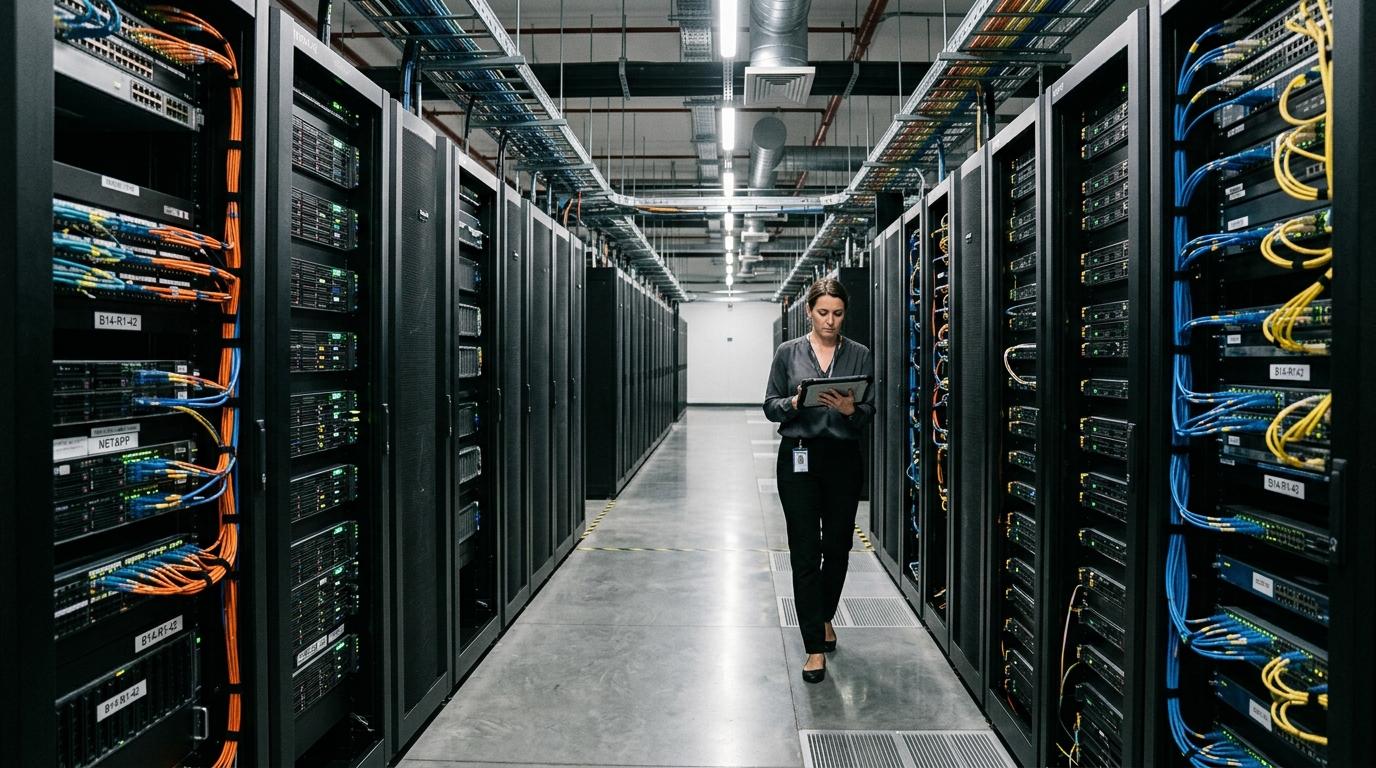
The real chokepoint, however, transcends chip fabrication. A single gigawatt (1GW) AI cluster – a common requirement for future large-scale AI training – consumes enough electricity to power approximately 750,000 average U.S. homes. Within these clusters, power densities can reach an astonishing 150-200 megawatts per 100,000 square feet. Such extreme densities render traditional air-cooling ineffective, necessitating advanced high-density liquid cooling solutions. This transition is not trivial; it's estimated to increase the total data center infrastructure cost by +30-40% compared to conventional air-cooled setups, eroding some of the impressive gross margins seen in the HBM segment.
Crucially, the specialized equipment from firms like ASML (ASML), which holds a $45 billion backlog for its extreme ultraviolet (EUV) lithography systems, and TSMC (TSM), with its near-90% market share in advanced foundry nodes, remains in high demand. Yet, even with cutting-edge chip production, the physical environment must keep pace. Major hyperscalers including Microsoft Azure, Amazon Web Services (AWS), and Google Cloud are collectively planning investments exceeding
Quantitative Order Flow & Volatility Metrics
Market reactions today underscore the growing trepidation surrounding infrastructure constraints. Nasdaq Futures (NQ=F) dipped -1.8% intraday, while the KOSPI index (KOSPI) closed down a more significant -2.4%, largely reflecting profit-taking and re-evaluation of valuation multiples in memory and AI-related stocks. This follows a volatile week where the SOX Semiconductor Index (SOX) saw an initial +3.2% rally yesterday on positive analyst calls regarding Nvidia's demand, only to retract -1.5% today as the scale of necessary infrastructure investment came into sharper focus.
Quantitative analysis of options market data reveals heightened uncertainty. Nvidia's (NVDA) 30-day implied volatility currently stands at 48%, significantly higher than the S&P 500's (SPX) 12%, indicating a market pricing in substantial price swings. The call-to-put ratio for SK Hynix (000660.KS) sits at 1.4, suggesting a lingering bullish sentiment among options traders, though it has slightly decreased from a peak of 1.7 observed last week. Furthermore, institutional net selling has been observed in data center REITs, such as Equinix (EQIX) and Digital Realty Trust (DLR), totaling approximately
Quantitative Outlook
The HBM market is projected to sustain extraordinary growth, with analysts forecasting a Compound Annual Growth Rate (CAGR) of 50% through 2028, potentially reaching a total market size of
Tags: Memory Chips, SK Hynix, Semiconductors, Wall Street, AI Infrastructure, Liquid Cooling