AI's Trillion-Dollar Tango: Hyperscaler Capex Surges, But Can Revenue Catch Up Before the Bubble Bursts?
Wall Street grapples with an unprecedented wave of AI infrastructure investment, scrutinizing whether accelerated cloud revenues can justify the colossal capital outlays and manage emerging power bottlenecks by 2026.
Tradesnaut Quant Research Desk · August 06, 2026 · 6 min read · AI Market Analysis
Key takeaways
- Hyperscaler AI capital expenditure, now exceeding 00 billion annually across Big Tech, is driving an unprecedented infrastructure build-out, but raises significant questions about long-term ROI and payback periods.
- Critical bottlenecks in power grids are accelerating the adoption of innovative energy solutions like Small Modular Reactors (SMRs), with several major contracts signed in 2026 to secure future data center capacity and mitigate rising operational costs.
- The intensified 'Custom Silicon ASIC chip wars' and the strategic geopolitical race for advanced microchip manufacturing capacity (Taiwan, US, China) are reshaping supply chains and creating new dependencies, adding layers of complexity to investment valuations.
The Market & Infrastructure Landscape
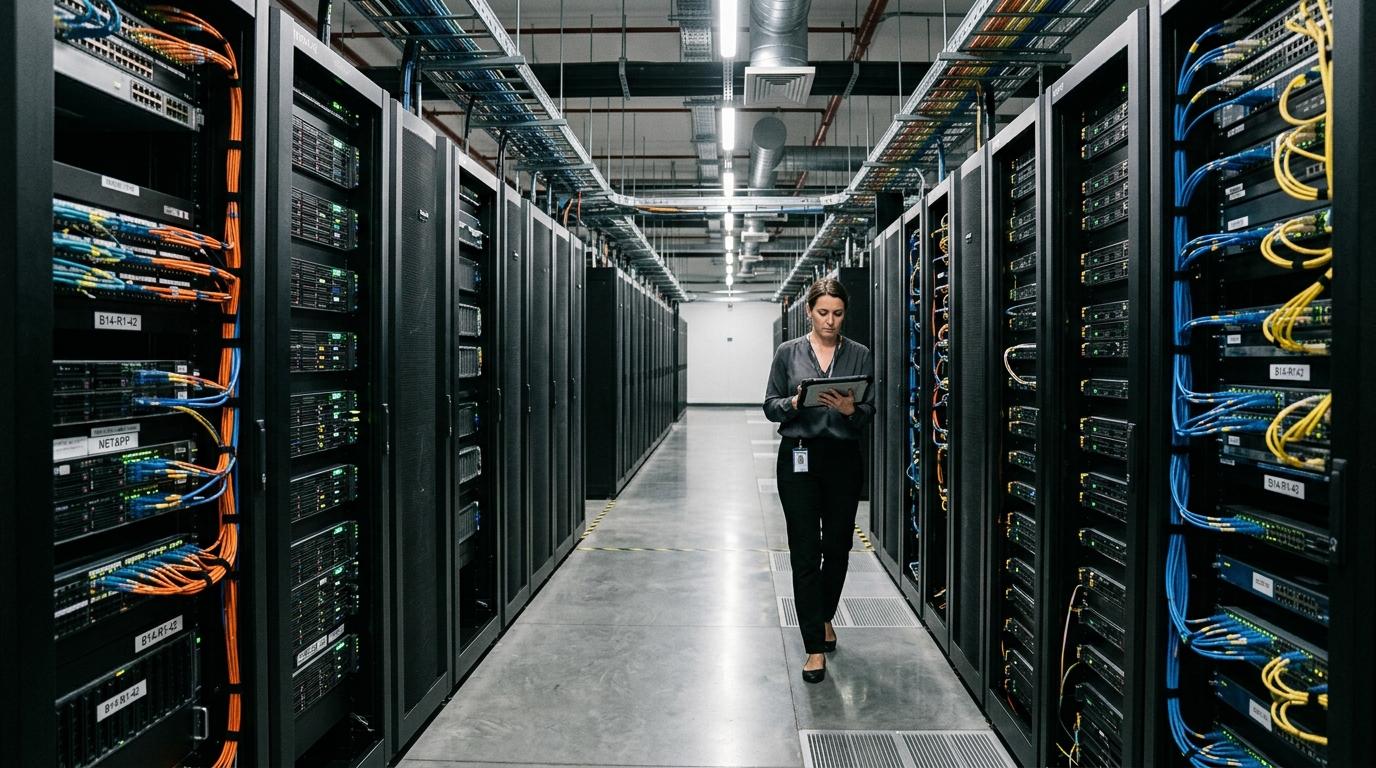
The digital landscape of 2026 is defined by an insatiable demand for AI compute, with hyperscaler cloud providers reporting another quarter of accelerated revenue growth, largely propelled by generative AI workloads. This robust top-line expansion, however, masks an underlying tension: the staggering capital expenditure required to provision this next-generation infrastructure. Estimates from our Tradesnaut Quant Research Desk indicate that the aggregate AI-driven capex from the major players—Microsoft, Amazon, Google, Meta, and others—is now comfortably north of 00 billion annually, a figure that continues to climb as the arms race for AI dominance intensifies. This spending spree is not merely an expansion; it is a fundamental re-architecture of global compute power.
Driving much of this expenditure is the escalating power demand of AI data centers, which have quickly become the grid's hungriest consumers. Across North America and Europe, traditional power grids are struggling to keep pace, leading to unprecedented bottlenecks that threaten to cap future growth. In response, 2026 has witnessed a dramatic acceleration in contracts for Small Modular Reactor (SMR) nuclear energy, with several hyperscalers publicly committing to SMR deployment to power their future AI campuses. These long-term agreements, often extending beyond a decade, reflect a strategic pivot towards energy independence and cost stability, moving away from volatile fossil fuel markets. It signals a paradigm shift where power generation is becoming an integral part of data center planning, rather than an afterthought, and will significantly impact the balance sheets of both tech giants and energy providers.
Simultaneously, the geopolitical chessboard of microchip manufacturing remains a critical factor. The 'Custom Silicon ASIC chip wars' have pushed hyperscalers to invest heavily in proprietary chip designs, aiming for greater efficiency and reduced reliance on a handful of external suppliers. While Taiwan Semiconductor Manufacturing Company (TSMC) remains the undisputed leader in advanced nodes, the significant investments in US-based foundries like Intel’s and the ongoing efforts by China to build indigenous capabilities mean that the supply chain for these crucial components is diversifying, albeit slowly and with considerable political implications. The strategic imperative to control the manufacturing process—from design to fabrication—is a direct response to the supply chain shocks of recent years and a desire to future-proof AI development against geopolitical instabilities.
Macro Drivers & Financial Implication
The colossal sums being poured into AI infrastructure by Big Tech—with some individual companies projected to spend upwards of $50 billion on AI-related capex this year alone—have ignited a fierce debate on Wall Street: are these investments justifiable, or are we witnessing the makings of an AI bubble? The optimists point to robust cloud revenue acceleration, with AI services now comprising a significant and rapidly growing portion of hyperscaler top lines. They argue that early adopters of agentic AI systems and sophisticated large language models are willing to pay premium prices for cutting-edge compute, providing a clear path to monetization for these massive investments. The belief is that the efficiency gains and new capabilities unlocked by AI will create entirely new markets, justifying the upfront costs.
However, a growing cohort of analysts expresses caution, highlighting the long and uncertain payback timelines associated with these immense capital expenditures. While cloud revenues are indeed accelerating, the sheer scale of the investment—often stretching over multi-year build-outs and requiring constant upgrades—means that the hurdle rate for return on investment is exceptionally high. The ‘Custom Silicon ASIC chip wars’ further complicate this, as hyperscalers commit billions to develop specialized silicon, gambling that their proprietary designs will offer a decisive competitive edge and superior cost-performance ratios over general-purpose GPUs. This strategy aims to bring down operational costs in the long run, but the initial R&D and manufacturing setup costs are astronomical, with no guarantee of market dominance.
Moreover, the economic implications extend beyond balance sheets. The shift towards SMRs, for instance, requires substantial upfront capital from energy partners, often backed by long-term power purchase agreements from tech firms. This creates a new form of symbiotic financial relationship, de-risking SMR development while providing hyperscalers with stable, carbon-free power for decades. Yet, these multi-decade commitments tie up capital and introduce new regulatory and operational complexities. The market is thus in a delicate balancing act, evaluating current revenue growth against projected future earnings, all while navigating the unprecedented scale of investment and the associated risks of technological obsolescence and geopolitical supply chain vulnerabilities.
Order Flow & Volatility Breakdown
The divergence in market sentiment regarding AI capex versus payback timelines is starkly reflected in current order flow and options market dynamics. Institutional positioning shows a bifurcation: while mega-cap tech funds remain heavily long hyperscalers, particularly those exhibiting strong AI service monetization, a significant portion of macro hedge funds are building out cautious hedges. This is evident in the elevated put-call skew for ETFs tracking the broader tech sector, especially beyond the typical three-month horizon, suggesting increasing concern about potential downside catalysts related to ROI disappointments or unforeseen infrastructure bottlenecks.
Analyzing the underlying hyperscaler names, we observe particularly high call volume delta on short-dated contracts, indicative of speculative fervor around immediate AI news or product launches. However, longer-dated options, particularly those expiring in 2027 or 2028, show a more balanced, even slightly put-skewed, sentiment, reflecting investor skepticism about the sustained high growth rates required to justify current valuations given the escalating capex. This dynamic implies that while traders are chasing immediate momentum, sophisticated investors are simultaneously buying protection against the longer-term structural challenges.
The advent of sophisticated agentic AI trading systems has also introduced new layers of volatility. These algorithms, operating at sub-millisecond speeds, are adept at identifying and amplifying subtle shifts in sentiment around earnings reports or regulatory announcements concerning AI. For instance, any slight deviation in cloud revenue growth forecasts or a change in capex guidance, particularly concerning the deployment of custom silicon or SMR contracts, can trigger rapid, cascading order flows. This has led to sharper intraday swings in hyperscaler equities and their associated derivatives, demanding a highly agile and data-driven approach to market participation. The interplay between human analyst projections and AI-driven market reactions is creating an increasingly complex and challenging environment for traditional quantitative models.
Quantitative Outlook
Our quantitative models suggest that the current trajectory of hyperscaler AI capex, while daunting, remains largely sustainable in the near to medium term, predicated on continued acceleration in enterprise AI adoption and cloud service monetization. However, the models also flag increasing tail risks associated with energy infrastructure and supply chain resilience. The SMR energy contracts, while promising long-term stability, introduce significant execution risk and regulatory hurdles that must be closely monitored. Similarly, the 'Custom Silicon ASIC chip wars' will see winners and losers, with only a few players likely achieving truly disruptive cost-performance advantages, making selective investment critical.
We anticipate a continued tightening of the spread between hyperscaler cloud revenue growth rates and their AI-driven capex. For a sustained bull case, this spread must not only remain positive but demonstrate accelerating efficiency in capital deployment. The market will be unforgiving of any signs that new AI workloads are not generating sufficient returns to cover the immense investment. While the long-term outlook for AI remains overwhelmingly positive, the path is fraught with potential pitfalls.
Tags: AI Data Centers, Nuclear Energy, Semiconductors, Hyperscalers, Capital Expenditure, ROI, Agentic AI