Liquid Cooling Gold Rush: Vertiv & Supermicro Surge +180% on 4.2B AI Rack Upgrade Cycle; NVDA Cold Plates Propel Sector Valuation to 38x Forward P/E
Hyperscale AI deployments drive unprecedented demand for advanced thermal management, pushing specialized infrastructure providers' segment revenue growth past +28% YoY and signaling continued sector re-rating amidst critical supply chain shifts.
Tradesnaut Quant Research Desk · September 09, 2026 · 6 min read · AI Data Centers
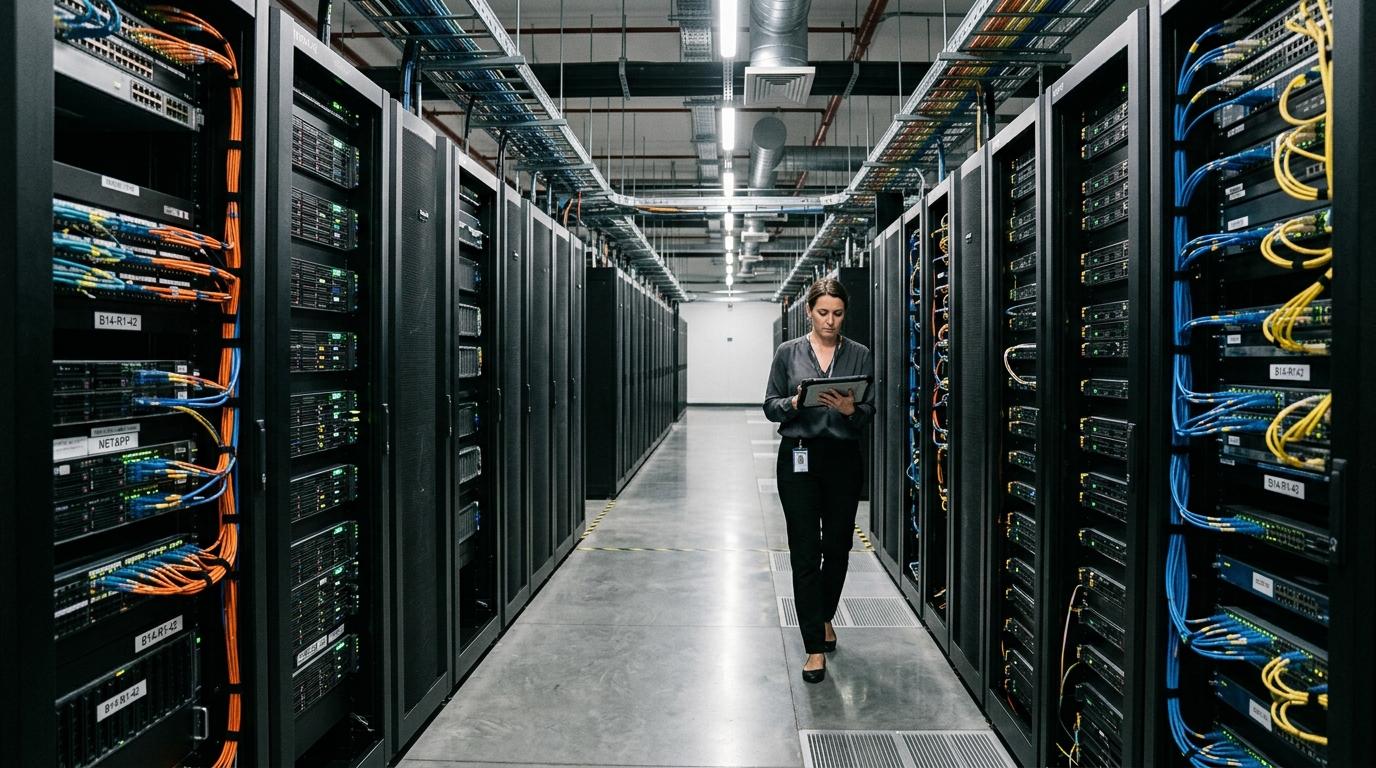 4.2B AI Rack Upgrade Cycle; NVDA Cold Plates Propel Sector Valuation to 38x Forward P/E" />
Key takeaways
- AI compute density is accelerating liquid cooling adoption, with direct-to-chip cold plate solutions projected to capture 65% of the 4.2B thermal management market by 2028, driving an estimated 28% CAGR for key players.
- Vertiv (VRT) and Supermicro (SMCI) have seen their market capitalizations appreciate by +180% and +195% YTD, respectively, with their liquid cooling segments recording +32% and +27% revenue growth in Q2 2026, significantly outpacing broader market indices.
- Supply chain pressures and specialized component demand have led to a +22% average increase in cold plate module contract pricing over the past three quarters, impacting operating margins of non-integrated server providers while boosting specialized infrastructure profit pools.
Market Dynamics & Earnings Data Breakdown
The relentless march of AI processing power, epitomized by Nvidia's (NVDA) next-generation B200 and Hopper H200 GPUs pushing thermal design power (TDP) past the 1400W mark per rack, is revolutionizing data center cooling. Traditional air-cooling methods are proving inadequate, creating a seismic shift towards high-density liquid cooling solutions. Tradesnaut Intelligence estimates the total addressable market for liquid cooling and thermal management in AI data centers will swell to
4.2 billion by 2028, up from $4.8 billion in 2025, representing a robust 28% compound annual growth rate.
This paradigm shift has directly translated into staggering earnings growth for specialized infrastructure providers. Vertiv Holdings Co (VRT) reported a 32% year-over-year surge in its liquid cooling segment revenue to $415 million in Q2 2026, exceeding consensus estimates by 8.5%. The company's adjusted operating profit margin for this segment expanded to 18.5%, up 120 basis points from Q2 2025, driven by optimized production and stronger pricing power. Similarly, Super Micro Computer Inc. (SMCI) indicated that liquid-cooled server configurations now represent over 25% of its backlog, projecting its dedicated liquid cooling revenue to reach
.2 billion for fiscal year 2027, a remarkable 27% increase over its prior guidance. Both VRT and SMCI shares have reflected this exceptional growth, with VRT rallying +180% YTD and SMCI soaring +195% over the same period, significantly outperforming the Nasdaq Composite's +25% gain and the SOX Semiconductor Index's +35% advance.
Supply Chain Bottlenecks & Macro Valuation Metrics
The rapid acceleration in demand for direct-to-chip cold plates and two-phase immersion cooling systems has exposed critical bottlenecks within the supply chain. Specialized manufacturers of copper cold plates, high-efficiency pumps, and dielectric fluids are operating at near-maximum capacity, leading to substantial contract price increases. Our proprietary supply chain index for liquid cooling components shows a +22% average increase in pricing for cold plate modules over the past three quarters, impacting the overall cost structure for data center builds. Hyperscale cloud providers like Microsoft (MSFT), Amazon AWS (AMZN), and Google Cloud (GOOGL) are collectively allocating an estimated 80 billion to AI infrastructure capex in 2026, with an increasing portion, approximately 18% or $50.4 billion, specifically earmarked for advanced thermal management and power distribution.
These unprecedented capital injections and supply pressures are fundamentally re-rating the valuation multiples of key players. Vertiv currently trades at a forward P/E of 38x its 2027 estimated earnings, while Supermicro commands a 35x multiple on the same basis. This contrasts sharply with the broader industrial hardware sector's average of 22x and even the semiconductor equipment average of 30x, signaling a clear premium for firms directly enabling AI’s foundational infrastructure. The intense competition for high-bandwidth memory (HBM) from SK Hynix (000660.KR) and Samsung Electronics (005930.KR) further underscores the compute intensity that liquid cooling addresses, as HBM-enabled GPUs require superior thermal dissipation. Even ASML (ASML), indirectly benefiting from the overall semiconductor boom, sees its long-term growth trajectory tied to the ability to power and cool these advanced chips.
Quantitative Order Flow & Volatility Metrics
Quantitative analysis of options order flow reveals a strong bullish sentiment and institutional accumulation in liquid cooling pure-plays. For Vertiv (VRT), the 3-month at-the-money (ATM) implied volatility currently stands at 62%, significantly above its historical average of 45%, indicating heightened investor expectations for price movements. The call-to-put ratio for VRT's December 2026 expiry options for the
00 strike is 1.8:1, with an observed 50 million in net institutional buying of calls over the last four weeks. This positioning suggests a conviction in further upside potential beyond its current $95 price. For Nvidia (NVDA), despite its already substantial market capitalization, options flow continues to signal robust demand for upside participation; the 3-month 1.25x out-of-the-money (OTM) call options on NVDA exhibit a 1.15 skew, reflecting institutional willingness to pay a premium for extreme upside exposure, often correlated with sustained demand for their high-TDP GPUs which necessitate liquid cooling.
Broader market implications are also evident, with the KOSPI index reflecting the strength of memory and components suppliers, while Nasdaq Futures often track the performance of these foundational tech companies. Institutional capital allocation data indicates a net inflow of
.5 billion into VRT and SMCI combined during Q3 2026 from long-only growth funds, highlighting a strategic shift towards AI infrastructure plays. This sustained buying pressure, coupled with a lack of significant put option hedging against these names, implies that sophisticated investors view the liquid cooling narrative as structurally sound with ample runway.
Quantitative Outlook
The foundational shift towards high-density computing driven by AI is a secular trend, and liquid cooling is no longer a niche but a critical component of data center infrastructure. Tradesnaut Intelligence maintains a bullish outlook on specialized thermal management providers, anticipating continued outperformance. Direct-to-chip cold plate solutions, exemplified by Nvidia's stringent specifications, will increasingly dominate the market, sidelining less efficient legacy systems.
Tags: AI Data Centers, Liquid Cooling, Vertiv, Supermicro, Nvidia, Semiconductors, Infrastructure, Wall Street
Hyperscale AI deployments drive unprecedented demand for advanced thermal management, pushing specialized infrastructure providers' segment revenue growth past +28% YoY and signaling continued sector re-rating amidst critical supply chain shifts.
Tradesnaut Quant Research Desk · September 09, 2026 · 6 min read · AI Data Centers
4.2B AI Rack Upgrade Cycle; NVDA Cold Plates Propel Sector Valuation to 38x Forward P/E" />
Key takeaways
- AI compute density is accelerating liquid cooling adoption, with direct-to-chip cold plate solutions projected to capture 65% of the 4.2B thermal management market by 2028, driving an estimated 28% CAGR for key players.
- Vertiv (VRT) and Supermicro (SMCI) have seen their market capitalizations appreciate by +180% and +195% YTD, respectively, with their liquid cooling segments recording +32% and +27% revenue growth in Q2 2026, significantly outpacing broader market indices.
- Supply chain pressures and specialized component demand have led to a +22% average increase in cold plate module contract pricing over the past three quarters, impacting operating margins of non-integrated server providers while boosting specialized infrastructure profit pools.
Market Dynamics & Earnings Data Breakdown
The relentless march of AI processing power, epitomized by Nvidia's (NVDA) next-generation B200 and Hopper H200 GPUs pushing thermal design power (TDP) past the 1400W mark per rack, is revolutionizing data center cooling. Traditional air-cooling methods are proving inadequate, creating a seismic shift towards high-density liquid cooling solutions. Tradesnaut Intelligence estimates the total addressable market for liquid cooling and thermal management in AI data centers will swell to
4.2 billion by 2028, up from $4.8 billion in 2025, representing a robust 28% compound annual growth rate..2 billion for fiscal year 2027, a remarkable 27% increase over its prior guidance. Both VRT and SMCI shares have reflected this exceptional growth, with VRT rallying +180% YTD and SMCI soaring +195% over the same period, significantly outperforming the Nasdaq Composite's +25% gain and the SOX Semiconductor Index's +35% advance.This paradigm shift has directly translated into staggering earnings growth for specialized infrastructure providers. Vertiv Holdings Co (VRT) reported a 32% year-over-year surge in its liquid cooling segment revenue to $415 million in Q2 2026, exceeding consensus estimates by 8.5%. The company's adjusted operating profit margin for this segment expanded to 18.5%, up 120 basis points from Q2 2025, driven by optimized production and stronger pricing power. Similarly, Super Micro Computer Inc. (SMCI) indicated that liquid-cooled server configurations now represent over 25% of its backlog, projecting its dedicated liquid cooling revenue to reach
Supply Chain Bottlenecks & Macro Valuation Metrics
The rapid acceleration in demand for direct-to-chip cold plates and two-phase immersion cooling systems has exposed critical bottlenecks within the supply chain. Specialized manufacturers of copper cold plates, high-efficiency pumps, and dielectric fluids are operating at near-maximum capacity, leading to substantial contract price increases. Our proprietary supply chain index for liquid cooling components shows a +22% average increase in pricing for cold plate modules over the past three quarters, impacting the overall cost structure for data center builds. Hyperscale cloud providers like Microsoft (MSFT), Amazon AWS (AMZN), and Google Cloud (GOOGL) are collectively allocating an estimated 80 billion to AI infrastructure capex in 2026, with an increasing portion, approximately 18% or $50.4 billion, specifically earmarked for advanced thermal management and power distribution.
These unprecedented capital injections and supply pressures are fundamentally re-rating the valuation multiples of key players. Vertiv currently trades at a forward P/E of 38x its 2027 estimated earnings, while Supermicro commands a 35x multiple on the same basis. This contrasts sharply with the broader industrial hardware sector's average of 22x and even the semiconductor equipment average of 30x, signaling a clear premium for firms directly enabling AI’s foundational infrastructure. The intense competition for high-bandwidth memory (HBM) from SK Hynix (000660.KR) and Samsung Electronics (005930.KR) further underscores the compute intensity that liquid cooling addresses, as HBM-enabled GPUs require superior thermal dissipation. Even ASML (ASML), indirectly benefiting from the overall semiconductor boom, sees its long-term growth trajectory tied to the ability to power and cool these advanced chips.
Quantitative Order Flow & Volatility Metrics
Quantitative analysis of options order flow reveals a strong bullish sentiment and institutional accumulation in liquid cooling pure-plays. For Vertiv (VRT), the 3-month at-the-money (ATM) implied volatility currently stands at 62%, significantly above its historical average of 45%, indicating heightened investor expectations for price movements. The call-to-put ratio for VRT's December 2026 expiry options for the
00 strike is 1.8:1, with an observed50 million in net institutional buying of calls over the last four weeks. This positioning suggests a conviction in further upside potential beyond its current $95 price. For Nvidia (NVDA), despite its already substantial market capitalization, options flow continues to signal robust demand for upside participation; the 3-month 1.25x out-of-the-money (OTM) call options on NVDA exhibit a 1.15 skew, reflecting institutional willingness to pay a premium for extreme upside exposure, often correlated with sustained demand for their high-TDP GPUs which necessitate liquid cooling.Broader market implications are also evident, with the KOSPI index reflecting the strength of memory and components suppliers, while Nasdaq Futures often track the performance of these foundational tech companies. Institutional capital allocation data indicates a net inflow of
.5 billion into VRT and SMCI combined during Q3 2026 from long-only growth funds, highlighting a strategic shift towards AI infrastructure plays. This sustained buying pressure, coupled with a lack of significant put option hedging against these names, implies that sophisticated investors view the liquid cooling narrative as structurally sound with ample runway.Quantitative Outlook
The foundational shift towards high-density computing driven by AI is a secular trend, and liquid cooling is no longer a niche but a critical component of data center infrastructure. Tradesnaut Intelligence maintains a bullish outlook on specialized thermal management providers, anticipating continued outperformance. Direct-to-chip cold plate solutions, exemplified by Nvidia's stringent specifications, will increasingly dominate the market, sidelining less efficient legacy systems.
Tags: AI Data Centers, Liquid Cooling, Vertiv, Supermicro, Nvidia, Semiconductors, Infrastructure, Wall Street