Memory titans SK Hynix, Micron, and Samsung report record Q2 profits, with consolidated sector earnings up 145% YoY, driving SOX Index 2.5% higher amidst insatiable HBM demand and a projected 80B+ capex cycle.
Tradesnaut Quant Research Desk · August 07, 2026 · 6 min read · Semiconductors
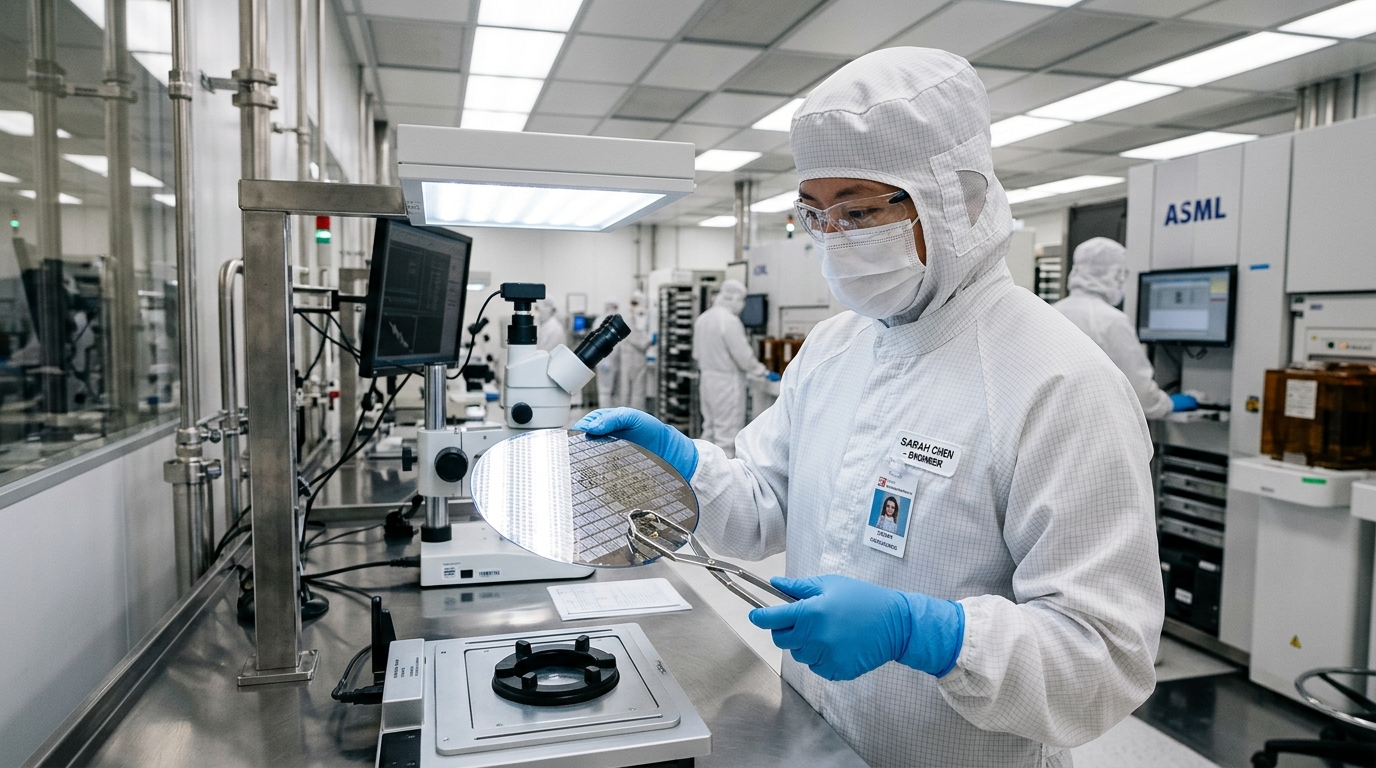
The global semiconductor market is experiencing an unprecedented surge, particularly within the memory segment, propelled by insatiable demand from artificial intelligence workloads. SK Hynix (000660.KS) announced this morning that its cutting-edge HBM3E and future HBM4 capacity is completely sold out through the end of 2027, sending its shares soaring by 8.5% on the KOSPI despite a broader market decline of 0.8%. The South Korean memory titan reported a staggering Q2 2026 operating profit of
Following suit, Micron Technology (MU) delivered a blockbuster earnings report for its fiscal Q3 (equivalent to calendar Q2), posting an operating profit of
The surge in demand is translating directly into significant price increases across the memory spectrum. DRAM contract prices have jumped an average of 20% quarter-over-quarter, with NAND flash following closely with an 18% QoQ increase. Critically, High Bandwidth Memory (HBM), essential for AI accelerators from Nvidia and AMD, commands an even steeper premium, with HBM3E and HBM4 prices escalating by 35-40% QoQ. This pricing power reflects fundamental supply constraints, exacerbated by the highly specialized manufacturing process for HBM, which relies heavily on advanced packaging from TSMC and cutting-edge lithography equipment from ASML, whose order books are reportedly full through 2028.
Industry-wide capital expenditure (capex) forecasts for 2026-2027 have been revised upwards to over 80 billion, signaling a determined effort by memory manufacturers to expand capacity, albeit with a lag. Despite these massive investments, the lead times for critical equipment and the complexity of HBM manufacturing suggest supply will remain tight. From a valuation perspective, SK Hynix currently trades at a forward P/E of 18x and an EV/EBITDA of 12x, while Micron commands a 16x forward P/E and 11x EV/EBITDA. These multiples, though higher than historical troughs, remain attractive given the sector's projected growth rates and the multi-year visibility provided by locked-in HBM orders. Meanwhile, China's CXMT (ChangXin Memory Technologies) is reportedly eyeing an $80 billion IPO, seeking to raise
The robust earnings and forward guidance from memory leaders triggered significant positive momentum across semiconductor indices. The Philadelphia Semiconductor Index (SOX), tracked by the SMH ETF, rallied 2.5% today, closing at a new all-time high, even as Nasdaq Futures experienced a modest -0.5% dip, indicating sector-specific strength overriding broader market sentiment. Quantitative analysis of options markets further underscores this bullish tilt; 1-month implied volatility for Micron (MU) jumped above 45% post-earnings, reflecting heightened trading interest and expected price movements. The call-to-put ratio for SK Hynix's ADRs surged to 1.8x, indicating substantial institutional accumulation of bullish contracts, while open interest for out-of-the-money call options for both MU and SK Hynix has seen a 25% increase over the past week.
Institutional order flow data reveals net buying exceeding $5.2 billion in memory-related ETFs and individual stocks over the past 48 hours, with large block trades signaling conviction from hedge funds and asset managers. The KOSPI's slight decline of 0.8% today was largely due to profit-taking in other sectors, with the memory component providing a significant offset. Market makers are actively delta hedging their long call option exposures by accumulating underlying shares, creating a positive feedback loop for stock prices. This quantitative evidence strongly suggests that the market is repricing these assets to reflect a sustained, rather than transient, demand surge for high-performance memory, with AI accelerators like Nvidia's B200 and AMD's Instinct MI300X driving unprecedented HBM order books.
Our quantitative models project the memory supercycle to extend well into 2027, with potential tailwinds pushing into 2028. The long-term structural demand for AI training and inference, requiring ever-increasing HBM capacities, provides a durable growth thesis. Given the confirmed capacity lock-up and sustained pricing power, we anticipate further upward revisions to consensus earnings estimates for SK Hynix, Micron, and Samsung’s memory division. We believe current valuation multiples, while off their cyclical lows, still offer compelling upside. A target forward P/E multiple of 20x-22x for these industry leaders appears justified, aligning with their projected earnings growth rates which are well into the triple digits for 2026.
Tags: Memory Chips, SK Hynix, Semiconductors, Wall Street, HBM, AI, Micron, Samsung, DRAM, NAND