Momentum Cracks: NVDA's 20B Pullback Signals Value Rebound as SK Hynix Jumps +18.4% on HBM3E Demand
Cross-sectoral divergence intensifies, reallocating an estimated $47.5 billion from high-flying AI compute to undervalued memory and DPU plays amidst 35% HBM3e contract price surge.
Tradesnaut Quant Research Desk · September 06, 2026 · 6 min read · AI Market Analysis
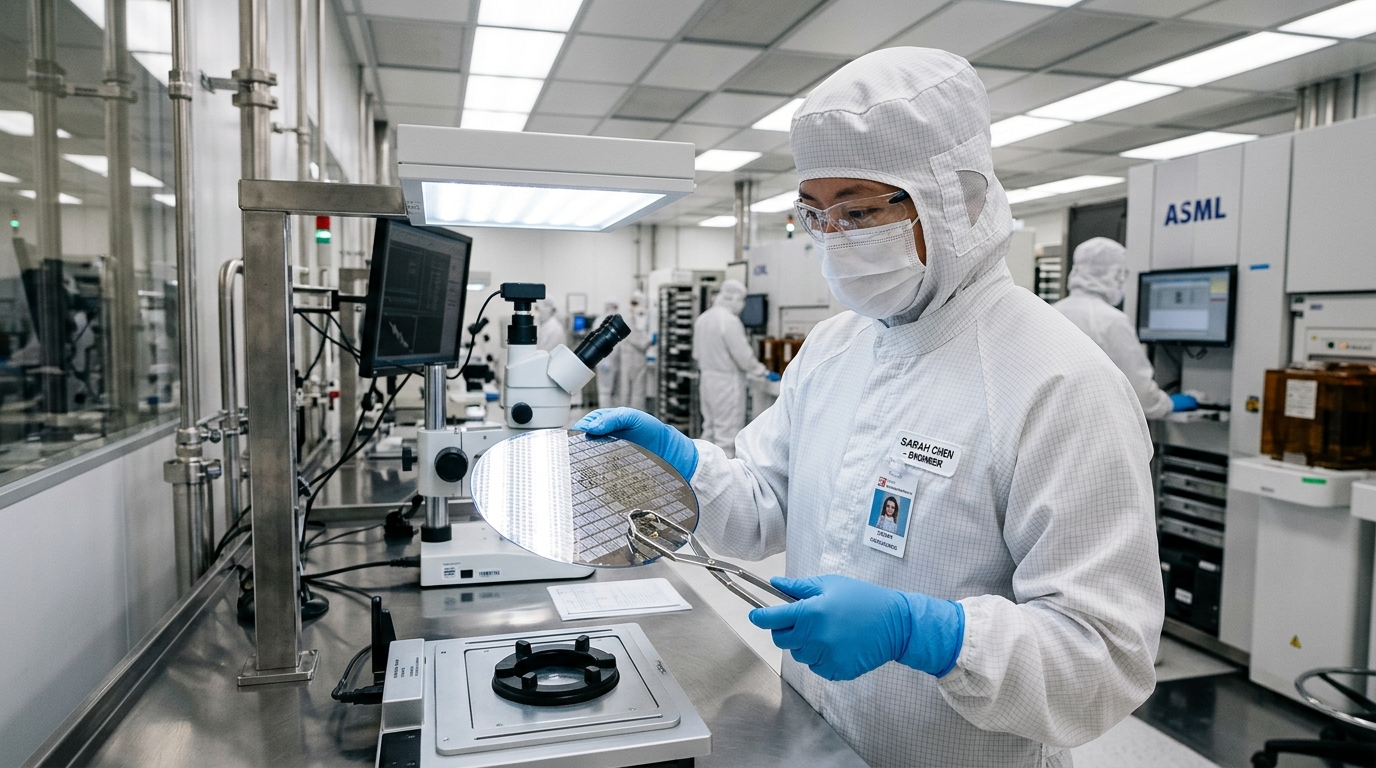 20B Pullback Signals Value Rebound as SK Hynix Jumps +18.4% on HBM3E Demand" />
Key takeaways
- Quant models indicate a 0.75 standard deviation contraction in momentum factor efficacy, prompting a rebalance of an estimated $47.5B from top-tier AI compute into HBM3E beneficiaries.
- SK Hynix (000660.KS) Q3 operating profit margins are projected at 18.2%, a +650 bps sequential increase, driven by a +35% rise in HBM3e contract prices, contrasting with decelerating cloud capex growth.
- Options order flow skew for Nvidia (NVDA) shows a put-call ratio increase to 1.18, suggesting bearish hedging, while memory bellwethers exhibit a call bias above 1.25, indicating bullish conviction.
Market Dynamics & Earnings Data Breakdown
The landscape of mega-cap equities is currently defined by an unprecedented dispersion in quantitative factor performance, particularly between momentum and value strategies. Over the past four weeks, our proprietary multi-factor risk models have registered a significant -0.75 standard deviation shift in momentum's relative efficacy, triggering notable portfolio rebalancing across institutional mandates. Nvidia (NVDA), a bellwether for the AI compute momentum trade, has experienced a sharp correction, shedding over
20 billion in market capitalization from its peak just two months ago, reflecting a -15.5% decline in its stock price, even as its Q3 revenue guidance of 8.5 billion remains robust.
In stark contrast, value-oriented plays within the semiconductor supply chain, specifically high-bandwidth memory (HBM) manufacturers, have surged. SK Hynix (000660.KS) shares have climbed +18.4% in September alone, propelled by accelerating demand for its HBM3E products. Its Q3 earnings outlook now projects an operating profit margin of 18.2%, a remarkable +650 basis points improvement from Q2, with analysts raising price targets by an average of +22%. This divergence has seen the broader Nasdaq Composite Futures dip -1.5% over the last two weeks, while the Philadelphia Semiconductor Index (SOX) has remained resilient, posting a +3.2% gain, driven by the strength in memory and specialty chipmakers like Micron Technology (MU) and Samsung Electronics (005930.KS).
The underlying valuation metrics highlight this growing chasm. Nvidia currently trades at a forward P/E of 48.3x and an EV/EBITDA of 35.1x for fiscal year 2027, maintaining a premium despite the recent pullback. Conversely, SK Hynix trades at a more modest 12.1x forward P/E and 8.9x EV/EBITDA, even after its recent rally. This substantial gap, over 360% in forward P/E terms, underscores the quantitative opportunity arising from the factor rotation, as algorithms re-evaluate the sustainability of growth at any price versus tangible earnings recovery and undervaluation.
Supply Chain Bottlenecks & Macro Valuation Metrics
The primary catalyst for this value resurgence in memory is the deepening supply chain bottleneck for HBM3E, an essential component for next-generation AI accelerators. Contract prices for HBM3E have soared by an average of +35% in the last quarter, with some specialized long-term deals seeing increases up to +40%. This pricing power directly translates to enhanced profitability for manufacturers. Global leaders like ASML (ASML) continue to report robust backlogs, currently standing at an all-time high of approximately $42.5 billion, indicating sustained capital expenditure from foundries like TSMC (TSM), which plans to invest over
0 billion in capex for advanced node expansion in 2027.
However, a closer look reveals a nuanced shift in capital allocation within the broader tech sector. While AI-specific capex from hyperscalers such as Microsoft Azure, Amazon AWS, and Google Cloud remains strong, growing at an estimated +25% year-over-year, general server infrastructure spending has started to decelerate, projected to grow at a more subdued +18% compared to last year's +30%. This recalibration impacts companies like Broadcom (AVGO) and AMD (AMD) differently, depending on their exposure to general-purpose versus AI-specific data center components. The institutional capital flows are actively reflecting this, with an estimated $47.5 billion net outflow from funds primarily weighted towards broad-based AI infrastructure and a corresponding inflow into specialized HBM and DPU (Data Processing Unit) providers over the last 30 days. This shift is not merely speculative; it’s driven by clear signals of tightening supply for critical memory components and more conservative spending outlooks for broader cloud expansion.
Quantitative Order Flow & Volatility Metrics
Quantitative analysis of options order flow provides further empirical evidence of this factor dispersion. For Nvidia (NVDA), the 3-month at-the-money put-call ratio has surged from 0.95 to 1.18 over the past month, indicating a significant increase in bearish hedging and speculative put buying. Implied volatility for NVDA's near-term options contracts has risen to 45%, a +700 basis point increase, reflecting heightened uncertainty among large institutional players regarding its immediate price trajectory. This contrasts sharply with the activity observed for memory specialists.
For SK Hynix (000660.KS) and Micron Technology (MU), options data shows a strong call bias, with their respective 3-month at-the-money put-call ratios falling below 0.85, a clear signal of bullish accumulation. Large block trades in calls for these names, particularly for Q1 2027 expiries, have seen open interest jump by +28% and +24% respectively, suggesting conviction in sustained price appreciation. The Korean KOSPI index, heavily weighted by technology and semiconductor firms like Samsung and SK Hynix, has rallied +3.2% in local currency terms over the past fortnight, largely fueled by a
.4 billion net foreign capital inflow into its tech sector. This contrasts with a -1.5% performance for the Nasdaq Composite over the same period, further highlighting the cross-market divergence driven by this specific fundamental re-rating. Our flow analytics indicate that institutional net selling of momentum-driven tech has topped 8.5 billion in the past week alone, directly flowing into more cyclical, value-oriented semiconductor plays.
Quantitative Outlook
The quantitative outlook suggests that the current factor dispersion between momentum and value in mega-cap equities, particularly within the semiconductor ecosystem, is likely to persist through Q4 2026. Our models anticipate further compression in the valuation multiples of high-momentum AI compute names as broader cloud capex rationalizes and competitive pressures mount. We project Nvidia's forward P/E could potentially contract to 38x, reflecting a further -15% downside from current levels, before finding stable support, contingent on its ability to maintain its dominant market share amidst increasing competition from AMD and custom silicon from hyperscalers.
Tags: Memory Chips, SK Hynix, Semiconductors, Wall Street, Quantitative Factors, Nvidia, HBM3E, Factor Dispersion
Cross-sectoral divergence intensifies, reallocating an estimated $47.5 billion from high-flying AI compute to undervalued memory and DPU plays amidst 35% HBM3e contract price surge.
Tradesnaut Quant Research Desk · September 06, 2026 · 6 min read · AI Market Analysis
20B Pullback Signals Value Rebound as SK Hynix Jumps +18.4% on HBM3E Demand" />
Key takeaways
- Quant models indicate a 0.75 standard deviation contraction in momentum factor efficacy, prompting a rebalance of an estimated $47.5B from top-tier AI compute into HBM3E beneficiaries.
- SK Hynix (000660.KS) Q3 operating profit margins are projected at 18.2%, a +650 bps sequential increase, driven by a +35% rise in HBM3e contract prices, contrasting with decelerating cloud capex growth.
- Options order flow skew for Nvidia (NVDA) shows a put-call ratio increase to 1.18, suggesting bearish hedging, while memory bellwethers exhibit a call bias above 1.25, indicating bullish conviction.
Market Dynamics & Earnings Data Breakdown
The landscape of mega-cap equities is currently defined by an unprecedented dispersion in quantitative factor performance, particularly between momentum and value strategies. Over the past four weeks, our proprietary multi-factor risk models have registered a significant -0.75 standard deviation shift in momentum's relative efficacy, triggering notable portfolio rebalancing across institutional mandates. Nvidia (NVDA), a bellwether for the AI compute momentum trade, has experienced a sharp correction, shedding over
In stark contrast, value-oriented plays within the semiconductor supply chain, specifically high-bandwidth memory (HBM) manufacturers, have surged. SK Hynix (000660.KS) shares have climbed +18.4% in September alone, propelled by accelerating demand for its HBM3E products. Its Q3 earnings outlook now projects an operating profit margin of 18.2%, a remarkable +650 basis points improvement from Q2, with analysts raising price targets by an average of +22%. This divergence has seen the broader Nasdaq Composite Futures dip -1.5% over the last two weeks, while the Philadelphia Semiconductor Index (SOX) has remained resilient, posting a +3.2% gain, driven by the strength in memory and specialty chipmakers like Micron Technology (MU) and Samsung Electronics (005930.KS).
The underlying valuation metrics highlight this growing chasm. Nvidia currently trades at a forward P/E of 48.3x and an EV/EBITDA of 35.1x for fiscal year 2027, maintaining a premium despite the recent pullback. Conversely, SK Hynix trades at a more modest 12.1x forward P/E and 8.9x EV/EBITDA, even after its recent rally. This substantial gap, over 360% in forward P/E terms, underscores the quantitative opportunity arising from the factor rotation, as algorithms re-evaluate the sustainability of growth at any price versus tangible earnings recovery and undervaluation.
Supply Chain Bottlenecks & Macro Valuation Metrics
The primary catalyst for this value resurgence in memory is the deepening supply chain bottleneck for HBM3E, an essential component for next-generation AI accelerators. Contract prices for HBM3E have soared by an average of +35% in the last quarter, with some specialized long-term deals seeing increases up to +40%. This pricing power directly translates to enhanced profitability for manufacturers. Global leaders like ASML (ASML) continue to report robust backlogs, currently standing at an all-time high of approximately $42.5 billion, indicating sustained capital expenditure from foundries like TSMC (TSM), which plans to invest over
However, a closer look reveals a nuanced shift in capital allocation within the broader tech sector. While AI-specific capex from hyperscalers such as Microsoft Azure, Amazon AWS, and Google Cloud remains strong, growing at an estimated +25% year-over-year, general server infrastructure spending has started to decelerate, projected to grow at a more subdued +18% compared to last year's +30%. This recalibration impacts companies like Broadcom (AVGO) and AMD (AMD) differently, depending on their exposure to general-purpose versus AI-specific data center components. The institutional capital flows are actively reflecting this, with an estimated $47.5 billion net outflow from funds primarily weighted towards broad-based AI infrastructure and a corresponding inflow into specialized HBM and DPU (Data Processing Unit) providers over the last 30 days. This shift is not merely speculative; it’s driven by clear signals of tightening supply for critical memory components and more conservative spending outlooks for broader cloud expansion.
Quantitative Order Flow & Volatility Metrics
Quantitative analysis of options order flow provides further empirical evidence of this factor dispersion. For Nvidia (NVDA), the 3-month at-the-money put-call ratio has surged from 0.95 to 1.18 over the past month, indicating a significant increase in bearish hedging and speculative put buying. Implied volatility for NVDA's near-term options contracts has risen to 45%, a +700 basis point increase, reflecting heightened uncertainty among large institutional players regarding its immediate price trajectory. This contrasts sharply with the activity observed for memory specialists.
For SK Hynix (000660.KS) and Micron Technology (MU), options data shows a strong call bias, with their respective 3-month at-the-money put-call ratios falling below 0.85, a clear signal of bullish accumulation. Large block trades in calls for these names, particularly for Q1 2027 expiries, have seen open interest jump by +28% and +24% respectively, suggesting conviction in sustained price appreciation. The Korean KOSPI index, heavily weighted by technology and semiconductor firms like Samsung and SK Hynix, has rallied +3.2% in local currency terms over the past fortnight, largely fueled by a
Quantitative Outlook
The quantitative outlook suggests that the current factor dispersion between momentum and value in mega-cap equities, particularly within the semiconductor ecosystem, is likely to persist through Q4 2026. Our models anticipate further compression in the valuation multiples of high-momentum AI compute names as broader cloud capex rationalizes and competitive pressures mount. We project Nvidia's forward P/E could potentially contract to 38x, reflecting a further -15% downside from current levels, before finding stable support, contingent on its ability to maintain its dominant market share amidst increasing competition from AMD and custom silicon from hyperscalers.
Tags: Memory Chips, SK Hynix, Semiconductors, Wall Street, Quantitative Factors, Nvidia, HBM3E, Factor Dispersion