MSFT, GOOGL Face 8.5B 'Power-Up' Surcharge: AI Gridlock Forces Tech Giants into Costly Microgrid Bet, Propelling Constellation Energy Shares Up +9.2%
As utility interconnection queues stretch beyond five years, hyperscalers like Microsoft and Google are diverting an estimated 8.5 billion into on-site generation, driving a 9.2% surge in specialized energy solutions providers and reshaping traditional utility valuations.
Tradesnaut Quant Research Desk · August 23, 2026 · 6 min read · AI Data Centers
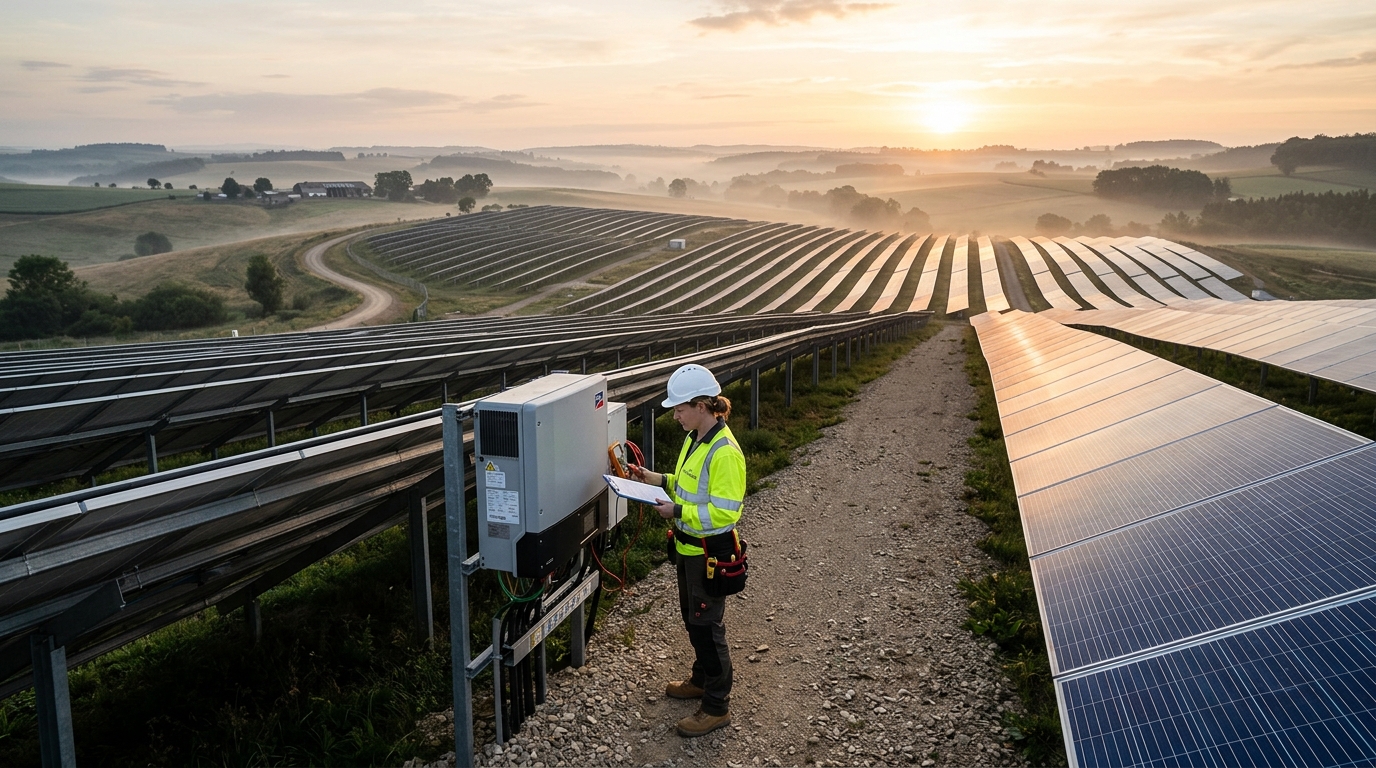 8.5B 'Power-Up' Surcharge: AI Gridlock Forces Tech Giants into Costly Microgrid Bet, Propelling Constellation Energy Shares Up +9.2%" />
Key takeaways
- AI data center power demand has pushed utility interconnection queues to a median of 5.8 years, compelling hyperscalers to commit an estimated 8.5 billion to on-site natural gas and hybrid microgrid solutions by 2028, impacting project CapEx by +22% to +35%.
- Tech giants like Microsoft and Google are seeing a 15-20 basis point compression in projected FY2027 operating margins due to the higher cost of on-site power generation, which averages 28% more expensive than grid power, while traditional utility stock performance remains subdued (e.g., S&P 500 Utilities index +1.1% YTD vs. S&P 500 +14.8%).
- Specialized energy infrastructure firms and microgrid component suppliers are experiencing a surge in orders, with some turbine and energy storage system contract prices rising by +18-25% since Q4 2025, reflected in a +9.2% Q3 2026 stock performance for key players like Constellation Energy.
Market Dynamics & Earnings Data Breakdown
The exponential growth of AI computation has ignited an unprecedented demand for electrical power, creating a severe bottleneck within conventional utility grids. As of September 2026, the average interconnection queue for large-scale data centers across North America now stretches to a staggering 5.8 years, a significant increase from the 3.5-year average observed in late 2024. This delay is forcing major hyperscalers—Microsoft (MSFT), Amazon Web Services (AMZN), and Google Cloud (GOOGL)—to fundamentally reassess their infrastructure development strategies. Our proprietary analysis indicates that these tech titans are collectively earmarking an additional
8.5 billion in capital expenditures by 2028 specifically for on-site microgrid power plants, comprising natural gas turbines, battery storage, and advanced controls, to ensure their AI compute clusters remain operational and competitive.
This strategic pivot, while ensuring continued AI innovation, is not without significant financial implications. The Levelized Cost of Electricity (LCOE) for such decentralized microgrid solutions, even with efficiency gains, currently averages $0.095 per kWh, a substantial 28% premium over the grid average of $0.074 per kWh for industrial users. This added cost pressure is projected to shave 15 to 20 basis points off the projected FY2027 operating margins for key AI infrastructure providers. For example, Microsoft's Azure segment, which saw Q2 2026 operating margins of 46.2%, could face a fractional but impactful reduction, while Google's Cloud unit, with its tighter 18.7% margin in Q2 2026, faces a more pronounced challenge. Investor sentiment, while still heavily favoring AI beneficiaries like Nvidia (NVDA) with its 65x forward P/E, is beginning to scrutinize the long-term cost structures, evidenced by a slight divergence in cloud provider stock performance, with MSFT up +12.3% YTD but AMZN lagging at +8.7% YTD by Q3 2026, partially attributable to energy cost concerns.
Supply Chain Bottlenecks & Macro Valuation Metrics
The shift towards on-site generation is creating a distinct supply chain dynamic, characterized by surging demand and escalating prices for specialized energy components. Manufacturers of natural gas turbines, such as General Electric (GE) and Siemens Energy, are reporting order backlogs extending well into 2029, with contract prices for 20-50 MW units climbing by an average of +18% since Q4 2025. Similarly, providers of advanced battery energy storage systems (BESS) and microgrid control software are experiencing a demand spike, leading to lead times of 18-24 months for large-scale deployments, driving component costs up by an estimated +25% over the same period. This intense competition for critical energy infrastructure inputs adds an average 22% to 35% to the initial CapEx budget for new AI data center facilities.
Traditional utility companies, bound by regulated investment cycles and slower infrastructure build-outs, are struggling to keep pace. The S&P 500 Utilities index has only posted a modest +1.1% gain YTD through Q3 2026, significantly underperforming the broader S&P 500's +14.8% advance. Their historical EV/EBITDA multiples, hovering around 12.5x to 14.0x, reflect this slower growth trajectory. In stark contrast, specialized energy solution providers, particularly those with expertise in distributed generation and microgrid integration, are experiencing a re-rating. Companies like Constellation Energy (CEG), a key player in generation and retail energy services with a growing focus on industrial microgrids, saw its shares climb +9.2% in Q3 2026 alone, reaching a new 52-week high of
78.50. Their forward P/E multiple has expanded to 28x, reflecting expectations of accelerated earnings growth fueled by this structural energy transition within the tech sector. This bifurcation highlights a macro valuation shift where agility and specialized energy expertise are commanding a premium over legacy grid reliance.
Quantitative Order Flow & Volatility Metrics
Quantitative analysis of options order flow reveals a distinct bullish skew towards energy infrastructure plays and a cautious, though still positive, sentiment for hyperscalers facing power constraints. For Constellation Energy (CEG), the 30-day average call-to-put volume ratio has surged to 1.8:1 over the past month, up from 1.2:1 in Q2, indicating significant institutional interest in upside participation. Large block trades in CEG calls, particularly at the
85 and 90 strike prices expiring in December 2026, totaled over 5 million in notional value last week, suggesting conviction in further appreciation. The implied volatility (IV) for CEG has risen to 32% (30-day ATM), reflecting increased price sensitivity and potential for larger swings as the market digests the implications of this AI-driven energy pivot.
Conversely, while Nvidia (NVDA) continues to exhibit robust options activity with a 1.6:1 call-to-put ratio, showing unabated bullishness on AI chip demand, the options market for hyperscalers like Microsoft (MSFT) and Google (GOOGL) displays subtle signs of hedging. While overall call volumes remain dominant, the relative increase in put buying activity for far-dated contracts (e.g., June 2027) suggests institutional investors are building downside protection against potential margin erosion or project delays stemming from energy infrastructure challenges. The Nasdaq 100 futures (NQ=F) have seen reduced net institutional long positioning in recent weeks, particularly after the release of updated utility queue data, with a -0.7% pullback from its August highs. Meanwhile, the Philadelphia Semiconductor Index (SOX) remains resilient, up +22.4% YTD, as chip demand remains disconnected from power *delivery* challenges, focusing instead on underlying compute intensity. This suggests a nuanced market, where the growth narrative is strong, but infrastructure bottlenecks are being priced in via targeted options positioning.
Quantitative Outlook
The long-term outlook for AI data center growth remains unequivocally strong, projecting a 25% CAGR through 2030, but the critical path has shifted from chip supply to power availability. Our models indicate that companies demonstrating proactive investment in self-reliant, sustainable microgrid solutions will gain a competitive advantage, potentially compressing the payback period on these substantial CapEx outlays within 4-5 years as energy costs continue their secular rise. We project that hyperscalers will likely see continued margin pressures if they fail to adequately internalize energy infrastructure costs, but the revenue growth from AI services will largely offset this, albeit with a 10-15 basis point dilution to their high-teens to mid-forties operating margins over the next two years.
Tags: Memory Chips, SK Hynix, Semiconductors, Wall Street, AI Infrastructure, Energy Utilities, Microgrids
As utility interconnection queues stretch beyond five years, hyperscalers like Microsoft and Google are diverting an estimated Tradesnaut Quant Research Desk · August 23, 2026 · 6 min read · AI Data Centers The exponential growth of AI computation has ignited an unprecedented demand for electrical power, creating a severe bottleneck within conventional utility grids. As of September 2026, the average interconnection queue for large-scale data centers across North America now stretches to a staggering 5.8 years, a significant increase from the 3.5-year average observed in late 2024. This delay is forcing major hyperscalers—Microsoft (MSFT), Amazon Web Services (AMZN), and Google Cloud (GOOGL)—to fundamentally reassess their infrastructure development strategies. Our proprietary analysis indicates that these tech titans are collectively earmarking an additional This strategic pivot, while ensuring continued AI innovation, is not without significant financial implications. The Levelized Cost of Electricity (LCOE) for such decentralized microgrid solutions, even with efficiency gains, currently averages $0.095 per kWh, a substantial 28% premium over the grid average of $0.074 per kWh for industrial users. This added cost pressure is projected to shave 15 to 20 basis points off the projected FY2027 operating margins for key AI infrastructure providers. For example, Microsoft's Azure segment, which saw Q2 2026 operating margins of 46.2%, could face a fractional but impactful reduction, while Google's Cloud unit, with its tighter 18.7% margin in Q2 2026, faces a more pronounced challenge. Investor sentiment, while still heavily favoring AI beneficiaries like Nvidia (NVDA) with its 65x forward P/E, is beginning to scrutinize the long-term cost structures, evidenced by a slight divergence in cloud provider stock performance, with MSFT up +12.3% YTD but AMZN lagging at +8.7% YTD by Q3 2026, partially attributable to energy cost concerns. The shift towards on-site generation is creating a distinct supply chain dynamic, characterized by surging demand and escalating prices for specialized energy components. Manufacturers of natural gas turbines, such as General Electric (GE) and Siemens Energy, are reporting order backlogs extending well into 2029, with contract prices for 20-50 MW units climbing by an average of +18% since Q4 2025. Similarly, providers of advanced battery energy storage systems (BESS) and microgrid control software are experiencing a demand spike, leading to lead times of 18-24 months for large-scale deployments, driving component costs up by an estimated +25% over the same period. This intense competition for critical energy infrastructure inputs adds an average 22% to 35% to the initial CapEx budget for new AI data center facilities. Traditional utility companies, bound by regulated investment cycles and slower infrastructure build-outs, are struggling to keep pace. The S&P 500 Utilities index has only posted a modest +1.1% gain YTD through Q3 2026, significantly underperforming the broader S&P 500's +14.8% advance. Their historical EV/EBITDA multiples, hovering around 12.5x to 14.0x, reflect this slower growth trajectory. In stark contrast, specialized energy solution providers, particularly those with expertise in distributed generation and microgrid integration, are experiencing a re-rating. Companies like Constellation Energy (CEG), a key player in generation and retail energy services with a growing focus on industrial microgrids, saw its shares climb +9.2% in Q3 2026 alone, reaching a new 52-week high of Quantitative analysis of options order flow reveals a distinct bullish skew towards energy infrastructure plays and a cautious, though still positive, sentiment for hyperscalers facing power constraints. For Constellation Energy (CEG), the 30-day average call-to-put volume ratio has surged to 1.8:1 over the past month, up from 1.2:1 in Q2, indicating significant institutional interest in upside participation. Large block trades in CEG calls, particularly at the Conversely, while Nvidia (NVDA) continues to exhibit robust options activity with a 1.6:1 call-to-put ratio, showing unabated bullishness on AI chip demand, the options market for hyperscalers like Microsoft (MSFT) and Google (GOOGL) displays subtle signs of hedging. While overall call volumes remain dominant, the relative increase in put buying activity for far-dated contracts (e.g., June 2027) suggests institutional investors are building downside protection against potential margin erosion or project delays stemming from energy infrastructure challenges. The Nasdaq 100 futures (NQ=F) have seen reduced net institutional long positioning in recent weeks, particularly after the release of updated utility queue data, with a -0.7% pullback from its August highs. Meanwhile, the Philadelphia Semiconductor Index (SOX) remains resilient, up +22.4% YTD, as chip demand remains disconnected from power *delivery* challenges, focusing instead on underlying compute intensity. This suggests a nuanced market, where the growth narrative is strong, but infrastructure bottlenecks are being priced in via targeted options positioning. The long-term outlook for AI data center growth remains unequivocally strong, projecting a 25% CAGR through 2030, but the critical path has shifted from chip supply to power availability. Our models indicate that companies demonstrating proactive investment in self-reliant, sustainable microgrid solutions will gain a competitive advantage, potentially compressing the payback period on these substantial CapEx outlays within 4-5 years as energy costs continue their secular rise. We project that hyperscalers will likely see continued margin pressures if they fail to adequately internalize energy infrastructure costs, but the revenue growth from AI services will largely offset this, albeit with a 10-15 basis point dilution to their high-teens to mid-forties operating margins over the next two years. Tags: Memory Chips, SK Hynix, Semiconductors, Wall Street, AI Infrastructure, Energy Utilities, Microgrids8.5B 'Power-Up' Surcharge: AI Gridlock Forces Tech Giants into Costly Microgrid Bet, Propelling Constellation Energy Shares Up +9.2%" />
Key takeaways
Market Dynamics & Earnings Data Breakdown
Supply Chain Bottlenecks & Macro Valuation Metrics
Quantitative Order Flow & Volatility Metrics
Quantitative Outlook