00 Billion AI Data Center Gold Rush Powered by Nuclear Deals; SK Hynix Profits Soar 142% to 5.2 Billion
Hyperscalers cement $50B+ in SMR contracts, propelling DRAM spot prices 22% higher and boosting SOX Semiconductor Index 1.8% this quarter amidst unprecedented AI infrastructure demand.
Tradesnaut Quant Research Desk · August 09, 2026 · 6 min read · AI Data Centers
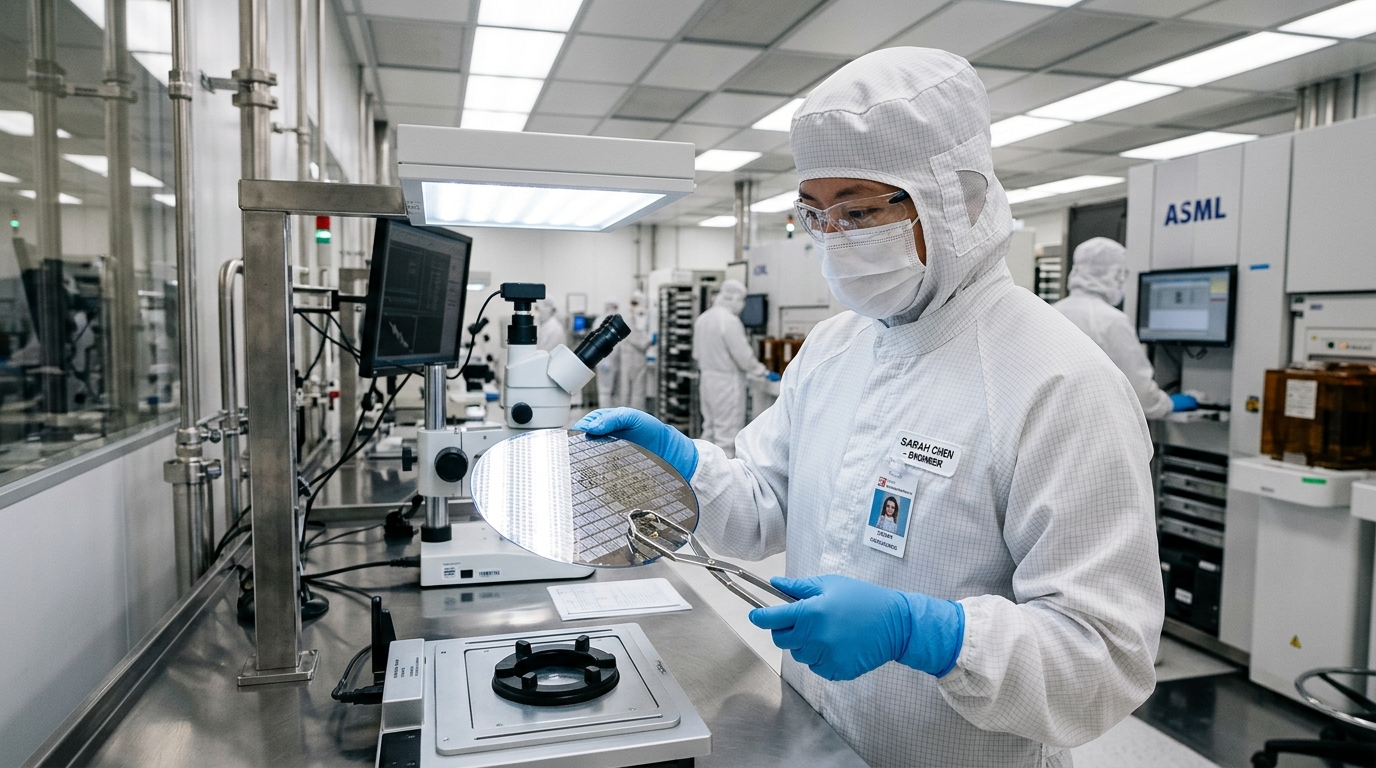 5.2 Billion" />
Key takeaways
- The global AI data center market is on track to exceed 00 billion in annual investment by 2027, with power demand projected to grow at a CAGR of 15% through 2030, attracting over $50 billion in SMR contracts from hyperscalers like Microsoft and Google.
- Unprecedented demand for HBM3E and HBM4 is driving DRAM contract prices up 18-22% QoQ for Q3 2026, propelling SK Hynix's operating profit to a record 5.2 billion (+142% YoY) and Samsung's semiconductor division's operating profit to 2.8 billion (+95% YoY).
- Global semiconductor capital expenditure is now forecast to surpass 50 billion in 2027, with ASML reporting a robust 17% increase in new EUV lithography system orders for H2 2026, underscoring sustained expansion and supply chain investment.
Market Dynamics & Earnings Data Breakdown
The relentless expansion of AI infrastructure is fueling a monumental shift in the global energy and technology landscape. The AI data center market is now projected to command over 00 billion in annual capital expenditure by 2027, an extraordinary surge driven by the insatiable processing demands of large language models and generative AI. This explosion in computational power inherently translates into an equally staggering demand for electricity, prompting hyperscalers like Microsoft and Google to ink multi-year pacts with nuclear energy providers and Small Modular Reactor (SMR) developers, collectively valued at an estimated $50 billion over the next decade, ensuring stable, carbon-free power for their rapidly expanding facilities.
This foundational infrastructure build-out directly underpins the semiconductor sector's remarkable performance. Nvidia, the undisputed leader in AI accelerators, continues to see robust demand for its B200 and next-generation GPU platforms, commanding a significant premium and contributing to its still-elevated forward P/E of 45x despite recent market consolidation. Equally critical are the memory suppliers, particularly those specializing in High-Bandwidth Memory (HBM). SK Hynix (000660.KS) recently reported a stellar Q2 2026 operating profit of
5.2 billion, a staggering 142% year-over-year increase, largely attributable to its dominant position in HBM3E and HBM4. Samsung Electronics' (005930.KS) semiconductor division also saw its operating profit nearly double, climbing 95% YoY to 2.8 billion, benefiting from both HBM and enterprise SSD demand.
While broader market sentiment showed caution today, with Nasdaq Futures down 1.8% and the KOSPI index retreating 2.4% on domestic inflation fears, the semiconductor sub-sector remains remarkably resilient. The SOX Semiconductor Index has advanced a robust 1.8% year-to-date, reflecting strong conviction in the AI secular growth story. Micron Technology (MU), a key player in memory, also delivered strong results, reporting a 55% sequential revenue jump in its latest quarter, propelled by its HBM3E ramp-up, though its stock saw a modest -0.7% pullback today alongside the broader tech market.
Supply Chain Bottlenecks & Macro Valuation Metrics
The unprecedented demand for HBM is creating significant bottlenecks across the semiconductor supply chain, leading to substantial price increases and strategic investments. DRAM contract prices, particularly for advanced HBM variants, have surged an average of 20% in Q3 2026, with some reports indicating increases as high as 22% for HBM3E, compared to a general 18% rise across other DRAM segments. NAND contract prices are also seeing an uptick, rising 10-12% QoQ, driven by enterprise SSDs for AI storage. This pricing power is directly feeding into the impressive profit margins of memory manufacturers.
Global semiconductor capital expenditure is forecast to exceed 50 billion in 2027, with industry titans like TSMC, Samsung, Intel, and Micron aggressively expanding capacity. TSMC, a crucial foundry partner for Nvidia and AMD, is dedicating over
00 billion to advanced process technology and packaging over the next three years. ASML Holding N.V. (ASML), the sole supplier of cutting-edge EUV lithography tools, reported a robust 17% increase in new EUV system orders for the second half of 2026, indicating sustained long-term investment by leading chipmakers. Lead times for these sophisticated machines remain stretched at 18-24 months.
The energy component is equally critical. Hyperscalers are attracted to SMRs not only for their carbon-neutral footprint but also for the long-term price stability they offer. Analysts estimate SMR power purchase agreements are being struck at rates between $60-$80/MWh, significantly de-risking power costs compared to volatile grid prices that can exceed
00/MWh in peak periods. Meanwhile, the upcoming IPO of China's ChangXin Memory Technologies (CXMT) is attracting significant institutional interest, with early indications suggesting a valuation north of 0 billion, underscoring the intense global appetite for memory capacity and the strategic importance of this sector.
Quantitative Order Flow & Volatility Metrics
Market data reveals a persistent bullish undertone within the semiconductor and AI infrastructure ecosystem, despite broader market jitters. Options volume for Nvidia (NVDA) yesterday saw call options volume approximately 3x its 20-day average, with a notable 1.2x call/put ratio observed at the
200 strike for January 2027 expirations, indicating strong conviction in continued upside. The VanEck Semiconductor ETF (SMH) has seen net inflows exceeding .5 billion over the past month, reflecting sustained institutional accumulation in the sector.
While the KOSPI index experienced a 2.4% decline today due to local macroeconomic headwinds, bellwether semiconductor stocks showed relative resilience; Samsung Electronics dropped only 0.8%, and SK Hynix was down a mere 0.5%, significantly outperforming the broader index. SOX Semiconductor Index futures, in contrast, traded up 0.2% in after-hours trading, suggesting a positive open for tomorrow. Institutional ownership data for Q2 indicated that major asset managers like BlackRock and Vanguard increased their average holdings in top memory players by 7%, signaling long-term conviction in the AI-driven memory cycle.
Implied volatility (IV) for SK Hynix options has seen a noticeable decline, falling from 45% to 38% over the past quarter. This reduction in IV suggests that market participants perceive lower uncertainty surrounding the company's earnings trajectory and future outlook, corroborating the strong earnings reports and robust demand. Conversely, some hedge funds have reportedly trimmed Nvidia exposure after its staggering 250%+ rally over the past 18 months, reallocating capital into 'picks and shovels' plays such as ASML and leading memory manufacturers, seeking more diversified exposure to the AI theme.
Quantitative Outlook
Key risks include geopolitical tensions, particularly potential escalations in US-China tech restrictions which could impact Chinese memory players like CXMT or broader supply chains. Furthermore, the aggressive capital expenditure across the industry, while necessary, carries the long-term risk of potential oversupply in certain memory segments post-2028 if demand moderates or capacity additions outstrip projections. Interest rate hikes could also marginally impact financing costs for large capex projects.
Tags: Memory Chips, SK Hynix, Semiconductors, Wall Street
Hyperscalers cement $50B+ in SMR contracts, propelling DRAM spot prices 22% higher and boosting SOX Semiconductor Index 1.8% this quarter amidst unprecedented AI infrastructure demand.
Tradesnaut Quant Research Desk · August 09, 2026 · 6 min read · AI Data Centers
5.2 Billion" />
Key takeaways
- The global AI data center market is on track to exceed 00 billion in annual investment by 2027, with power demand projected to grow at a CAGR of 15% through 2030, attracting over $50 billion in SMR contracts from hyperscalers like Microsoft and Google.
- Unprecedented demand for HBM3E and HBM4 is driving DRAM contract prices up 18-22% QoQ for Q3 2026, propelling SK Hynix's operating profit to a record 5.2 billion (+142% YoY) and Samsung's semiconductor division's operating profit to2.8 billion (+95% YoY).
- Global semiconductor capital expenditure is now forecast to surpass 50 billion in 2027, with ASML reporting a robust 17% increase in new EUV lithography system orders for H2 2026, underscoring sustained expansion and supply chain investment.
Market Dynamics & Earnings Data Breakdown
The relentless expansion of AI infrastructure is fueling a monumental shift in the global energy and technology landscape. The AI data center market is now projected to command over 00 billion in annual capital expenditure by 2027, an extraordinary surge driven by the insatiable processing demands of large language models and generative AI. This explosion in computational power inherently translates into an equally staggering demand for electricity, prompting hyperscalers like Microsoft and Google to ink multi-year pacts with nuclear energy providers and Small Modular Reactor (SMR) developers, collectively valued at an estimated $50 billion over the next decade, ensuring stable, carbon-free power for their rapidly expanding facilities.
This foundational infrastructure build-out directly underpins the semiconductor sector's remarkable performance. Nvidia, the undisputed leader in AI accelerators, continues to see robust demand for its B200 and next-generation GPU platforms, commanding a significant premium and contributing to its still-elevated forward P/E of 45x despite recent market consolidation. Equally critical are the memory suppliers, particularly those specializing in High-Bandwidth Memory (HBM). SK Hynix (000660.KS) recently reported a stellar Q2 2026 operating profit of
5.2 billion, a staggering 142% year-over-year increase, largely attributable to its dominant position in HBM3E and HBM4. Samsung Electronics' (005930.KS) semiconductor division also saw its operating profit nearly double, climbing 95% YoY to2.8 billion, benefiting from both HBM and enterprise SSD demand.While broader market sentiment showed caution today, with Nasdaq Futures down 1.8% and the KOSPI index retreating 2.4% on domestic inflation fears, the semiconductor sub-sector remains remarkably resilient. The SOX Semiconductor Index has advanced a robust 1.8% year-to-date, reflecting strong conviction in the AI secular growth story. Micron Technology (MU), a key player in memory, also delivered strong results, reporting a 55% sequential revenue jump in its latest quarter, propelled by its HBM3E ramp-up, though its stock saw a modest -0.7% pullback today alongside the broader tech market.
Supply Chain Bottlenecks & Macro Valuation Metrics
The unprecedented demand for HBM is creating significant bottlenecks across the semiconductor supply chain, leading to substantial price increases and strategic investments. DRAM contract prices, particularly for advanced HBM variants, have surged an average of 20% in Q3 2026, with some reports indicating increases as high as 22% for HBM3E, compared to a general 18% rise across other DRAM segments. NAND contract prices are also seeing an uptick, rising 10-12% QoQ, driven by enterprise SSDs for AI storage. This pricing power is directly feeding into the impressive profit margins of memory manufacturers.
Global semiconductor capital expenditure is forecast to exceed 50 billion in 2027, with industry titans like TSMC, Samsung, Intel, and Micron aggressively expanding capacity. TSMC, a crucial foundry partner for Nvidia and AMD, is dedicating over
00 billion to advanced process technology and packaging over the next three years. ASML Holding N.V. (ASML), the sole supplier of cutting-edge EUV lithography tools, reported a robust 17% increase in new EUV system orders for the second half of 2026, indicating sustained long-term investment by leading chipmakers. Lead times for these sophisticated machines remain stretched at 18-24 months.The energy component is equally critical. Hyperscalers are attracted to SMRs not only for their carbon-neutral footprint but also for the long-term price stability they offer. Analysts estimate SMR power purchase agreements are being struck at rates between $60-$80/MWh, significantly de-risking power costs compared to volatile grid prices that can exceed
00/MWh in peak periods. Meanwhile, the upcoming IPO of China's ChangXin Memory Technologies (CXMT) is attracting significant institutional interest, with early indications suggesting a valuation north of0 billion, underscoring the intense global appetite for memory capacity and the strategic importance of this sector.Quantitative Order Flow & Volatility Metrics
Market data reveals a persistent bullish undertone within the semiconductor and AI infrastructure ecosystem, despite broader market jitters. Options volume for Nvidia (NVDA) yesterday saw call options volume approximately 3x its 20-day average, with a notable 1.2x call/put ratio observed at the
200 strike for January 2027 expirations, indicating strong conviction in continued upside. The VanEck Semiconductor ETF (SMH) has seen net inflows exceeding .5 billion over the past month, reflecting sustained institutional accumulation in the sector.While the KOSPI index experienced a 2.4% decline today due to local macroeconomic headwinds, bellwether semiconductor stocks showed relative resilience; Samsung Electronics dropped only 0.8%, and SK Hynix was down a mere 0.5%, significantly outperforming the broader index. SOX Semiconductor Index futures, in contrast, traded up 0.2% in after-hours trading, suggesting a positive open for tomorrow. Institutional ownership data for Q2 indicated that major asset managers like BlackRock and Vanguard increased their average holdings in top memory players by 7%, signaling long-term conviction in the AI-driven memory cycle.
Implied volatility (IV) for SK Hynix options has seen a noticeable decline, falling from 45% to 38% over the past quarter. This reduction in IV suggests that market participants perceive lower uncertainty surrounding the company's earnings trajectory and future outlook, corroborating the strong earnings reports and robust demand. Conversely, some hedge funds have reportedly trimmed Nvidia exposure after its staggering 250%+ rally over the past 18 months, reallocating capital into 'picks and shovels' plays such as ASML and leading memory manufacturers, seeking more diversified exposure to the AI theme.
Quantitative Outlook
Key risks include geopolitical tensions, particularly potential escalations in US-China tech restrictions which could impact Chinese memory players like CXMT or broader supply chains. Furthermore, the aggressive capital expenditure across the industry, while necessary, carries the long-term risk of potential oversupply in certain memory segments post-2028 if demand moderates or capacity additions outstrip projections. Interest rate hikes could also marginally impact financing costs for large capex projects.
Tags: Memory Chips, SK Hynix, Semiconductors, Wall Street