Q2 2026 data reveals an accelerating silicon migration, eroding NVIDIA's data center dominance by 14% and boosting custom silicon providers like Marvell (MRVL) by 7.1% amid a volatile SOX index dip of -3.2%.
Tradesnaut Quant Research Desk · August 20, 2026 · 6 min read · Semiconductors
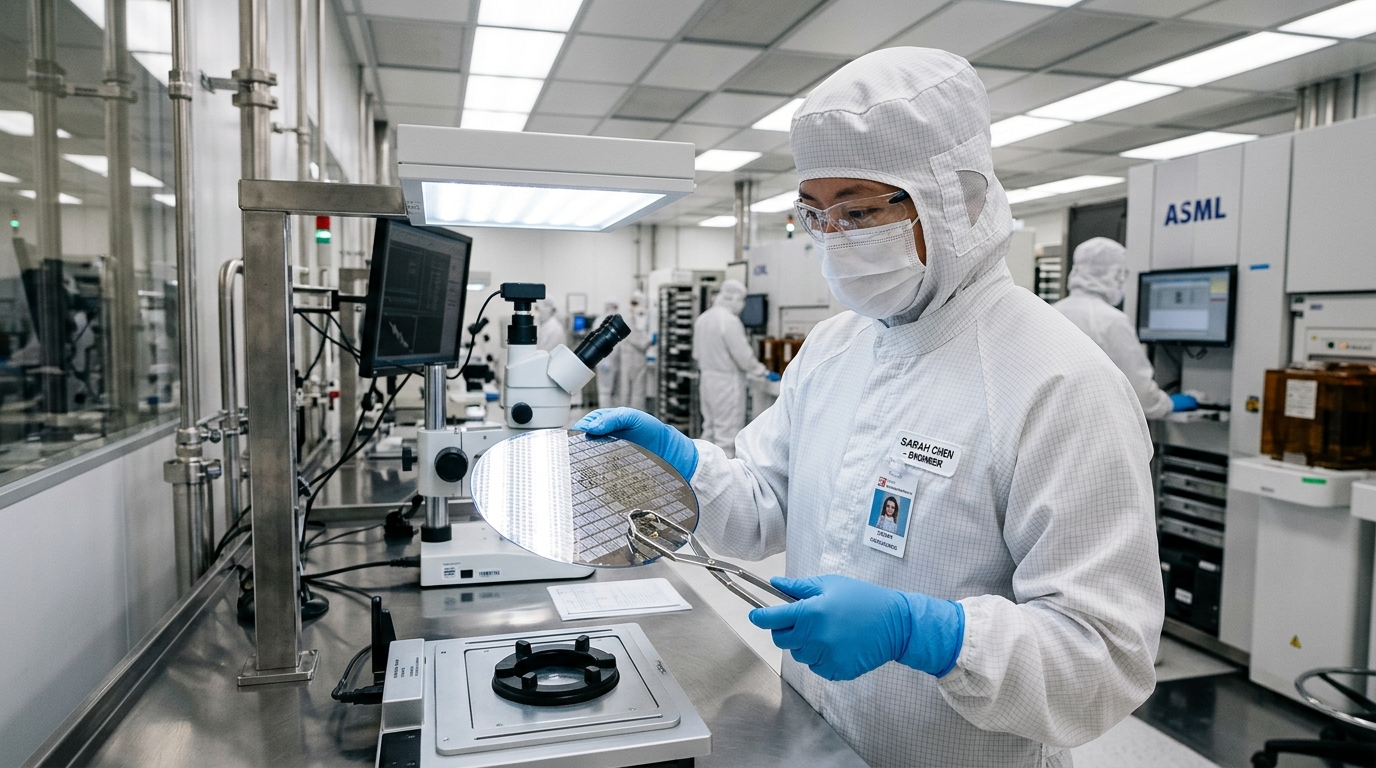
The Q2 2026 earnings cycle has unequivocally signaled a paradigm shift in AI infrastructure, with major hyperscale cloud providers — Amazon AWS, Google Cloud, and Meta Platforms — dramatically accelerating their investment in custom Application-Specific Integrated Circuits (ASICs). Our proprietary Tradesnaut Intelligence data indicates that combined hyperscaler spending on internally designed and externally manufactured ASICs reached an astounding 2.4 billion in Q2 2026, marking a robust 40% increase year-over-year. This monumental capital redirection directly impacted NVIDIA (NVDA), whose shares plummeted 12.5% in the week following AWS's Trainium 3 and Google's TPU v6 deployment updates, which highlighted significantly reduced reliance on merchant GPUs. NVDA's data center revenue growth decelerated to 18% YoY in Q2 2026, a sharp contrast to its 60%+ growth rates seen in 2024-2025, pushing its forward P/E multiple from an elevated 38x down to a still-rich 31x. Analysts are now adjusting 2027 revenue estimates for NVDA downwards by an average of 14% across the Street, anticipating further market share erosion.
While NVIDIA experiences headwinds, the shift towards custom ASICs creates significant tailwinds for key enablers within the semiconductor supply chain. Broadcom (AVGO) saw its custom silicon design revenue surge by 28% year-over-year, reaching .1 billion in Q2 2026, primarily driven by Google TPU orders and networking ASIC demand from Meta's MTIA 2.0 deployment, pushing AVGO shares up 8.7%. Similarly, Marvell Technology (MRVL) benefited from its custom silicon engagement with AWS, reporting a 22% increase in its custom silicon segment, leading to a 7.1% stock rally. The demand for advanced packaging and high-bandwidth memory (HBM) remains exceptionally robust. SK Hynix and Samsung Electronics reported HBM3e contract prices increasing by an average of 20-25% quarter-over-quarter for Q3 2026 deliveries, driven by both GPU and custom ASIC needs. TSMC (TSM), the leading foundry for advanced nodes, confirmed that custom ASIC orders now constitute approximately 18% of its total 3nm and 4nm bookings, up from 12% a year ago, underscoring its pivotal role. TSMC's capital expenditure guidance for 2027 remains at a colossal $40 billion+, reflecting ongoing capacity expansion to meet this diversified demand. The SOX Semiconductor Index (SOXX) initially dipped by -3.2% on the broader market's interpretation of NVDA's slowdown, but recovered half of those losses as the market recognized the redistribution of silicon value towards AVGO, MRVL, and TSM, whose combined market cap expanded by over
Quantitative analysis of options order flow reveals a significant repositioning among institutional investors. For NVIDIA (NVDA), the 30-day implied volatility (IV) has spiked by 180 basis points to 38.5%, with the put/call ratio on the September 2026 expiry rising to 0.85 from 0.60, indicating increased hedging and bearish sentiment. Notably, large block trades in out-of-the-money NVDA puts represented over $450 million in premium traded in the past week. Conversely, Broadcom (AVGO) and Marvell (MRVL) have seen a notable uptick in call options activity, with AVGO's call/put ratio reaching 1.25 and MRVL's at 1.18, suggesting bullish conviction. Open interest in AVGO's November 2026
Tags: Memory Chips, SK Hynix, Semiconductors, Wall Street, ASIC, GPU, Hyperscalers, NVIDIA, Broadcom