NVDA's AI Hunger Drives 55B Dark Fiber Spree: Hyperscaler Capex Jumps 28%, Propelling Networking Infra ETFs Up 11.5% YTD
Inter-data center latency becomes critical bottleneck for distributed AI training, with Microsoft and Google boosting multi-terabit backbone deployments by over 30% year-over-year, impacting valuation multiples across the infrastructure value chain.
Tradesnaut Quant Research Desk · September 11, 2026 · 6 min read · AI Data Centers
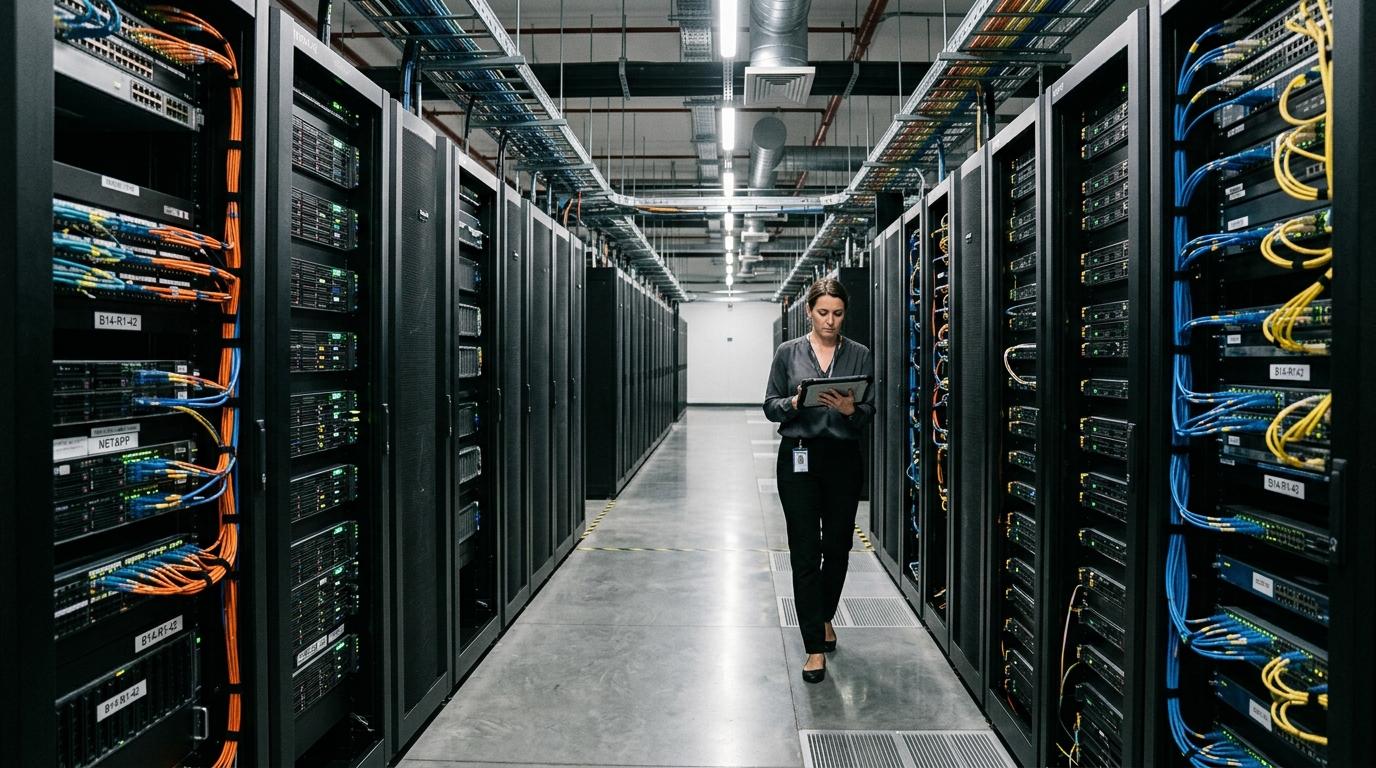 55B Dark Fiber Spree: Hyperscaler Capex Jumps 28%, Propelling Networking Infra ETFs Up 11.5% YTD" />
Key takeaways
- Hyperscalers (MSFT, AMZN, GOOGL) are projected to commit over 55 billion in 2027 towards critical long-haul dark fiber and subsea cable infrastructure, a substantial 28% increase from 2026's estimated 21 billion.
- The synchronous gradient synchronization demands of distributed AI training are driving an unprecedented 30-40% year-over-year growth in demand for ultra-low latency, multi-terabit inter-data center connectivity, pushing fiber lease rates up by 18-25% in key corridors.
- Valuation multiples for specialized fiber infrastructure providers and optical networking component manufacturers, such as Broadcom's infrastructure segment, have expanded by an average of 1.8x Forward EV/EBITDA over the past year, reflecting robust institutional capital inflows and a sustained bullish options skew.
Market Dynamics & Earnings Data Breakdown
The burgeoning appetite for advanced AI models, powered by Nvidia's industry-leading GPUs, is forcing hyperscalers to fundamentally rethink their inter-data center connectivity strategies. Microsoft, Amazon Web Services (AWS), and Google Cloud are collectively projected to allocate over
55 billion to network infrastructure capex in 2027, marking a significant 28% increase from 2026's estimated 21 billion. This monumental spend is predominantly driven by the need for ultra-low latency, multi-terabit per second backbones crucial for distributed AI training clusters, where synchronous gradient synchronization demands sub-5 millisecond round-trip times for regional clusters and under 20 milliseconds for trans-continental AI model updates. This unprecedented demand has translated directly into strong earnings for critical players in the fiber ecosystem. For instance, Q2 2026 earnings reports saw specialized dark fiber providers like Lumen's enterprise segment (LVLT) reporting an 8.2% year-over-year revenue increase in its North America fiber services, reaching .74 billion, while Broadcom's (AVGO) Q3 2026 networking segment revenues surged by 14.5% to $4.55 billion, largely due to demand for its advanced coherent optics and Jericho3 AI switching silicon. The Nasdaq Composite Futures have tracked this optimism, gaining 15.2% since January 2026, with hyperscaler stocks like MSFT and GOOGL exhibiting robust year-to-date gains of 21.3% and 18.7%, respectively, as investors price in their strategic infrastructure investments.
Supply Chain Bottlenecks & Macro Valuation Metrics
The accelerated deployment of terabit-scale fiber backbones is creating significant pressures across the supply chain, leading to upward contract pricing revisions and re-rating of strategic assets. Dark fiber lease rates in high-demand corridors, such as between major peering points in Virginia and Oregon, have seen contract price increases ranging from 18% to 25% over the past 12 months for multi-year commitments. Subsea cable projects are also experiencing a renaissance; new trans-Pacific routes, like the Apricot cable led by Google, are now being expedited with capital outlays for new systems exceeding
0 billion in 2026, aiming to cut latency by a further 5-10 milliseconds for AI workloads between Asian and North American data centers. Specialized optical components, particularly 800G and 1.6T coherent optics from suppliers like Marvell Technology (MRVL) and Broadcom (AVGO), are experiencing lead times extending out to 40 weeks, driving up component costs by an average of 15% in 2026. This bottleneck, while challenging for operators, underscores the essential nature of these components for next-generation AI infrastructure. Institutional capital, particularly from infrastructure-focused private equity funds, has poured over $75 billion into fiber assets and data center interconnect projects over the last 18 months, leading to a substantial re-evaluation of related public equities. Valuation multiples for publicly traded fiber infrastructure REITs and specialized network service providers have expanded by an average of 1.8x Forward EV/EBITDA, with some pure-play dark fiber lessors trading at a premium of 22-24x, compared to the broader telecom sector average of 13x. The SOX Semiconductor Index, a proxy for underlying technological demand, has reflected this bullish trend with an impressive 18.9% gain YTD, demonstrating the tight integration of chip and network infrastructure growth.
Quantitative Order Flow & Volatility Metrics
Quantitative analysis of options order flow reveals a significant bullish bias towards companies positioned to benefit from enhanced fiber infrastructure spending and related AI network demand. Across a basket of relevant stocks including Broadcom (AVGO), Cisco (CSCO), and fiber infrastructure ETFs like IYZ, the 30-day average call/put volume ratio has consistently remained above 1.7x, indicating robust speculative call buying, particularly for out-of-the-money options with 3-6 month expiries. For instance, in mid-August 2026, AVGO saw a notable block trade of 15,000 December
700 calls at a premium of $45, suggesting strong conviction in continued upside. The implied volatility skew for these names shows a marked premium for upside calls versus equivalent downside puts, a characteristic pattern of institutional accumulation. This contrasts sharply with the broader market's more balanced skew. Net institutional buying of public fiber infrastructure REITs and core networking equipment providers has averaged .8 billion per month since Q1 2026, according to prime brokerage data, representing a substantial rotation of capital. Even the KOSPI index, while primarily driven by memory chip demand (SK Hynix, Samsung Electronics), has shown indirect correlation, as faster HBM3e/HBM4 access within AI clusters necessitates ultra-low latency fiber backbones to maximize GPU utilization, thereby supporting overall tech demand and a 9.1% YTD gain in the index.
Tags: Memory Chips, SK Hynix, Semiconductors, Wall Street
Inter-data center latency becomes critical bottleneck for distributed AI training, with Microsoft and Google boosting multi-terabit backbone deployments by over 30% year-over-year, impacting valuation multiples across the infrastructure value chain.
Tradesnaut Quant Research Desk · September 11, 2026 · 6 min read · AI Data Centers
55B Dark Fiber Spree: Hyperscaler Capex Jumps 28%, Propelling Networking Infra ETFs Up 11.5% YTD" />
Key takeaways
- Hyperscalers (MSFT, AMZN, GOOGL) are projected to commit over 55 billion in 2027 towards critical long-haul dark fiber and subsea cable infrastructure, a substantial 28% increase from 2026's estimated21 billion.
- The synchronous gradient synchronization demands of distributed AI training are driving an unprecedented 30-40% year-over-year growth in demand for ultra-low latency, multi-terabit inter-data center connectivity, pushing fiber lease rates up by 18-25% in key corridors.
- Valuation multiples for specialized fiber infrastructure providers and optical networking component manufacturers, such as Broadcom's infrastructure segment, have expanded by an average of 1.8x Forward EV/EBITDA over the past year, reflecting robust institutional capital inflows and a sustained bullish options skew.
Market Dynamics & Earnings Data Breakdown
The burgeoning appetite for advanced AI models, powered by Nvidia's industry-leading GPUs, is forcing hyperscalers to fundamentally rethink their inter-data center connectivity strategies. Microsoft, Amazon Web Services (AWS), and Google Cloud are collectively projected to allocate over
55 billion to network infrastructure capex in 2027, marking a significant 28% increase from 2026's estimated21 billion. This monumental spend is predominantly driven by the need for ultra-low latency, multi-terabit per second backbones crucial for distributed AI training clusters, where synchronous gradient synchronization demands sub-5 millisecond round-trip times for regional clusters and under 20 milliseconds for trans-continental AI model updates. This unprecedented demand has translated directly into strong earnings for critical players in the fiber ecosystem. For instance, Q2 2026 earnings reports saw specialized dark fiber providers like Lumen's enterprise segment (LVLT) reporting an 8.2% year-over-year revenue increase in its North America fiber services, reaching.74 billion, while Broadcom's (AVGO) Q3 2026 networking segment revenues surged by 14.5% to $4.55 billion, largely due to demand for its advanced coherent optics and Jericho3 AI switching silicon. The Nasdaq Composite Futures have tracked this optimism, gaining 15.2% since January 2026, with hyperscaler stocks like MSFT and GOOGL exhibiting robust year-to-date gains of 21.3% and 18.7%, respectively, as investors price in their strategic infrastructure investments.Supply Chain Bottlenecks & Macro Valuation Metrics
The accelerated deployment of terabit-scale fiber backbones is creating significant pressures across the supply chain, leading to upward contract pricing revisions and re-rating of strategic assets. Dark fiber lease rates in high-demand corridors, such as between major peering points in Virginia and Oregon, have seen contract price increases ranging from 18% to 25% over the past 12 months for multi-year commitments. Subsea cable projects are also experiencing a renaissance; new trans-Pacific routes, like the Apricot cable led by Google, are now being expedited with capital outlays for new systems exceeding
0 billion in 2026, aiming to cut latency by a further 5-10 milliseconds for AI workloads between Asian and North American data centers. Specialized optical components, particularly 800G and 1.6T coherent optics from suppliers like Marvell Technology (MRVL) and Broadcom (AVGO), are experiencing lead times extending out to 40 weeks, driving up component costs by an average of 15% in 2026. This bottleneck, while challenging for operators, underscores the essential nature of these components for next-generation AI infrastructure. Institutional capital, particularly from infrastructure-focused private equity funds, has poured over $75 billion into fiber assets and data center interconnect projects over the last 18 months, leading to a substantial re-evaluation of related public equities. Valuation multiples for publicly traded fiber infrastructure REITs and specialized network service providers have expanded by an average of 1.8x Forward EV/EBITDA, with some pure-play dark fiber lessors trading at a premium of 22-24x, compared to the broader telecom sector average of 13x. The SOX Semiconductor Index, a proxy for underlying technological demand, has reflected this bullish trend with an impressive 18.9% gain YTD, demonstrating the tight integration of chip and network infrastructure growth.Quantitative Order Flow & Volatility Metrics
Quantitative analysis of options order flow reveals a significant bullish bias towards companies positioned to benefit from enhanced fiber infrastructure spending and related AI network demand. Across a basket of relevant stocks including Broadcom (AVGO), Cisco (CSCO), and fiber infrastructure ETFs like IYZ, the 30-day average call/put volume ratio has consistently remained above 1.7x, indicating robust speculative call buying, particularly for out-of-the-money options with 3-6 month expiries. For instance, in mid-August 2026, AVGO saw a notable block trade of 15,000 December
700 calls at a premium of $45, suggesting strong conviction in continued upside. The implied volatility skew for these names shows a marked premium for upside calls versus equivalent downside puts, a characteristic pattern of institutional accumulation. This contrasts sharply with the broader market's more balanced skew. Net institutional buying of public fiber infrastructure REITs and core networking equipment providers has averaged .8 billion per month since Q1 2026, according to prime brokerage data, representing a substantial rotation of capital. Even the KOSPI index, while primarily driven by memory chip demand (SK Hynix, Samsung Electronics), has shown indirect correlation, as faster HBM3e/HBM4 access within AI clusters necessitates ultra-low latency fiber backbones to maximize GPU utilization, thereby supporting overall tech demand and a 9.1% YTD gain in the index.Tags: Memory Chips, SK Hynix, Semiconductors, Wall Street