Q3 2026 HBM contract prices leap +22.5%, driving SK Hynix's forward P/E to 19.8x, a 35% premium over 5-year averages, amid unprecedented AI compute build-out.
Tradesnaut Quant Research Desk · August 18, 2026 · 6 min read · Agentic AI & Trading
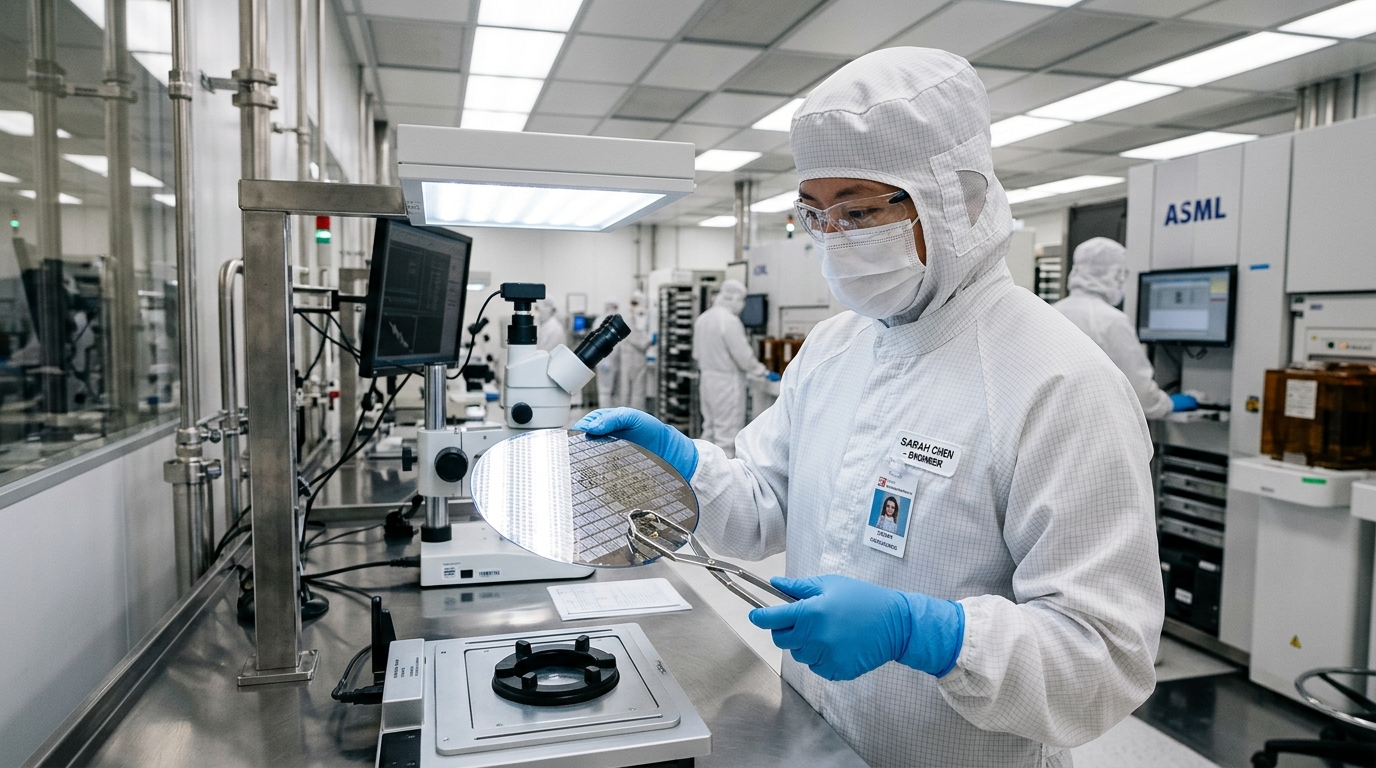
The semiconductor sector, particularly high-bandwidth memory (HBM) and AI accelerator segments, witnessed extraordinary momentum following robust Q2 2026 earnings reports. SK Hynix led the charge, announcing an operating profit of .95 billion, a staggering 195% year-over-year increase, significantly beating consensus estimates of .34 billion. This impressive performance was underpinned by a 135% YoY surge in HBM revenue, reaching $4.7 billion, driven by insatiable demand for HBM3e from key AI accelerator manufacturers like Nvidia. Shares of SK Hynix (000660.KS) rallied +14.7% on the KOSPI, closing at ₩268,500, pushing its market capitalization to approximately
Nvidia (NVDA) continued its dominance, with its data center revenue projected to exceed
The burgeoning demand for HBM has tightened supply considerably, pushing contract prices for Q3 2026 HBM3e memory up by an average of +22.5% quarter-over-quarter, with some spot market transactions even higher at +25% for immediate delivery. This premium pricing is a direct result of the complex manufacturing process and the limited number of suppliers capable of meeting stringent quality and performance requirements for advanced AI chips. Major memory manufacturers are investing heavily, with SK Hynix projecting 2026 capex of
Valuation metrics for key AI beneficiaries reflect this aggressive growth outlook. SK Hynix is currently trading at a forward P/E of 19.8x based on revised 2027 earnings, representing a 35% premium compared to its 5-year historical average of 14.6x, yet still below Nvidia's forward P/E of 38.5x. The EV/EBITDA multiple for the top three HBM suppliers (SK Hynix, Samsung, Micron) now averages 12.4x, a significant expansion from 8.8x just 12 months prior. Hyperscalers’ unprecedented capex commitments – Microsoft, AWS, and Google planning a combined 80 billion+ in 2026 – underscore the structural shift in enterprise IT spend towards AI. This massive capital flow is corroborated by satellite imagery analysis showing accelerated construction and heat signatures consistent with expanding data center footprints globally, providing an early signal that the AI investment cycle is far from peaking. Operating profit margins for HBM segments are now comfortably in the 50-55% range for leading players, a significant uplift from traditional DRAM margins of 25-30%.
Market microstructure analysis reveals heightened activity across options markets, particularly for firms at the forefront of AI innovation. Nvidia (NVDA) experienced a substantial bullish skew in its options order flow, with the 30-day average call/put ratio reaching 1.85, significantly above its historical mean of 1.2. The volume of out-of-the-money (OTM) call options for NVDA with October 2026 expiry trading at strikes of
For SK Hynix, significant net institutional buying was observed on the KOSPI, estimated at $850 million for the day, with foreign investors accumulating shares. Options data for SK Hynix on the Korea Exchange showed a notable increase in call option open interest for September 2026 expiry at ₩280,000 and ₩300,000 strikes, with volumes up 150% compared to its 20-day average. This aggressive positioning suggests institutional traders are leveraging real-time insights, likely derived from agentic AI parsing of supply chain data, competitor announcements, and even macroeconomic indicators like energy prices affecting Constellation Energy (CEG), a key power provider for some hyperscale data centers, whose stock also saw a +1.1% uptick. The implied volatility for the overall memory sector, as tracked by a custom basket of memory ETFs, rose by 85 basis points, but the equity delta remained strongly positive, indicating demand for upside protection and participation.
Tags: Memory Chips, SK Hynix, Semiconductors, Wall Street, AI, HBM3e, Nvidia, TSMC