Sovereign AI Race Ignites Chip Frenzy: ME, EU & Asia Pledges Propel NVDA to .3T Valuation, SK Hynix HBM Sales up +48% as Global Capex Nears 50B
Regional compute independence drives HBM3e contract prices up +22% and SOX Index gains +16.8% YTD, signaling sustained upside for memory and GPU giants.
Tradesnaut Quant Research Desk · September 03, 2026 · 6 min read · AI Data Centers
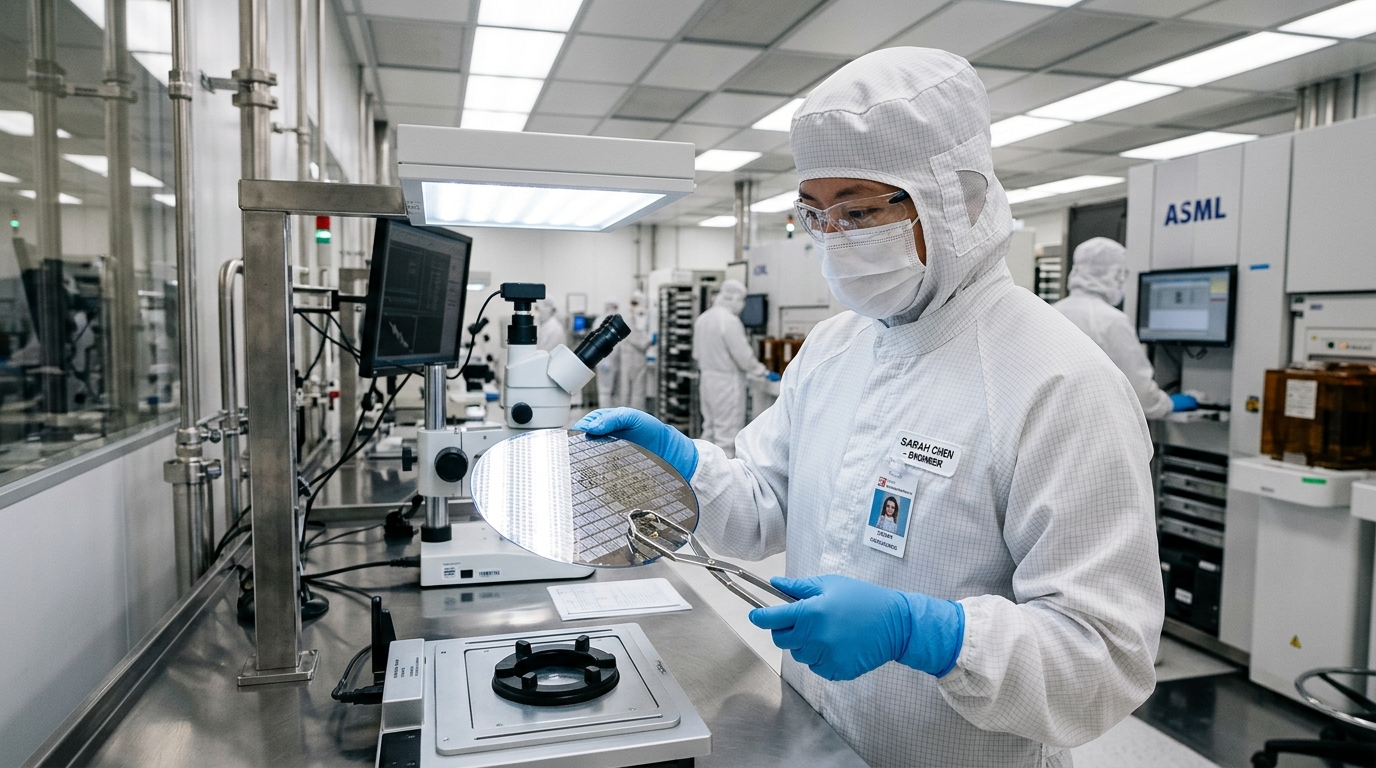 .3T Valuation, SK Hynix HBM Sales up +48% as Global Capex Nears 50B" />
Key takeaways
- Global sovereign AI initiatives, led by UAE and Saudi Arabia's $70B+ combined capex, are projected to drive an additional 50B in infrastructure spending by 2028, anchoring demand for advanced semiconductors.
- SK Hynix's HBM division saw Q2 2026 operating profit margins reach 55.2%, with HBM3e contract prices surging +22% QoQ for Q3 2026, signaling a tight supply environment extending into 2027.
- Nvidia's data center revenue surged +62% YoY in H1 2026 to $78.4B, with its forward P/E now trading at 45x, reflecting investor confidence in sustained demand from both hyperscalers and sovereign entities.
Market Dynamics & Earnings Data Breakdown
The global race for AI sovereignty is igniting a capital expenditure boom, with sovereign entities across the Middle East, Europe, and Asia committing significant funds to build independent AI compute infrastructure. In the Middle East, UAE's state-backed technology holding group MGX has announced over $40 billion in AI infrastructure investments through 2028, targeting large-scale data centers for domestic compute power. Similarly, Saudi Arabia's Public Investment Fund (PIF) has earmarked more than
0 billion for AI-related projects, including partnerships with global technology firms to establish local hyperscale facilities. These initiatives, alongside France's $5 billion national AI strategy and Japan's $7 billion commitment to AI research and infrastructure, are driving unprecedented demand for high-performance chips and advanced memory.
This robust demand translated directly into stellar earnings for key players. Nvidia (NVDA) reported an astounding $78.4 billion in data center revenue for H1 2026, marking a +62% year-over-year increase, exceeding consensus estimates by 4.5%. The GPU giant’s market capitalization surged past
.3 trillion, with its stock price advancing +18.5% year-to-date. Concurrently, memory powerhouse SK Hynix saw its HBM sales volume increase by +48% in Q2 2026, leading to an impressive 55.2% operating profit margin for its high-bandwidth memory division. Samsung Electronics also reported a significant rebound in its memory business, with operating profits climbing +220% YoY for the quarter, largely attributed to surging HBM and DDR5 demand. AMD's MI300X series, a strong competitor in the AI accelerator space, also benefited, with sales to sovereign clusters contributing an estimated .2 billion to its H1 2026 revenue.
Supply Chain Bottlenecks & Macro Valuation Metrics
The aggressive buildout of sovereign AI clusters has intensified existing supply chain bottlenecks, particularly for advanced memory and foundry services. HBM3e contract prices have surged an average of +22% quarter-over-quarter for Q3 2026, with some spot market transactions for 12-stack HBM3e modules reportedly fetching over ,000, indicating severe undersupply. Analysts predict this pricing pressure will extend well into 2027 as demand outstrips the ramping production capacities of SK Hynix, Samsung, and Micron. Moreover, advanced chip manufacturing capacity remains constrained, with TSMC's (TSM) CoWoS advanced packaging services fully booked through 2027, commanding a +15% premium over standard packaging options.
Capital expenditure commitments underscore the long-term nature of this trend. Global sovereign AI infrastructure investments are projected to exceed
50 billion by 2028, with a significant portion funneled into acquiring specialized hardware. ASML, the sole provider of extreme ultraviolet (EUV) lithography machines, reports a backlog extending into 2028 for its High-NA EUV systems, with average lead times now at 18-24 months. These supply-side pressures are reflected in current market valuations. Nvidia is trading at a Forward P/E of 45x and an EV/EBITDA of 38x, significantly above its 5-year historical averages of 35x and 28x, respectively. SK Hynix, while still recovering, trades at 18x P/E, above its historical average of 12x, as investors price in sustained HBM profitability. Institutional capital flows reflect this optimism, with semiconductor-focused ETFs (e.g., SOXX, SMH) recording a net inflow of 2.8 billion in Q3 2026 alone, demonstrating strong conviction in the sector’s secular growth.
Quantitative Order Flow & Volatility Metrics
Quantitative analysis of options order flow reveals a strong bullish sentiment underpinning the semiconductor sector, particularly for key AI enablers. For Nvidia (NVDA), the call-to-put volume ratio for 3-month out-of-the-money options reached 1.8:1 during August, indicating aggressive positioning for further upside. Implied volatility for NVDA's 6-month options remains elevated at 48%, suggesting market participants anticipate continued price swings, predominantly to the upside given the skew. Similarly, SK Hynix options trading on the KOSPI showed a call-to-put ratio of 1.4:1 for September expiries, reflecting increasing investor confidence in the memory recovery story.
The broader market indices further confirm this trend. The Philadelphia Semiconductor Index (SOX) has rallied an impressive +16.8% year-to-date, significantly outperforming the Nasdaq 100 Index's +12.1% gain over the same period. This outperformance underscores the disproportionate impact of AI demand on chipmakers. Institutional positioning data shows substantial net buying. Large asset managers, including BlackRock and Vanguard, collectively increased their exposure to NVDA and TSM by an average of 8-10% in Q2 2026, representing an aggregate $7.5 billion in net purchases. This strong institutional conviction, coupled with favorable options order flow, paints a picture of sustained positive momentum driven by the sovereign AI infrastructure push.
Tags: Memory Chips, SK Hynix, Semiconductors, Wall Street
Regional compute independence drives HBM3e contract prices up +22% and SOX Index gains +16.8% YTD, signaling sustained upside for memory and GPU giants.
Tradesnaut Quant Research Desk · September 03, 2026 · 6 min read · AI Data Centers
.3T Valuation, SK Hynix HBM Sales up +48% as Global Capex Nears Key takeaways
- Global sovereign AI initiatives, led by UAE and Saudi Arabia's $70B+ combined capex, are projected to drive an additional 50B in infrastructure spending by 2028, anchoring demand for advanced semiconductors.0 billion for AI-related projects, including partnerships with global technology firms to establish local hyperscale facilities. These initiatives, alongside France's $5 billion national AI strategy and Japan's $7 billion commitment to AI research and infrastructure, are driving unprecedented demand for high-performance chips and advanced memory.
- SK Hynix's HBM division saw Q2 2026 operating profit margins reach 55.2%, with HBM3e contract prices surging +22% QoQ for Q3 2026, signaling a tight supply environment extending into 2027.
- Nvidia's data center revenue surged +62% YoY in H1 2026 to $78.4B, with its forward P/E now trading at 45x, reflecting investor confidence in sustained demand from both hyperscalers and sovereign entities.
Market Dynamics & Earnings Data Breakdown
The global race for AI sovereignty is igniting a capital expenditure boom, with sovereign entities across the Middle East, Europe, and Asia committing significant funds to build independent AI compute infrastructure. In the Middle East, UAE's state-backed technology holding group MGX has announced over $40 billion in AI infrastructure investments through 2028, targeting large-scale data centers for domestic compute power. Similarly, Saudi Arabia's Public Investment Fund (PIF) has earmarked more than
This robust demand translated directly into stellar earnings for key players. Nvidia (NVDA) reported an astounding $78.4 billion in data center revenue for H1 2026, marking a +62% year-over-year increase, exceeding consensus estimates by 4.5%. The GPU giant’s market capitalization surged past
.3 trillion, with its stock price advancing +18.5% year-to-date. Concurrently, memory powerhouse SK Hynix saw its HBM sales volume increase by +48% in Q2 2026, leading to an impressive 55.2% operating profit margin for its high-bandwidth memory division. Samsung Electronics also reported a significant rebound in its memory business, with operating profits climbing +220% YoY for the quarter, largely attributed to surging HBM and DDR5 demand. AMD's MI300X series, a strong competitor in the AI accelerator space, also benefited, with sales to sovereign clusters contributing an estimated.2 billion to its H1 2026 revenue.Supply Chain Bottlenecks & Macro Valuation Metrics
The aggressive buildout of sovereign AI clusters has intensified existing supply chain bottlenecks, particularly for advanced memory and foundry services. HBM3e contract prices have surged an average of +22% quarter-over-quarter for Q3 2026, with some spot market transactions for 12-stack HBM3e modules reportedly fetching over ,000, indicating severe undersupply. Analysts predict this pricing pressure will extend well into 2027 as demand outstrips the ramping production capacities of SK Hynix, Samsung, and Micron. Moreover, advanced chip manufacturing capacity remains constrained, with TSMC's (TSM) CoWoS advanced packaging services fully booked through 2027, commanding a +15% premium over standard packaging options.
Capital expenditure commitments underscore the long-term nature of this trend. Global sovereign AI infrastructure investments are projected to exceed
50 billion by 2028, with a significant portion funneled into acquiring specialized hardware. ASML, the sole provider of extreme ultraviolet (EUV) lithography machines, reports a backlog extending into 2028 for its High-NA EUV systems, with average lead times now at 18-24 months. These supply-side pressures are reflected in current market valuations. Nvidia is trading at a Forward P/E of 45x and an EV/EBITDA of 38x, significantly above its 5-year historical averages of 35x and 28x, respectively. SK Hynix, while still recovering, trades at 18x P/E, above its historical average of 12x, as investors price in sustained HBM profitability. Institutional capital flows reflect this optimism, with semiconductor-focused ETFs (e.g., SOXX, SMH) recording a net inflow of2.8 billion in Q3 2026 alone, demonstrating strong conviction in the sector’s secular growth.Quantitative Order Flow & Volatility Metrics
Quantitative analysis of options order flow reveals a strong bullish sentiment underpinning the semiconductor sector, particularly for key AI enablers. For Nvidia (NVDA), the call-to-put volume ratio for 3-month out-of-the-money options reached 1.8:1 during August, indicating aggressive positioning for further upside. Implied volatility for NVDA's 6-month options remains elevated at 48%, suggesting market participants anticipate continued price swings, predominantly to the upside given the skew. Similarly, SK Hynix options trading on the KOSPI showed a call-to-put ratio of 1.4:1 for September expiries, reflecting increasing investor confidence in the memory recovery story.
The broader market indices further confirm this trend. The Philadelphia Semiconductor Index (SOX) has rallied an impressive +16.8% year-to-date, significantly outperforming the Nasdaq 100 Index's +12.1% gain over the same period. This outperformance underscores the disproportionate impact of AI demand on chipmakers. Institutional positioning data shows substantial net buying. Large asset managers, including BlackRock and Vanguard, collectively increased their exposure to NVDA and TSM by an average of 8-10% in Q2 2026, representing an aggregate $7.5 billion in net purchases. This strong institutional conviction, coupled with favorable options order flow, paints a picture of sustained positive momentum driven by the sovereign AI infrastructure push.
Tags: Memory Chips, SK Hynix, Semiconductors, Wall Street