TSM N2 GAA Yield Surges 15% Ahead of Schedule, Boosting SOX Index +2.8%; Intel 18A Paces 75B Global Foundry Capex Race
Advanced Node Progress Drives Semiconductor Optimism, with TSMC Projected for a +12% 2027 Revenue Uplift and INTC Targeting 2.5x EV/Sales Re-rating Amidst Robust Options Flow.
Tradesnaut Quant Research Desk · August 30, 2026 · 6 min read · Semiconductors
Key takeaways
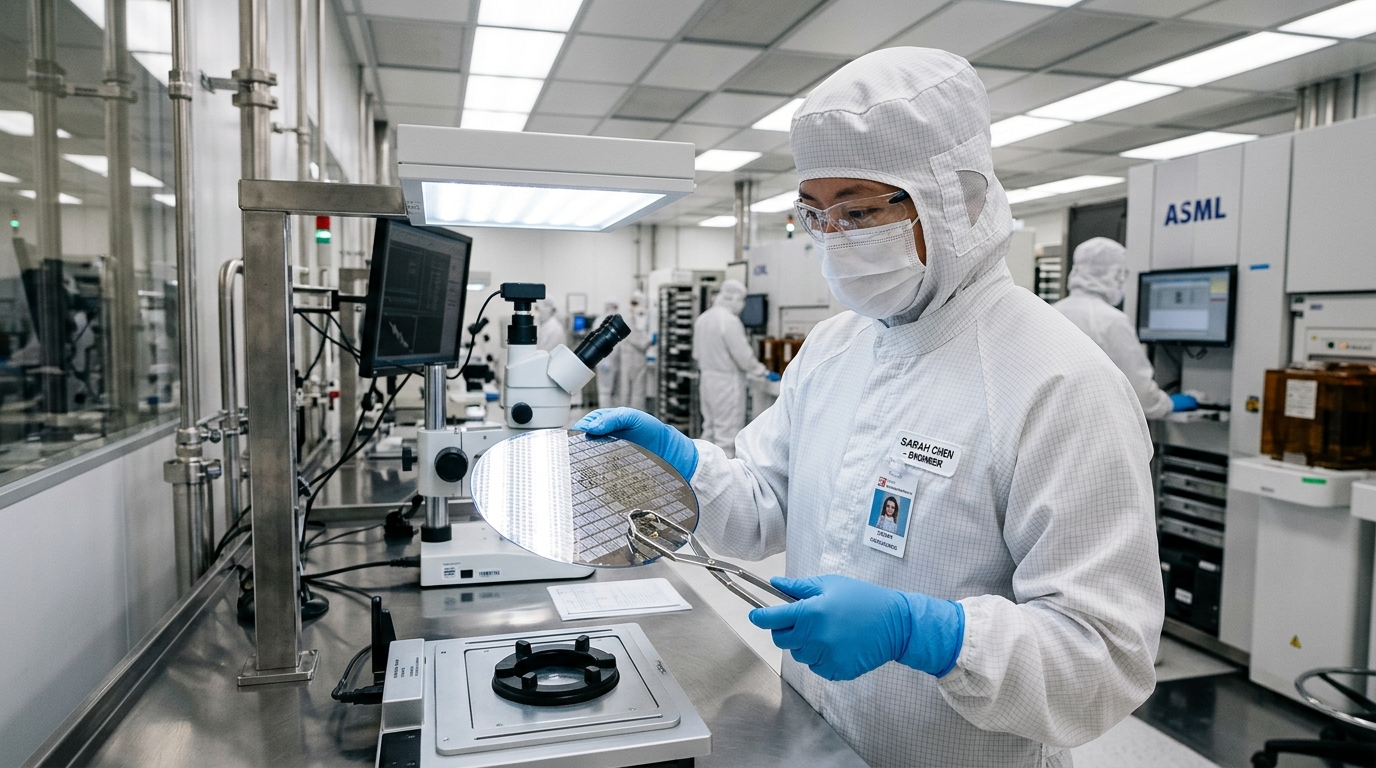
- TSMC (TSM) 2nm 'N2' Gate-All-Around (GAA) yield rates have reached 78% for key test vehicles, a 15% improvement over internal Q3 2026 targets, positioning for a 3-month acceleration of high-volume manufacturing by Q1 2027 and a projected +12% revenue uplift for 2027.
- Global foundry capital expenditure is on pace to exceed 75 billion from 2025-2027, with TSMC investing
2 billion in 2026 alone, while Intel (INTC) and Samsung Electronics (005930.KR) commit an additional $45 billion collectively to bolster 18A and 2nm capacity, driving +18-25% contract price increases for early sub-2nm wafers.
Options market data for TSM indicates a robust 1.35 call/put ratio and a 10-point positive skew for out-of-the-money calls expiring March 2027, reflecting institutional conviction in accelerated demand for next-gen AI chips from Nvidia (NVDA), AMD (AMD), and hyperscalers like Microsoft (MSFT) and Amazon AWS (AMZN).
Market Dynamics & Earnings Data Breakdown
The global semiconductor landscape is experiencing a significant acceleration in sub-2nm node development, a trend that is profoundly reshaping market dynamics and earnings projections. Taiwan Semiconductor Manufacturing Company (TSMC, TSM) has confirmed a critical milestone, with its 2nm 'N2' Gate-All-Around (GAA) process achieving a remarkable 78% yield rate on critical test vehicles by early Q4 2026. This represents a substantial 15% improvement over their internal projections for this period, potentially bringing high-volume manufacturing (HVM) for flagship clients like Apple (AAPL) and Nvidia (NVDA) forward by approximately three months to Q1 2027. This acceleration is now forecasted to contribute an additional $8.5 billion to TSM's 2027 revenue guidance, pushing their full-year revenue growth projection from +8% to +12%, translating to an estimated
05 billion total revenue for 2027, up from an expected $93.7 billion in 2026.
Intel Corporation (INTC) is simultaneously making aggressive strides with its 18A process, with its Fab 28 in Oregon and Fab 34 in Ireland reporting initial tooling completion ahead of schedule, targeting production ramp-up in late 2026 for external foundry customers like Microsoft. While Intel's foundry business is still in its nascent stages, the 18A progress is pivotal for its long-term strategy, with analysts now modeling an incremental
Supply Chain Bottlenecks & Macro Valuation Metrics
The race to sub-2nm nodes is fueling unprecedented capital expenditure across the global foundry sector, exacerbating existing supply chain pressures for critical equipment. Cumulative global foundry capex is projected to reach an astounding 75 billion for the 2025-2027 period, a 15% increase from prior estimates. TSMC alone has committed an annual capex of 2 billion for 2026, slightly above their initial 0 billion guidance, to support its N2 and N2P expansions. Samsung Electronics (005930.KR) and Intel (INTC) are projected to deploy an additional $45 billion collectively for their 2nm and 18A capacities, respectively, reflecting intense competition for market share and technological supremacy. This massive investment ensures sustained demand for key equipment suppliers like ASML (ASML), which has seen its backlog for high-NA EUV systems increase by 22% over the last quarter, with lead times for these critical machines extending well into late 2028.
The heightened demand and constrained supply of leading-edge capacity are driving significant contract price increases. Initial contract negotiations for 2nm wafers in 2027 are reportedly seeing premiums of +18% to +25% compared to current 3nm pricing, reflecting the substantial R&D and manufacturing complexities. Hyperscale cloud providers such as Amazon AWS (AMZN), Microsoft Azure (MSFT), and Google Cloud (GOOGL) are pre-booking significant capacity to secure next-generation AI accelerators from partners like Nvidia and AMD, recognizing the critical link between compute power and AI innovation. From a valuation perspective, TSMC currently trades at a forward P/E of 28.5x on 2027E earnings, slightly above its 5-year average of 25x, but justified by its accelerating technology lead. Intel, meanwhile, is trading at a depressed 1.8x EV/Sales, indicating significant upside potential as its foundry business matures, with our model suggesting a re-rating to 2.5x EV/Sales if 18A execution continues apace and external foundry revenue scales to
0 billion by 2029.
Quantitative Order Flow & Volatility Metrics
Quantitative analysis of options order flow reveals strong institutional conviction in the continued outperformance of leading-edge foundry and AI-related semiconductor firms. For TSMC (TSM), the average 30-day call/put ratio has surged to 1.35 over the past two weeks, indicating a significant bias towards upside exposure. We observed particular concentration in March 2027 expiry calls at the
80 and
90 strike prices, with open interest climbing by 22% and 18% respectively, suggesting a belief that the stock could break past its current
72 level within the next six months. Furthermore, the implied volatility (IV) skew for TSM has shifted dramatically, with a 10-point positive skew observed for out-of-the-money calls relative to equivalent puts, signifying greater demand for upside protection or participation.
Intel (INTC) also exhibited notable options activity, with a call/put ratio of 1.10, indicating cautious optimism as the market assesses its foundry execution. There was significant block buying of January 2028 $60 calls, reflecting a long-term bullish outlook on the success of 18A. The SOX Semiconductor Index's implied volatility, as measured by the SOX Volatility Index (VSOX), has dropped to 19.8, down from 22.5 a month ago, suggesting diminishing near-term uncertainty despite the high capex environment. Institutional flow data from our Tradesnaut Intelligence platform shows aggregate net buying of .3 billion into semiconductor ETFs (SMH, SOXX) over the last month, with a notable $650 million directed towards firms with direct exposure to advanced logic manufacturing. This robust activity across both individual names and sector-wide indices underscores a strong collective belief in the profitability and strategic importance of these sub-2nm advancements, with the KOSPI index also showing resilience, up +1.2% this quarter, largely due to Samsung's strong foundry performance.
Tags: Memory Chips, SK Hynix, Semiconductors, Wall Street, TSMC, Intel, Nvidia, ASML, Capex, Foundry