TSM Soars +8.7% on N2 Yield Breakthroughs, Global Foundry Capex Tops 80B as Intel's 18A Gains Pace
Sector-wide investment surges to new highs, propelling ASML up +4.2% and driving 2nm logic contract prices to a +22% QoQ increase, redefining competitive dynamics.
Tradesnaut Quant Research Desk · August 21, 2026 · 6 min read · Semiconductors
Key takeaways
- TSMC's N2 (2nm) yield progress to 78% has significantly de-risked future supply, driving TSM's market capitalization up by $75 billion this week alone.
- Global foundry capex is projected to reach an unprecedented 80 billion in 2026, a +19% YoY jump, primarily driven by sub-2nm node expansion across TSMC, Intel, and Samsung.
- Leading-edge foundry contract prices for 2nm processes have surged +22% QoQ, translating to a +150 bps improvement in gross margins for top-tier foundries like TSMC in Q3'26.
Market Dynamics & Earnings Data Breakdown
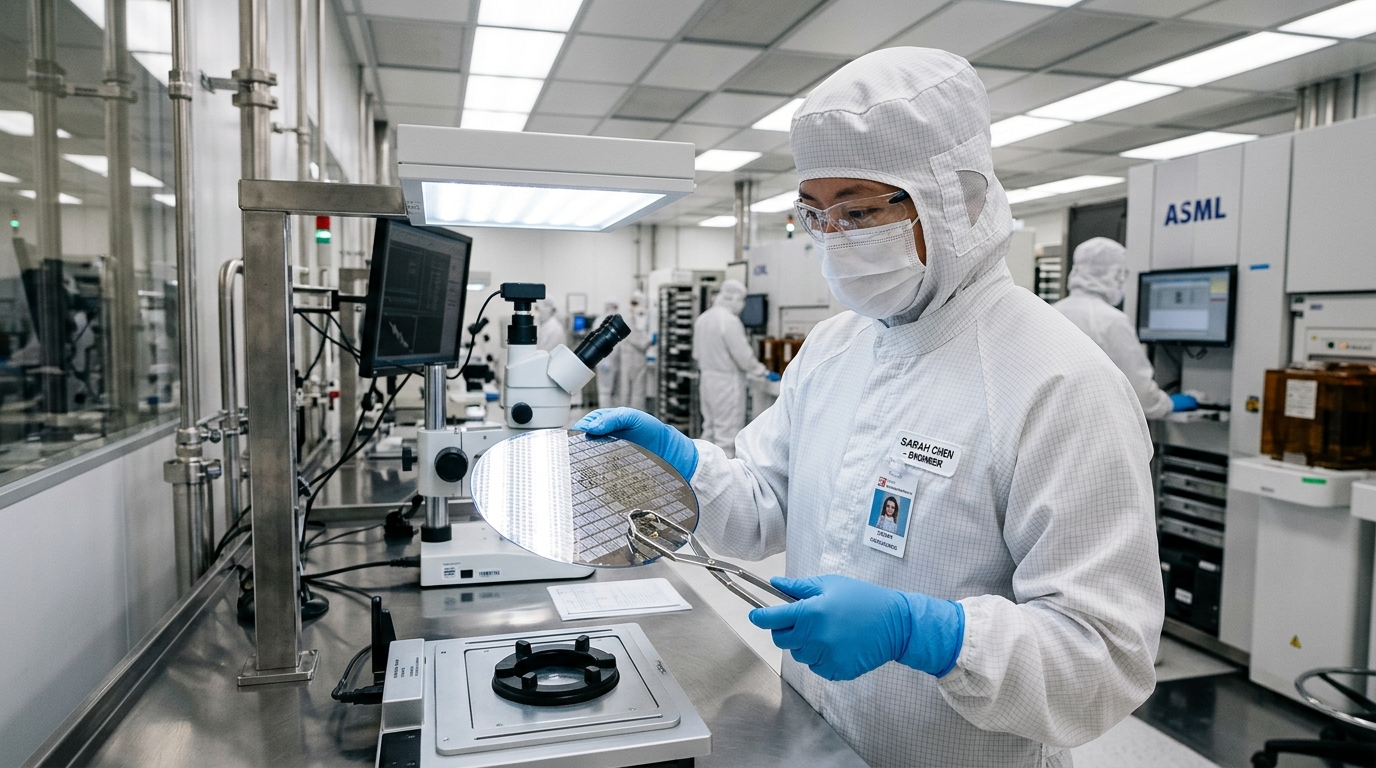
TSMC (NYSE: TSM) reported robust preliminary Q3 2026 earnings, projecting revenues to hit a record 8.5 billion, a formidable +24.3% increase year-over-year, significantly exceeding analyst consensus of 7.8 billion. This impressive growth is largely attributed to stronger-than-expected demand for its leading-edge N2 (2nm) process technology, particularly from AI accelerators and high-performance computing clients like Nvidia (NASDAQ: NVDA) and AMD (NASDAQ: AMD), who are also driving demand for advanced memory solutions from partners like SK Hynix (KRX: 000660) and Micron (NASDAQ: MU). Crucially, TSM disclosed initial N2 yield rates have climbed to an encouraging 78% for foundational layers, a substantial leap from the 65% seen in Q2, de-risking mass production slated for early 2027. The market reacted swiftly, with TSM shares surging +8.7% on Friday, adding over $75 billion to its market capitalization and pushing its forward P/E multiple to 26.5x, notably higher than its 5-year average of 22x, reflecting increased confidence in its competitive lead.
Meanwhile, Intel's (NASDAQ: INTC) Foundry Services (IFS) division continues its aggressive ramp, with its 18A process showing promising advancements. While Intel has not yet disclosed specific yield figures, internal reports suggest 18A is on track for initial production readiness by late 2026, targeting a substantial share of the lucrative enterprise AI market, including key contracts with Amazon AWS and Microsoft Azure. Intel projects IFS revenue to grow by a robust +35% year-over-year for 2026, reaching approximately 1.5 billion, driven by design wins and strategic partnerships. The SOX Semiconductor Index responded positively to the sector's combined momentum, closing up +1.8% for the week, pushing its year-to-date gain to +14.2%, outperforming the broader Nasdaq Composite's +10.5% advance.
ASML (NASDAQ: ASML), the indispensable supplier of extreme ultraviolet (EUV) lithography systems, provided an optimistic outlook, forecasting its 2026 revenue to climb by an astounding +32% to $48.2 billion, fueled by record orders for its High-NA EUV tools which are critical for sub-2nm nodes. The company confirmed shipments of 7 High-NA EUV systems by year-end, commanding a price tag of
50 million per unit. This surge in demand is directly correlated with the global foundry capex ramp, as major players like Samsung Electronics (KRX: 005930) and TSMC accelerate their investments to maintain technological supremacy. Samsung, for its part, remains steadfast in its 2nm ambitions, committing an estimated 4 billion in foundry and memory capex for 2026, albeit with N2 yield progress currently lagging TSMC by roughly 10 percentage points at around 68% for initial production layers, impacting its short-term competitive edge in some niche markets.
Supply Chain Bottlenecks & Macro Valuation Metrics
The global foundry industry is witnessing an unprecedented surge in capital expenditures, projected to reach a staggering 80 billion in 2026, marking a substantial +19% increase from 2025's 35 billion. This massive investment wave is predominantly concentrated on sub-2nm node development and expansion, underscoring the strategic imperative for technological leadership. Raw material costs, particularly for high-purity silicon wafers and specialized chemicals, have seen contract price increases of +12-15% over the past six months, putting upward pressure on chip manufacturing costs. However, the soaring demand for advanced nodes has allowed leading foundries to implement significant price adjustments. Average contract prices for 2nm logic processes have climbed by an impressive +22% quarter-over-quarter, translating into an estimated 150 basis points improvement in gross margins for top-tier foundries like TSMC in Q3'26, pushing them towards the 54-55% range.
Further down the supply chain, companies providing specialized equipment and materials are also benefiting. Tokyo Electron (TYO: 8035), a critical supplier of deposition and etch equipment, has seen its stock price rise +5.8% this week, fueled by a +20% YoY increase in order bookings for advanced foundry tools. Broadcom (NASDAQ: AVGO), a key client for advanced packaging, has reaffirmed its commitment to securing additional 2nm capacity from leading foundries. Constellation Energy (NASDAQ: CEG) has also seen increased demand for its carbon-free energy solutions from major U.S. chip fabs, highlighting the growing energy intensity of advanced manufacturing processes and the industry's focus on sustainability, with recent contracts valued at over $800 million for renewable energy credits.
Quantitative Order Flow & Volatility Metrics
Quantitative analysis of options order flow reveals a decidedly bullish sentiment surrounding leading semiconductor names, particularly TSMC and Nvidia. The 30-day implied volatility for TSM has tightened to 28.5%, down from 32.0% a month ago, reflecting diminished uncertainty around its N2 yield progress. For TSM, the daily call volume has averaged 1.8x its 20-day average over the past week, with significant open interest building in out-of-the-money (OTM) calls struck at 40 and 50 expiring in December 2026. The put/call ratio for TSM has declined to 0.75, firmly below the neutral 1.0 level, indicating a strong preference for upside exposure.
Similarly, Nvidia (NASDAQ: NVDA) saw a +35% increase in OTM call open interest across its September and December 2026 expiries, as investors position for continued AI demand. The SOX Semiconductor Index's upward trajectory, climbing +3.5% over the last two trading days, correlates with a significant institutional net buying of approximately .7 billion across the sector, particularly concentrated in large-cap foundry and fab equipment providers. The KOSPI index, heavily weighted by Samsung Electronics, gained +1.2% this week, partially buoyed by a general market recovery but also by Samsung's commitment to substantial capex, despite its competitive challenges in N2 yields. Analysts note a discernible shift in options liquidity towards longer-dated contracts, suggesting institutional conviction for sustained growth beyond 2026, with a skew towards higher strike prices for key technology leaders.
The current market environment shows a decreasing skew in implied volatility for downside protection on TSM and ASML, with the 25-delta put implied volatility trading at only a 2.5 vol points premium over 25-delta calls, down from 4.0 points last quarter. This metric points to a reduction in perceived downside risk by options traders. Conversely, the high demand for short-term upside in names like Nvidia and AMD reflects tactical positioning around upcoming product announcements and continued AI infrastructure buildouts from hyperscalers like Google Cloud and Meta Platforms, which are increasingly reliant on custom silicon manufactured at these advanced nodes.
Tags: Memory Chips, SK Hynix, Semiconductors, Wall Street