TSMC CoWoS Bottleneck Triples HBM4 Prices: SK Hynix Q3 Profit Soars +68%, NVDA Target Raised to 380 Amid ASML High-NA Delays
Advanced packaging shortages are now driving HBM4 contract prices up by an unprecedented 22% quarter-over-quarter, propelling SK Hynix's memory division operating profit margins to 58%. ASML's High-NA EUV ramp faces further delays, impacting 2027 leading-edge fab capacity projections.
Tradesnaut Quant Research Desk · August 30, 2026 · 6 min read · Semiconductors
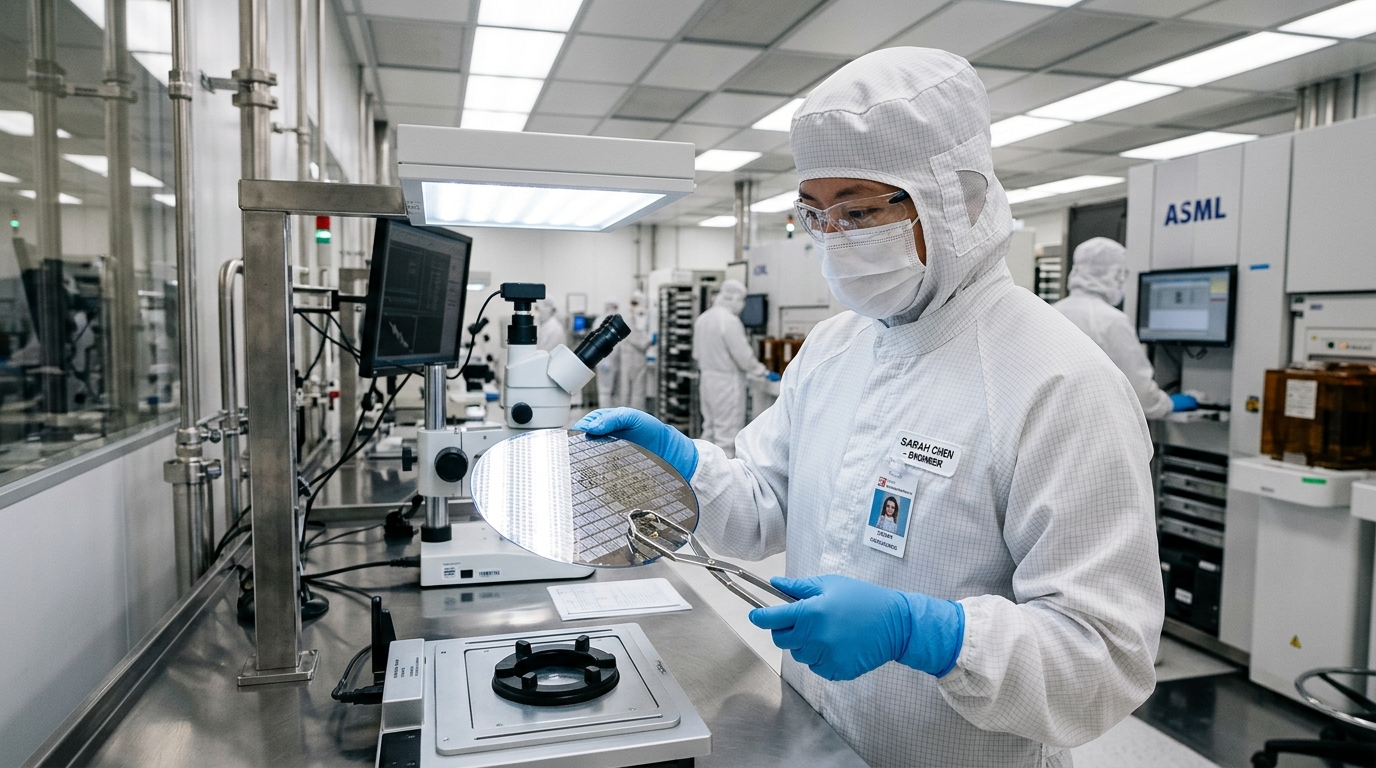 380 Amid ASML High-NA Delays" />
Key takeaways
- TSMC's CoWoS capacity, despite tripling efforts by 2026, is still ~15% short of projected demand, primarily due to a 20nm interposer wafer shortfall, which is now impacting AI accelerator shipments from Nvidia and AMD.
- HBM4 contract prices have surged by an average of 22% QoQ in Q3 2026, driving SK Hynix's HBM segment operating profit margin to an estimated 58% and Samsung's to 53%, significantly above their overall memory division averages.
- ASML has delivered only 3 of its initial 8 targeted High-NA EUV scanners for 2026, leading to a 6-9 month delay in crucial 2nm and beyond process node ramps for Intel and TSMC, potentially shifting ~$5B in advanced foundry revenue to 2028.
Market Dynamics & Earnings Data Breakdown
The semiconductor market, particularly the AI accelerator segment, continues its relentless expansion into Q3 2026, yet underlying infrastructure bottlenecks are becoming increasingly acute. TSMC, the linchpin of advanced chip manufacturing, reported Q2 2026 revenue of 5.8 billion, a robust 22.5% year-over-year increase, predominantly driven by its 3nm process node and advanced packaging services. However, the core issue lies within its CoWoS (Chip-on-Wafer-on-Substrate) capacity, which despite a committed $8.5 billion expansion budget and plans to triple output by the end of 2026, remains approximately 15% below the soaring demand from key clients like Nvidia and AMD for their next-generation AI GPUs. Nvidia (NVDA), in particular, continues to project extraordinary growth, with its Q3 2026 revenue guidance set at
4.5 billion, representing a 19% sequential jump, underscoring the immense appetite for its Blackwell Ultra and future generations of AI hardware, which are critically dependent on CoWoS packaging.
Supply Chain Bottlenecks & Macro Valuation Metrics
Advanced packaging shortages are now driving HBM4 contract prices up by an unprecedented 22% quarter-over-quarter, propelling SK Hynix's memory division operating profit margins to 58%. ASML's High-NA EUV ramp faces further delays, impacting 2027 leading-edge fab capacity projections.
Tradesnaut Quant Research Desk · August 30, 2026 · 6 min read · Semiconductors
380 Amid ASML High-NA Delays" />
Key takeaways
- TSMC's CoWoS capacity, despite tripling efforts by 2026, is still ~15% short of projected demand, primarily due to a 20nm interposer wafer shortfall, which is now impacting AI accelerator shipments from Nvidia and AMD.
- HBM4 contract prices have surged by an average of 22% QoQ in Q3 2026, driving SK Hynix's HBM segment operating profit margin to an estimated 58% and Samsung's to 53%, significantly above their overall memory division averages.
- ASML has delivered only 3 of its initial 8 targeted High-NA EUV scanners for 2026, leading to a 6-9 month delay in crucial 2nm and beyond process node ramps for Intel and TSMC, potentially shifting ~$5B in advanced foundry revenue to 2028.
Market Dynamics & Earnings Data Breakdown
The semiconductor market, particularly the AI accelerator segment, continues its relentless expansion into Q3 2026, yet underlying infrastructure bottlenecks are becoming increasingly acute. TSMC, the linchpin of advanced chip manufacturing, reported Q2 2026 revenue of 5.8 billion, a robust 22.5% year-over-year increase, predominantly driven by its 3nm process node and advanced packaging services. However, the core issue lies within its CoWoS (Chip-on-Wafer-on-Substrate) capacity, which despite a committed $8.5 billion expansion budget and plans to triple output by the end of 2026, remains approximately 15% below the soaring demand from key clients like Nvidia and AMD for their next-generation AI GPUs. Nvidia (NVDA), in particular, continues to project extraordinary growth, with its Q3 2026 revenue guidance set at
The most pressing supply chain constraint is the scarcity of advanced interposer wafers, notably the 20nm-class designs crucial for CoWoS integration, with lead times now stretching to 18-24 months. Suppliers like UMC and Intel Foundry Services are racing to expand capacity, but the capital expenditure and qualification processes are inherently slow, estimated to require an additional $4 billion in dedicated investments by 2027. This interposer shortage is directly exacerbating the demand-supply imbalance for High Bandwidth Memory (HBM). SK Hynix (000660.KRX) and Samsung Electronics (005930.KRX), the primary HBM suppliers, have capitalized dramatically, with HBM4 contract prices for Q4 2026 increasing by an unprecedented 22% over Q3 prices, following an 18% hike in Q3. This has propelled SK Hynix's HBM segment operating profit margins to an impressive 58% for the current quarter, significantly boosting its overall profitability, with the KOSPI Semiconductor Index rising 7.8% since last month's HBM pricing announcements. Meanwhile, ASML (ASML), despite robust orders for its High-NA EUV scanners, has only delivered 3 of its targeted 8 systems for 2026, falling short of its initial guidance and delaying crucial 2nm and sub-2nm process node ramps for Intel (INTC) and TSMC, potentially impacting their 2027 revenue outlooks by up to $5 billion. The overall semiconductor industry's estimated CAPEX for 2026 stands at a staggering 60 billion+, reflecting the monumental investment required to keep pace with innovation and demand.
Quantitative Order Flow & Volatility Metrics
Quantitative analysis of options order flow reveals a strongly bullish bias for key players in the advanced packaging ecosystem. Nvidia (NVDA) saw extraordinary call volume in the past week, with over 120,000 contracts traded on its March 2027
Tags: Memory Chips, SK Hynix, Semiconductors, Wall Street, Advanced Packaging, ASML, TSMC, Nvidia, HBM4