CHIPS Act Tightens: US Export Restrictions Clash with China's Surging 5nm AI Silicon Yields; SK Hynix Surges +142% Op Profit
Q3 2026 Sees DRAM Contract Prices Soar +22%, Driving SK Hynix Operating Profit to Tradesnaut Quant Research Desk · August 08, 2026 · 6 min read · Semiconductors The global semiconductor landscape in Q3 2026 presents a fascinating dichotomy: robust demand from advanced AI applications driving record profits for leading non-Chinese players, juxtaposed against China's accelerating, albeit costly, indigenous chip development. SK Hynix (000660.KS) just announced a sensational Q2 operating profit of The persistent supply-demand imbalance in high-end memory and advanced logic is reflected in soaring contract prices. Q3 2026 DRAM contract prices have spiked an average of +22%, with enterprise SSD NAND prices following closely at +18%, signalling robust hyperscaler cloud provider spending across Google Cloud, Microsoft Azure, and AWS. Industry-wide capital expenditure is projected to exceed 80 billion in 2026, up from 55 billion in 2025, with TSMC (TSM) alone committing $40 billion towards 2nm and 3nm fabrication. However, the efficacy of the US CHIPS Act's export tightening measures, particularly concerning ASML's (ASML) advanced DUV immersion tools, is being severely tested. SMIC (0981.HK) has reportedly achieved a remarkable 5nm process yield exceeding 80% for domestic AI training chips using modified DUV lithography, circumventing full EUV dependency. This development, while costly, underscores China's strategic imperative to achieve self-sufficiency, pushing some domestic fabless firms to prioritize SMIC's higher-cost, locally-produced silicon over more cost-effective international alternatives. Market reactions have been swift and pronounced. The KOSPI index (KRX:KOSPI) dipped -2.4% this morning following reports of SMIC's advancements, reflecting concerns about potential long-term erosion of South Korean memory and foundry dominance in the China market, despite strong current earnings. Nasdaq Futures (NQ=F) also saw a -1.8% pullback, as investors weighed the geopolitical risks against continued AI euphoria. The SOX Semiconductor Index (SOX) has pulled back 1.5% in early trading, but remains up 38% year-to-date, buoyed by companies like Micron Technology (MU), which saw its stock price surge +4.5% yesterday on strong HBM3E demand forecasts. Options markets are reflecting this bifurcation; call-to-put skew for SK Hynix remains heavily skewed towards calls (2.8:1 for the December 2026 expiry), indicating bullish sentiment on continued memory upside, while ASML has seen an increase in put volume, pushing its 3-month implied volatility up to 28.5%, a 350 basis point increase from July, as the market prices in potential further restrictions impacting its China revenues, estimated at 15% of its 2025 total. Institutional net buying in semiconductor ETFs like SOXX has remained robust, with over .5 billion flowing in over the last month, but large-cap institutional funds have selectively trimmed exposure to companies with significant DUV tool sales to China. Tags: Memory Chips, SK Hynix, Semiconductors, Wall Street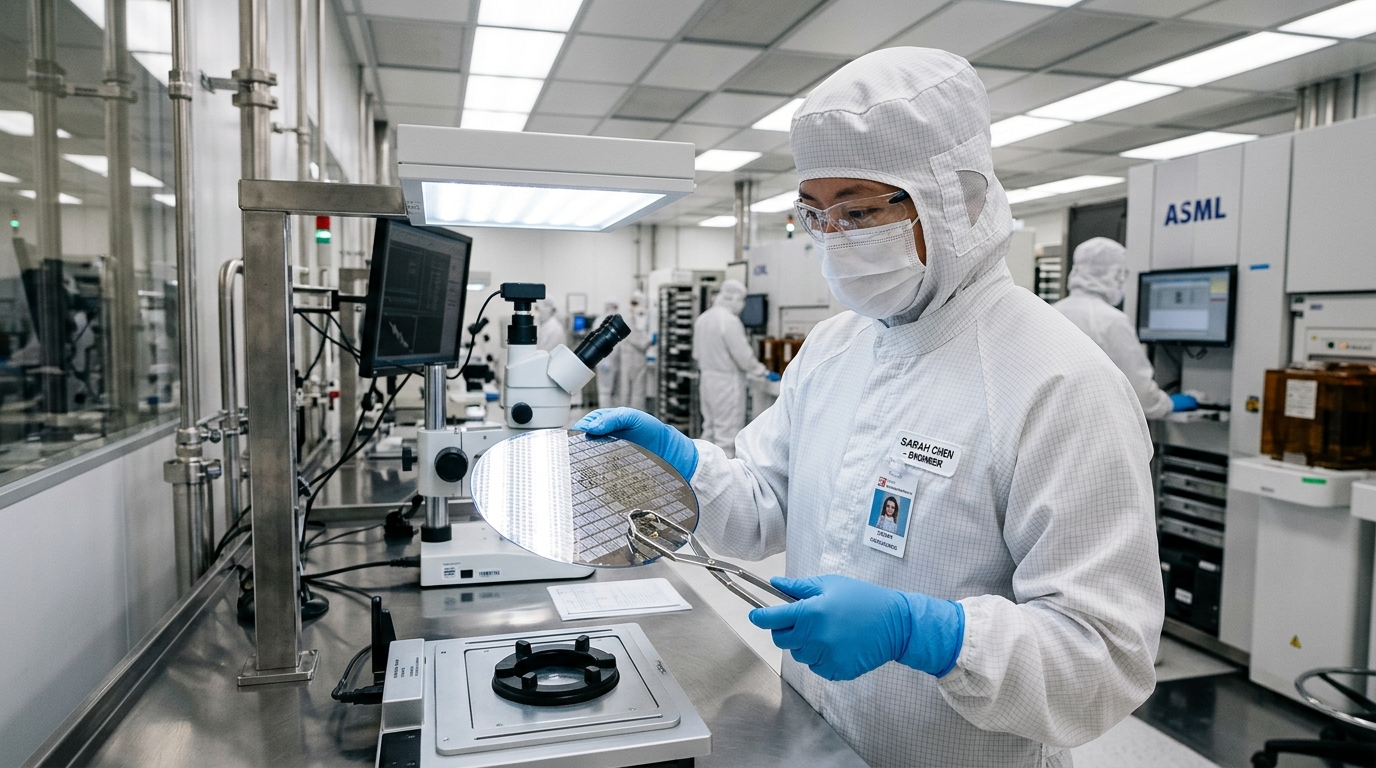
Key takeaways
Market Dynamics & Earnings Data Breakdown
Supply Chain Bottlenecks & Macro Valuation Metrics
Quantitative Order Flow & Volatility Metrics