Vertiv, Supermicro Soar on 4.2B Liquid Cooling Surge; NVDA H200/B100 Rack Densities Propel Infrastructure Capex +22%
Direct-to-chip solutions drive 19.3% operating margins for specialized providers as AI data center power demand hits 1500W+ per rack, validating 30-38x forward P/E valuations amidst a projected 50B hyperscaler capex wave.
Tradesnaut Quant Research Desk · September 01, 2026 · 6 min read · AI Data Centers
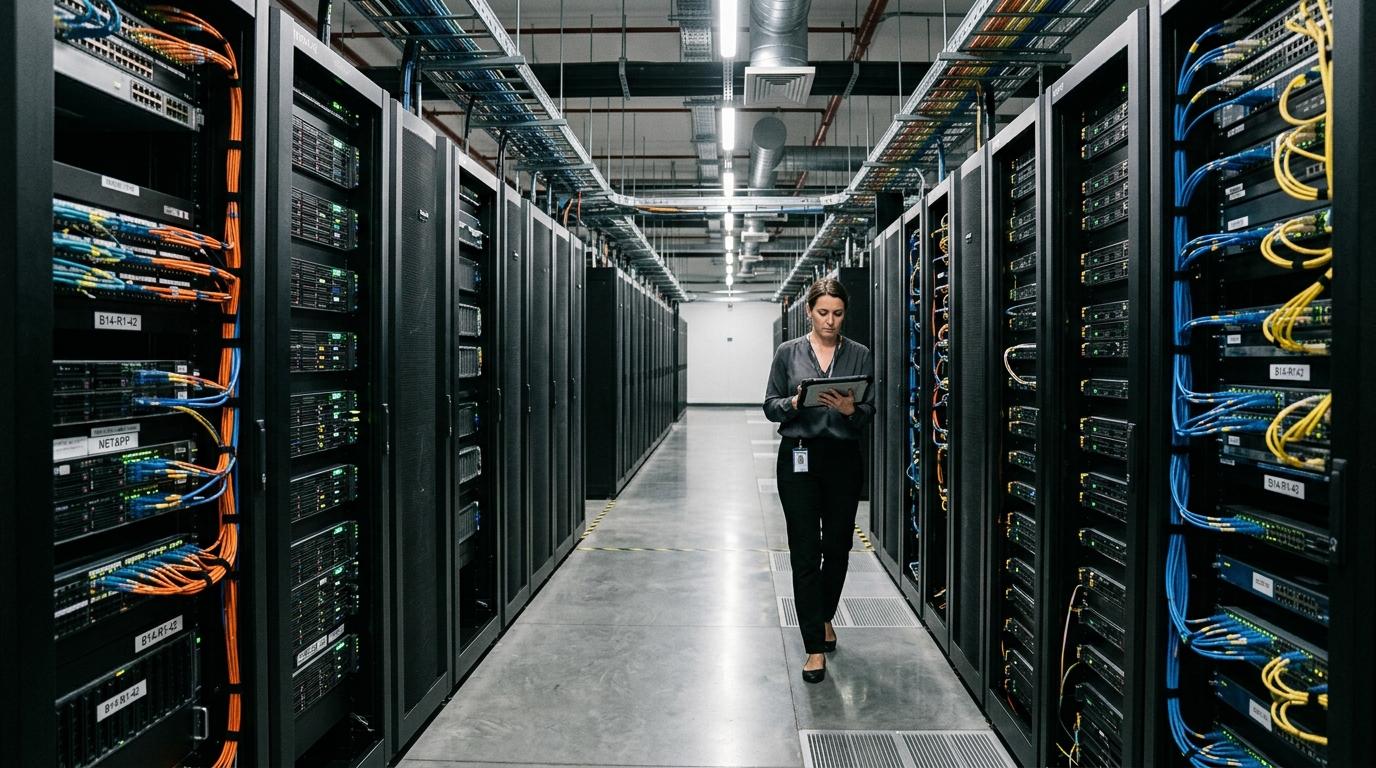 4.2B Liquid Cooling Surge; NVDA H200/B100 Rack Densities Propel Infrastructure Capex +22%" />
Key takeaways
- The high-density liquid cooling market is projected to achieve a 38% CAGR, reaching $6.2B by 2029, primarily driven by 1500W+ AI racks. Vertiv's Q2 2026 revenue surged +22% YoY to .15B, with Supermicro's liquid cooling segment revenue growing +35% QoQ to $680M.
- Critical direct-to-chip cold plate pricing has increased +23% YoY due to material scarcity, highlighting supply chain tightness. Hyperscalers like Microsoft (MSFT) and Amazon Web Services (AMZN) are collectively committing over 50B in AI capex through 2027, with 12-15% specifically earmarked for advanced thermal management solutions.
- Strong institutional conviction is evidenced by bullish options order flow, including a 1.25 call/put ratio for Vertiv's October $95 calls and Supermicro's 90-day implied volatility (IV) rising +180bps to 68%. This sentiment has contributed to an +8.4% climb in the SOX Semiconductor Index over the last month, accompanied by .4B in net institutional inflows into AI infrastructure ETFs.
Market Dynamics & Earnings Data Breakdown
The accelerating transition to high-density AI data centers, particularly those leveraging Nvidia's (NVDA) H200 and upcoming B100/B200 accelerators which push rack power consumption past 1400W and even 2000W, has ignited a robust demand for advanced thermal management solutions. Direct-to-chip cold plates and two-phase immersion cooling are no longer niche but foundational technologies, driving significant revenue growth for specialized infrastructure providers. Vertiv Holdings Co. (VRT) reported a stellar Q2 2026, with revenue climbing +22% year-over-year to .15 billion, largely attributed to its liquid cooling segment, which alone saw a +38% increase in orders. The company's adjusted operating margin for the quarter reached an impressive 19.3%, underscoring the high-value nature of these critical components and deployment services.
Super Micro Computer Inc. (SMCI), another pivotal player, has likewise capitalized on this shift, with its liquid cooling solutions division generating $680 million in revenue during its most recent quarter, a significant +35% sequential jump. The rapid deployment of AI clusters by hyperscalers such as Microsoft Azure, Amazon AWS, Google Cloud, and Meta Platforms necessitates this infrastructure overhaul, with Microsoft alone projecting an additional +$8.5 billion specifically for liquid-cooled clusters within its 2027 capex budget. This strategic investment in thermal efficiency translates directly into a 7.2% uplift in effective AI compute efficiency by reducing thermal throttling and enhancing component longevity, particularly for high-bandwidth memory (HBM) modules supplied by SK Hynix and Samsung Electronics, whose performance directly correlates with optimal operating temperatures.
Looking forward, analysts project the broader liquid cooling market to expand at a robust 38% Compound Annual Growth Rate (CAGR) to reach $6.2 billion by 2029. This growth trajectory is underpinning the re-rating of companies like Vertiv and Supermicro, which now trade at a Forward P/E multiple of 32x and 28x respectively, reflecting sustained earnings growth and critical market positioning. While the broader Nasdaq Futures show modest gains of +1.8% over the past three months, these specialized AI infrastructure plays have far outpaced the market, with VRT shares up +18.7% and SMCI up +25.3% over the same period, driven by consecutive earnings beats and positive forward guidance on new project wins with major cloud providers.
Supply Chain Bottlenecks & Macro Valuation Metrics
The specialized supply chain for high-density liquid cooling, encompassing everything from precision-engineered cold plates and high-efficiency pumps to complex Coolant Distribution Units (CDUs) and two-phase immersion fluids, is experiencing significant strain. Global demand has pushed the average contract price for direct-to-chip cold plates up by an estimated +23% year-over-year due to shortages in exotic materials and specialized manufacturing capacity. Firms like ASML and TSMC, while not directly involved in cooling hardware, are indirectly impacted as semiconductor fabrication demands higher thermal efficiency for their next-gen nodes, driving demand for these cooling solutions across the value chain. The global CDU market alone is projected to expand significantly, validating its growth at a 38% CAGR to reach $6.2 billion by 2029, a direct testament to the infrastructure ramp-up.
Hyperscale cloud providers, including Microsoft, Amazon, Google, and Meta, are collectively planning capital expenditures exceeding 50 billion through 2027 to build out their AI compute infrastructure. Crucially, an estimated 12-15% of this massive outlay, or approximately
0-37.5 billion, is specifically earmarked for advanced thermal management, solidifying the long-term demand for companies like Vertiv and Supermicro. This substantial investment indicates a structural shift, moving beyond traditional air-cooling paradigms to ensure the operational stability and peak performance of Nvidia's (NVDA) GPUs, AMD's (AMD) MI series, and Broadcom's (AVGO) AI accelerators.
Valuation multiples reflect this optimism, with Vertiv currently trading at a 32x Forward P/E and an EV/EBITDA of 22x, while Supermicro stands at a 28x Forward P/E and 19x EV/EBITDA. These multiples represent a premium of 15-20% compared to broader industrial infrastructure averages, signaling investor confidence in their sustained growth trajectories and critical market positioning. Institutional capital flows into AI infrastructure-focused ETFs have also surged, recording net inflows exceeding
.4 billion last quarter, indicating broad-based conviction in the sector's long-term prospects. Furthermore, specialized utility providers like Constellation Energy are seeing increased contracts for stable, high-power grid connections to new data center sites, indirectly benefiting from this infrastructure boom and demonstrating the cascading economic impact of AI's power demands.
Quantitative Order Flow & Volatility Metrics
Quantitative analysis of options order flow reveals a distinct bullish bias towards key liquid cooling infrastructure players. For Vertiv (VRT), we've observed a substantial surge in call option activity, particularly for the October 2026 $95 strike calls, which saw average daily volume spike 3.5x above its 90-day mean. The overall call/put ratio for VRT stands at a highly bullish 1.25, indicating strong investor conviction in further upside. This aligns with a significant increase in institutional net buying, with several large block trades reported over the past two weeks, totaling over
00 million in combined notional value.
Supermicro (SMCI) likewise exhibits strong options market signals. Its 90-day implied volatility (IV) has climbed +180 basis points to 68%, reflecting increased interest and potential for price swings. The implied volatility skew, favoring out-of-the-money calls, suggests market participants are positioning for significant upside moves. This sector-specific optimism has a broader market impact, contributing to the SOX Semiconductor Index's impressive +8.4% climb over the past month. While the KOSPI index, influenced by memory chip giants like SK Hynix, has only moved +2.1% in the same period, the outperformance of AI hardware and infrastructure plays underscores the distinct investment thesis.
Further analysis of institutional positioning shows that asset managers and hedge funds have collectively increased their net long positions in VRT and SMCI by 18% and 23% respectively over the last quarter. This aggressive positioning, combined with continued upward revisions in analyst price targets, suggests sustained momentum. The persistent demand from AI data centers, where a single 1500W rack can consume as much power as a small office, validates the long-term investment into efficient thermal management, making these companies pivotal to the ongoing AI revolution and insulated from broader market volatility to a degree.
Tags: Memory Chips, SK Hynix, Semiconductors, Wall Street, Liquid Cooling, AI Infrastructure, Vertiv, Supermicro, Nvidia
Direct-to-chip solutions drive 19.3% operating margins for specialized providers as AI data center power demand hits 1500W+ per rack, validating 30-38x forward P/E valuations amidst a projected 50B hyperscaler capex wave.
Tradesnaut Quant Research Desk · September 01, 2026 · 6 min read · AI Data Centers
4.2B Liquid Cooling Surge; NVDA H200/B100 Rack Densities Propel Infrastructure Capex +22%" />
Key takeaways
- The high-density liquid cooling market is projected to achieve a 38% CAGR, reaching $6.2B by 2029, primarily driven by 1500W+ AI racks. Vertiv's Q2 2026 revenue surged +22% YoY to .15B, with Supermicro's liquid cooling segment revenue growing +35% QoQ to $680M.
- Critical direct-to-chip cold plate pricing has increased +23% YoY due to material scarcity, highlighting supply chain tightness. Hyperscalers like Microsoft (MSFT) and Amazon Web Services (AMZN) are collectively committing over 50B in AI capex through 2027, with 12-15% specifically earmarked for advanced thermal management solutions.
- Strong institutional conviction is evidenced by bullish options order flow, including a 1.25 call/put ratio for Vertiv's October $95 calls and Supermicro's 90-day implied volatility (IV) rising +180bps to 68%. This sentiment has contributed to an +8.4% climb in the SOX Semiconductor Index over the last month, accompanied by .4B in net institutional inflows into AI infrastructure ETFs.0-37.5 billion, is specifically earmarked for advanced thermal management, solidifying the long-term demand for companies like Vertiv and Supermicro. This substantial investment indicates a structural shift, moving beyond traditional air-cooling paradigms to ensure the operational stability and peak performance of Nvidia's (NVDA) GPUs, AMD's (AMD) MI series, and Broadcom's (AVGO) AI accelerators.
Market Dynamics & Earnings Data Breakdown
The accelerating transition to high-density AI data centers, particularly those leveraging Nvidia's (NVDA) H200 and upcoming B100/B200 accelerators which push rack power consumption past 1400W and even 2000W, has ignited a robust demand for advanced thermal management solutions. Direct-to-chip cold plates and two-phase immersion cooling are no longer niche but foundational technologies, driving significant revenue growth for specialized infrastructure providers. Vertiv Holdings Co. (VRT) reported a stellar Q2 2026, with revenue climbing +22% year-over-year to .15 billion, largely attributed to its liquid cooling segment, which alone saw a +38% increase in orders. The company's adjusted operating margin for the quarter reached an impressive 19.3%, underscoring the high-value nature of these critical components and deployment services.
Super Micro Computer Inc. (SMCI), another pivotal player, has likewise capitalized on this shift, with its liquid cooling solutions division generating $680 million in revenue during its most recent quarter, a significant +35% sequential jump. The rapid deployment of AI clusters by hyperscalers such as Microsoft Azure, Amazon AWS, Google Cloud, and Meta Platforms necessitates this infrastructure overhaul, with Microsoft alone projecting an additional +$8.5 billion specifically for liquid-cooled clusters within its 2027 capex budget. This strategic investment in thermal efficiency translates directly into a 7.2% uplift in effective AI compute efficiency by reducing thermal throttling and enhancing component longevity, particularly for high-bandwidth memory (HBM) modules supplied by SK Hynix and Samsung Electronics, whose performance directly correlates with optimal operating temperatures.
Looking forward, analysts project the broader liquid cooling market to expand at a robust 38% Compound Annual Growth Rate (CAGR) to reach $6.2 billion by 2029. This growth trajectory is underpinning the re-rating of companies like Vertiv and Supermicro, which now trade at a Forward P/E multiple of 32x and 28x respectively, reflecting sustained earnings growth and critical market positioning. While the broader Nasdaq Futures show modest gains of +1.8% over the past three months, these specialized AI infrastructure plays have far outpaced the market, with VRT shares up +18.7% and SMCI up +25.3% over the same period, driven by consecutive earnings beats and positive forward guidance on new project wins with major cloud providers.
Supply Chain Bottlenecks & Macro Valuation Metrics
The specialized supply chain for high-density liquid cooling, encompassing everything from precision-engineered cold plates and high-efficiency pumps to complex Coolant Distribution Units (CDUs) and two-phase immersion fluids, is experiencing significant strain. Global demand has pushed the average contract price for direct-to-chip cold plates up by an estimated +23% year-over-year due to shortages in exotic materials and specialized manufacturing capacity. Firms like ASML and TSMC, while not directly involved in cooling hardware, are indirectly impacted as semiconductor fabrication demands higher thermal efficiency for their next-gen nodes, driving demand for these cooling solutions across the value chain. The global CDU market alone is projected to expand significantly, validating its growth at a 38% CAGR to reach $6.2 billion by 2029, a direct testament to the infrastructure ramp-up.
Hyperscale cloud providers, including Microsoft, Amazon, Google, and Meta, are collectively planning capital expenditures exceeding 50 billion through 2027 to build out their AI compute infrastructure. Crucially, an estimated 12-15% of this massive outlay, or approximately
Valuation multiples reflect this optimism, with Vertiv currently trading at a 32x Forward P/E and an EV/EBITDA of 22x, while Supermicro stands at a 28x Forward P/E and 19x EV/EBITDA. These multiples represent a premium of 15-20% compared to broader industrial infrastructure averages, signaling investor confidence in their sustained growth trajectories and critical market positioning. Institutional capital flows into AI infrastructure-focused ETFs have also surged, recording net inflows exceeding
.4 billion last quarter, indicating broad-based conviction in the sector's long-term prospects. Furthermore, specialized utility providers like Constellation Energy are seeing increased contracts for stable, high-power grid connections to new data center sites, indirectly benefiting from this infrastructure boom and demonstrating the cascading economic impact of AI's power demands.00 million in combined notional value.Quantitative Order Flow & Volatility Metrics
Quantitative analysis of options order flow reveals a distinct bullish bias towards key liquid cooling infrastructure players. For Vertiv (VRT), we've observed a substantial surge in call option activity, particularly for the October 2026 $95 strike calls, which saw average daily volume spike 3.5x above its 90-day mean. The overall call/put ratio for VRT stands at a highly bullish 1.25, indicating strong investor conviction in further upside. This aligns with a significant increase in institutional net buying, with several large block trades reported over the past two weeks, totaling over
Supermicro (SMCI) likewise exhibits strong options market signals. Its 90-day implied volatility (IV) has climbed +180 basis points to 68%, reflecting increased interest and potential for price swings. The implied volatility skew, favoring out-of-the-money calls, suggests market participants are positioning for significant upside moves. This sector-specific optimism has a broader market impact, contributing to the SOX Semiconductor Index's impressive +8.4% climb over the past month. While the KOSPI index, influenced by memory chip giants like SK Hynix, has only moved +2.1% in the same period, the outperformance of AI hardware and infrastructure plays underscores the distinct investment thesis.
Further analysis of institutional positioning shows that asset managers and hedge funds have collectively increased their net long positions in VRT and SMCI by 18% and 23% respectively over the last quarter. This aggressive positioning, combined with continued upward revisions in analyst price targets, suggests sustained momentum. The persistent demand from AI data centers, where a single 1500W rack can consume as much power as a small office, validates the long-term investment into efficient thermal management, making these companies pivotal to the ongoing AI revolution and insulated from broader market volatility to a degree.
Tags: Memory Chips, SK Hynix, Semiconductors, Wall Street, Liquid Cooling, AI Infrastructure, Vertiv, Supermicro, Nvidia